
The Ministry of Food and Agriculture and a Ghanaian-based agribusiness company, ABC Oyeasase Yie Ltd, have signed a memorandum of understanding (MoU) for the latter to establish a fertiliser blending plant in the country.
The $50 million plant, to be sited in the Eastern Region, is expected to produce enough organic fertiliser for farmers not only in Ghana but the sub-region.Africans & Diaspora
The plant, with an annual capacity of 500,000 metric tonnes, is to support the national food security programme, which will feed into the company’s sustainable agriculture production strategy.
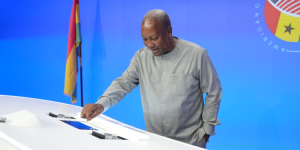
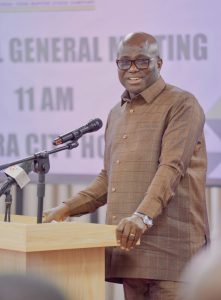
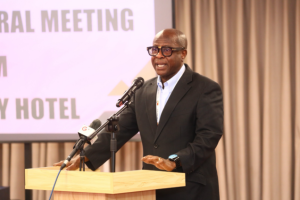
The sector minister, Eric Opoku and Director of ABC Oyeasase Yie Ltd, Samuel Adimado, signed for their respective institutions in Accra yesterday, and it was witnessed by the Managing Director of ABC Oyeasase Yie Ltd, Rev. Mark Nyantakyi.
In a brief statement, Mr Opoku encouraged the company to let the signing reflect on the ground by starting the project right away.
“We want to see real action on the ground. And so, you need to give us an assurance that after signing, within some days, we will see action on the ground.
“So that the ministry, after signing, will also prepare itself to take up some of your produce to support the Feed Ghana programme,” he said.
He said all over the world, agriculture was shifting towards organic, because food produced was meant for consumption, “and even before production, we need to protect the health of the soil”.
“With organic fertiliser, we are able to protect the health of the soil and then make it more productive so that we can maximise our yield. It is also environmentally friendly,” the minister said.
Organic fertiliser
For his part, Mr Adimado said all was set for the commencement of the plant, adding, “All that is required to kick-start is ready, and that is why we are here to sign the MoU”.
Mr Adimado gave the assurance that the signing of the MoU would not be a talk shop, but that the business plan and the financing sourcing would be enough for a full-fledged fertiliser blending facility.
He explained that “this fertiliser is organic-based, which means that it will not only feed the plants but also take care of the soil”.
“We need a farming system that will protect the soil, as well as feed the plant,” Mr Adimado added.
He explained that the source of the bulk of the fertiliser would be from the sub-region, and it would also help in the regional supply of fertiliser.
“If you look at the AfCFTA model, we have positioned ourselves so that the fertiliser will not only feed our country, but also contribute to the West Africa sub-region,” he said