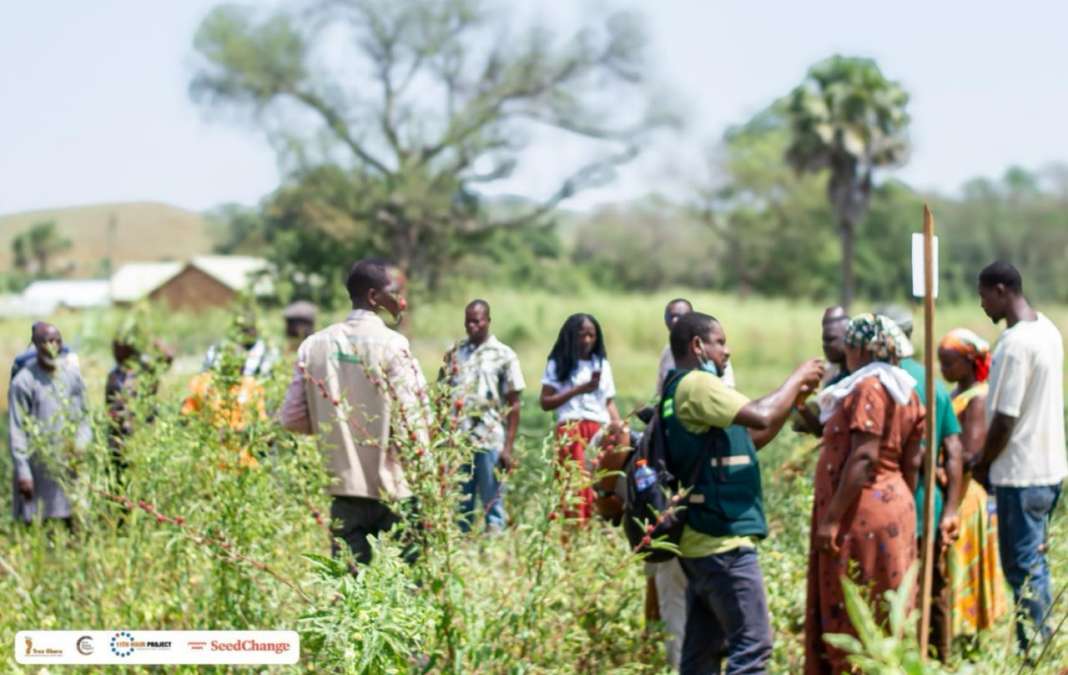
MoFA officials want a farmer-run seed bank in Gundoug, Upper East, to become a model for preserving indigenous crop varieties across northern Ghana.
Agriculture officials in the Upper East Region want a farmer-run seed bank in Gundoug, Nabdam District, to become a model for keeping indigenous crop varieties alive across northern Ghana.Access Services
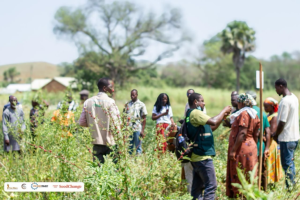
Officials from the Ministry of Food and Agriculture (MoFA) made the call at a stakeholder meeting in the community. Two non-governmental organisations, Trax Ghana and The Beela Project, organised it to gather technical advice on their community seed programme. Extension agents, assembly members and the farmers who produce, collect and store the seeds also attended.
Alhaji Zakaria Fuseini, MoFA’s Upper East Regional Director, raised concerns about seed varieties brought in from outside the region. Some, he said, are poorly suited to northern soils and weather. When they fail to germinate, farmers lose a season’s harvest. He said stronger community seed systems would help farmers cope with less predictable rains.
How the system works
The Gundoug seed bank is a pilot. Robert Anaab Atiim, the project’s field coordinator, said it should be stocked with indigenous and locally adapted maize, sorghum, cowpea and vegetable seeds by the end of this farming season. Villagers have been trained in three roles: producing seed, collecting it and keeping it safe between seasons.Order Bulk Seeds
The project began in January 2024 with funding from The 11th Hour Project, a United States foundation, and SeedChange, a Canadian organisation. It covers 10 communities in the Upper East and North East regions. Its main public event is an annual seed fair in Bolgatanga. At the third fair, on 16 May 2026, 114 farmers took part in the exchange: 23 brought seed to give away and 91 took seed home.
Abena Offeh-Gyimah, who heads The Beela Project, has described Gundoug as a learning centre for neighbouring communities. She said many smallholders lack the skills to select and store their own seed, and called for support to build that capacity. Vincent Subbey, Director of Trax Ghana, said the work aims to protect biodiversity and farmers’ control over their seed.
A wider argument over seed
The project also backs farmer-led advocacy on seed laws, which places it in a long-running national debate. Parliament passed the Plant Variety Protection Act in 2020 to grant rights to breeders of new varieties. Food Sovereignty Ghana and other civil society groups argued that it restricts farmers’ freedom to save, exchange and sell seed. In May 2023, the Supreme Court unanimously dismissed the group’s challenge to the law.
The government has maintained that the law still lets farmers save and replant seed of protected varieties. When the bill went to Parliament, the Attorney-General said farmers could keep that right within reasonable limits.
Trax Ghana and Beela have said their research found that several indigenous varieties of millet, sorghum, rice, beans and okra have already disappeared from local farms. NewsGhana reported on that research at an earlier Bolgatanga seed fair.