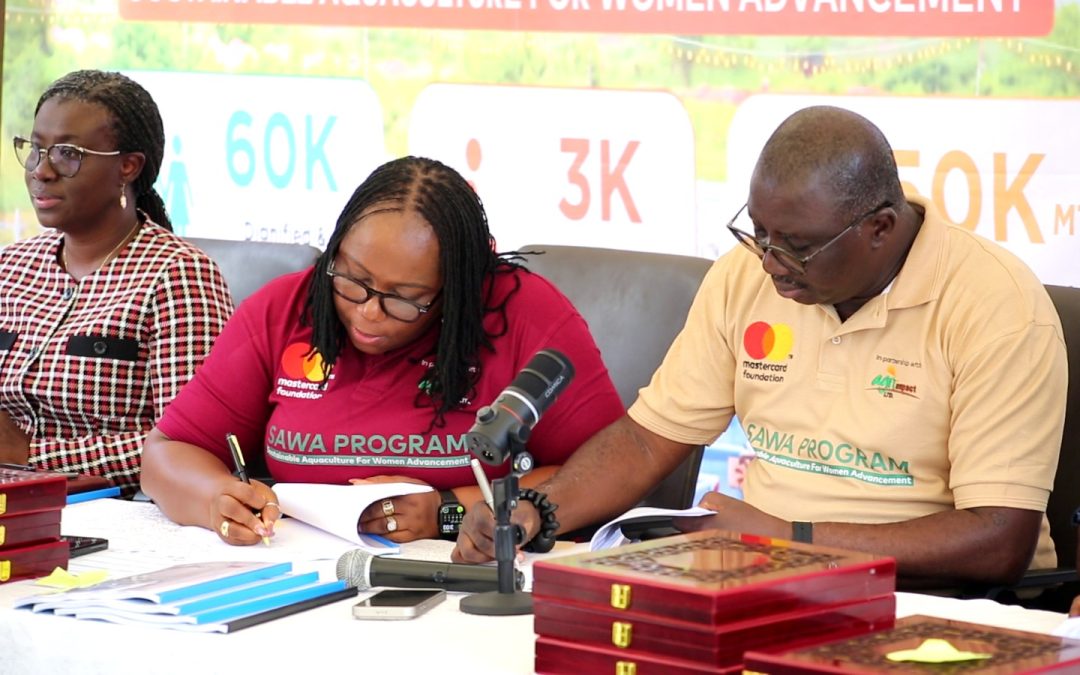
About 60,000 young women aged 18-35 are expected to benefit from jobs and business opportunities under a four-year aquaculture programme aimed at expanding Ghana’s tilapia and catfish production.Ghana Business News
The Sustainable Aquaculture for Women Advancement (SAWA) programme, led by Agri-Impact Ltd in partnership with the Mastercard Foundation, seeks to create jobs across the aquaculture value chain while increasing local fish production.
The initiative brings together public and private sector partners, including Newage Agric Solutions, AgroKings, the Fisheries Commission, TechnoServe, the Council for Scientific and Industrial Research (CSIR) and PricewaterhouseCoopers (PwC), Centre Enterprise Learning (CEL), TechnoServe, Naple Betta, Afrigem Global and Aglow Farms.
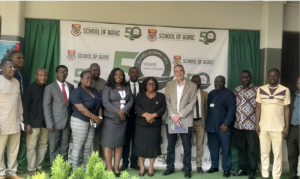
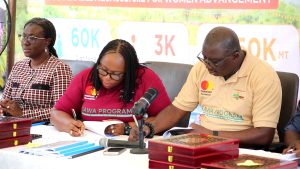
Speaking at the programme’s signing ceremony in Accra on November 2, 2026, Chief Executive Officer of Agri-Impact Ltd, Dr (h.c) Daniel Fahene Acquaye, said private sector involvement would be critical to providing participants with the infrastructure, technical expertise and market access needed to build sustainable businesses.
“This programme is centred on the young people. But you cannot support young people without having an anchor private sector that is sitting at the centre,” he said.
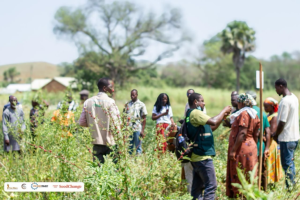
Dr Acquaye said some of the participants would be supported to establish businesses across the aquaculture value chain, including tilapia and catfish production, aggregation, processing, marketing and distribution.
A key partner, Newage Agric Solutions, is targeting a reduction of about 20 percent in fish feed costs by supporting local production of raw materials such as maize and soya beans.
Its Managing Partner, Roland Quaye, said feed accounts for between 60 and 70 per cent of aquaculture production costs, making affordability crucial to farmers’ profitability.
“Just by coming on board, you can be rest assured that we are going to reduce the feed cost of all aquaculture farmers by close to about 20 percent,” he said.
Abigail Obeng, a participant of the SAWA programme and Chief Executive Officer of Aquatic Clean Solutions, also welcomed the initiative, saying it would create opportunities for more women to establish businesses and achieve financial independence.
She said about 90 per cent of her workforce were women and expressed hope that the programme would encourage more unemployed graduates and school dropouts to venture into aquaculture.
“Enjoying our own money is sweet. We want young women to also have our own money to enjoy in life,” she said.
The programme is expected to boost domestic fish production, reduce reliance on imports and create sustainable livelihood opportunities, particularly for young women.