Agric Ministry defends timing of 2026 farm input distribution

Agric Ministry defends timing of 2026 farm input distribution

The Ministry of Food and Agriculture has pushed back against concerns over delays in the distribution of farm inputs for the 2026 farming season, insisting that the timing of deliveries is being aligned with the actual crop production cycle.

In a statement shared on Tuesday, July 21, the Ministry said distributing inputs too early could create risks including improper storage, diversion, and application outside the recommended period.

It explained that in northern Ghana, where the major farming season begins in May, fertiliser application typically takes place between late June and the end of July.

Ghana Sports Updates

The Ministry therefore said that inputs for the northern farming season were distributed within the recommended application window.

For southern Ghana, however, the focus is now shifting to the minor farming season, which begins in August, with distribution to targeted areas currently underway.

As part of the intervention, the Ministry says 40,000 bags of inorganic fertiliser have been allocated to the Peasant Farmers Association of Ghana for distribution to vulnerable farmers who may not have been covered under allocations channelled through Metropolitan, Municipal and District Assemblies.

The intervention also extends to selected irrigation schemes, where the Ministry says it has supplied inputs to support production during the lean season.

Vegetable producers, particularly tomato farmers in targeted production areas, have also received seeds and organic fertilisers, while farmers engaged in irrigated agriculture are expected to receive additional support under the government’s dry-season production initiative.

The Ministry says the interventions are targeted at vulnerable farmers and are designed to provide an emergency cushion against high production costs while boosting output and strengthening food security.

It adds that field officers are supervising the distribution and use of the inputs to ensure that the intended beneficiaries receive the required support.

The Ministry is also projecting an increase in agricultural production this year, citing favourable rainfall patterns and ongoing interventions.

It says the 2026 farming season targets could even be exceeded as government works to transform agriculture from subsistence activity into a more profitable and competitive enterprise.


Ghana’s golden opportunity: From raw commodities to global agro-industrial powerhouse

Ghana’s golden opportunity: From raw commodities to global agro-industrial powerhouse

Ghana stands at a critical juncture in its economic history. For decades, the nation has exported raw agricultural commodities while simultaneously importing finished food products at a significant premium. This paradox—exporting unprocessed wealth while spending billions on imports—represents both a profound economic inefficiency and an extraordinary opportunity. The Ghana Agro-Industrial Twinning & International Partnership Initiative represents a bold, strategically coherent response to this challenge, designed to catalyze a transformation that could reshape the nation’s economic trajectory and position it as a regional agro-industrial powerhouse.

The initiative is grounded in compelling economics. Ghana’s food import bill reached approximately US$3.25 billion in 2024, with over half of this figure attributable to products that could be domestically produced. Simultaneously, the nation processes less than 20% of its cocoa beans, under 10% of its cashew nuts, and only 30-40% of its shea nuts—a value-capture gap that costs the economy billions in lost value addition annually. The opportunity is equally clear: by fostering strategic partnerships between Ghanaian districts and international agro-processing investors, the nation can unlock an estimated US$1.5-3.0 billion in investment, create 50,000-100,000 direct and indirect jobs, and reduce annual import bills by US$300-600 million while expanding exports by US$500 million to US$1 billion annually.

What distinguishes this initiative from previous agricultural development efforts is its sophisticated architecture. Rather than pursuing generic agricultural development, the programme identifies specific commodities, specific districts, and specific international partners—matching Ghana’s comparative advantage in particular agro-ecological zones to the capital, technology, and market access of international investors. The result is a framework that is simultaneously ambitious in scale and pragmatic in execution, backed by robust government policy support and aligned with continental trade opportunities through the African Continental Free Trade Area (AfCFTA).

Ghana’s agricultural sector presents a striking paradox. The nation possesses world-class endowments in climate, soil, water, and biodiversity. Its farmers produce some of the world’s finest cocoa, cashew, shea, and other commodities. Yet the vast majority of value added through processing, branding, and distribution accrues not in Ghana, but in Switzerland, the Netherlands, Vietnam, and other processing hubs thousands of miles away.

The statistics are sobering. Ghana processes less than one-fifth of its cocoa beans domestically, exporting the remainder as raw beans for processing abroad. For cashew, the figure is even more stark: over 90% of Ghana’s raw nuts are exported to Vietnam and India for processing, with Ghana capturing only the farm-gate price while international processors capture the value-added margin—often 200-300% above the raw commodity price. Shea presents a similar pattern, with only 30-40% of production processed domestically despite installed capacity exceeding 300,000 tonnes annually.


The mirror image of this value-capture gap is Ghana’s persistent food import bill. In 2024, Ghana imported approximately US$3.25 billion worth of food and agricultural products, with grains, meat, fish, fats and oils, and sugar together accounting for over half of all food imports. Many of these products could be produced domestically: Ghana meets only a small fraction of domestic demand for poultry, approximately half of its milled-rice requirement, and roughly one-fifth of its palm-oil consumption from local production. Each percentage point recovered for domestic supply represents foreign exchange retained, a job created, and a margin captured at home.

The economic consequence is substantial. Ghana’s non-traditional exports grew 53% to US$2.4 billion in 2025, yet the nation remains heavily dependent on raw commodity exports. The structural transformation that would allow Ghana to capture value through processing, branding, and distribution—the path followed by successful agro-industrial economies from Brazil to Vietnam—remains incomplete. This is the opportunity that the Agro-Industrial Twinning Initiative directly addresses.

The Policy Environment: An Exceptional Moment

The timing of this initiative is fortuitous. The current Ghanaian administration has placed agriculture and agribusiness at the centre of its economic transformation plan, creating a policy environment that is unusually conducive to large-scale agro-processing investment.

The Agriculture for Economic Transformation Agenda (AETA) serves as the overarching framework, with the Feed Ghana Programme (2025-2028) as its flagship initiative. Launched by the President in April 2025 at Techiman in the Bono East Region, Feed Ghana prioritises a set of strategic commodity value chains and is explicitly designed not only to secure food but to “expand agro-industrial value chains,” reduce the import bill, and create jobs. The programme is backed by a US$10 billion commitment, representing one of the largest agricultural investments in Ghana’s history.

Within this framework, several instruments are directly relevant to inward agro-processing investment:

Agro-Industrial Zones and Agro-Production Enclaves. The Government is establishing zones in each region “based on their comparative advantage,” equipped with irrigation, warehousing, and road access, to host processing and allied industries and to attract private capital. These zones are designed to function as integrated ecosystems, connecting raw material production to processing to distribution.

Farmer Service Centres and Farm Banks. Service hubs supply mechanisation, inputs, and technical support to smallholders, while Farm Banks ease access to land and irrigation within designated agricultural zones—the raw-material base on which processors depend. This infrastructure addresses a critical constraint: international investors require reliable, concentrated supplies of consistent quality, which smallholder-dominated production systems have historically struggled to provide.


The 24-Hour Economy Policy. Now placed on a statutory footing through a dedicated Authority, this policy supports round-the-clock, three-shift operation in priority sectors. Agro-processing is named first among its target sectors, with participating firms offered time-of-use electricity tariffs, tax incentives, and financing support through the Ghana EXIM Bank. This represents a significant competitive advantage: the ability to operate continuously, with lower energy costs during off-peak hours, materially improves the economics of processing operations.

The “Big Push” and the Volta Economic Corridor. A US$10 billion infrastructure programme is rehabilitating roads and rail to open economic corridors and connect production zones to ports. The Volta Economic Corridor—

EXECUTIVE SUMMARY

Ghana stands at a critical juncture in its economic history. For decades, the nation has exported raw agricultural commodities while simultaneously importing finished food products at a significant premium. This paradox—exporting unprocessed wealth while spending billions on imports—represents both a profound economic inefficiency and an extraordinary opportunity. The Ghana Agro-Industrial Twinning & International Partnership Initiative represents a bold, strategically coherent response to this challenge, designed to catalyze a transformation that could reshape the nation’s economic trajectory and position it as a regional agro-industrial powerhouse.

The initiative is grounded in compelling economics. Ghana’s food import bill reached approximately US$3.25 billion in 2024, with over half of this figure attributable to products that could be domestically produced. Simultaneously, the nation processes less than 20% of its cocoa beans, under 10% of its cashew nuts, and only 30-40% of its shea nuts—a value-capture gap that costs the economy billions in lost value addition annually. The opportunity is equally clear: by fostering strategic partnerships between Ghanaian districts and international agro-processing investors, the nation can unlock an estimated US$1.5-3.0 billion in investment, create 50,000-100,000 direct and indirect jobs, and reduce annual import bills by US$300-600 million while expanding exports by US$500 million to US$1 billion annually.

What distinguishes this initiative from previous agricultural development efforts is its sophisticated architecture. Rather than pursuing generic agricultural development, the programme identifies specific commodities, specific districts, and specific international partners—matching Ghana’s comparative advantage in particular agro-ecological zones to the capital, technology, and market access of international investors. The result is a framework that is simultaneously ambitious in scale and pragmatic in execution, backed by robust government policy support and aligned with continental trade opportunities through the African Continental Free Trade Area (AfCFTA).

Ghana’s agricultural sector presents a striking paradox. The nation possesses world-class endowments in climate, soil, water, and biodiversity. Its farmers produce some of the world’s finest cocoa, cashew, shea, and other commodities. Yet the vast majority of value added through processing, branding, and distribution accrues not in Ghana, but in Switzerland, the Netherlands, Vietnam, and other proce

The statistics are sobering. Ghana processes less than one-fifth of its cocoa beans domestically, exporting the remainder as raw beans for processing abroad. For cashew, the figure is even more stark: over 90% of Ghana’s raw nuts are exported to Vietnam and India for processing, with Ghana capturing only the farm-gate price while international processors capture the value-added margin—often 200-300% above the raw commodity price. Shea presents a similar pattern, with only 30-40% of production processed domestically despite installed capacity exceeding 300,000 tonnes annually.

The mirror image of this value-capture gap is Ghana’s persistent food import bill. In 2024, Ghana imported approximately US$3.25 billion worth of food and agricultural products, with grains, meat, fish, fats and oils, and sugar together accounting for over half of all food imports. Many of these products could be produced domestically: Ghana meets only a small fraction of domestic demand for poultry, approximately half of its milled-rice requirement, and roughly one-fifth of its palm-oil consumption from local production. Each percentage point recovered for domestic supply represents foreign exchange retained, a job created, and a margin captured at home.

The economic consequence is substantial. Ghana’s non-traditional exports grew 53% to US$2.4 billion in 2025, yet the nation remains heavily dependent on raw commodity exports. The structural transformation that would allow Ghana to capture value through processing, branding, and distribution—the path followed by successful agro-industrial economies from Brazil to Vietnam—remains incomplete. This is the opportunity that the Agro-Industrial Twinning Initiative directly addresses.

The timing of this initiative is fortuitous. The current Ghanaian administration has placed agriculture and agribusiness at the centre of its economic transformation plan, creating a policy environment that is unusually conducive to large-scale agro-processing investment.

The Agriculture for Economic Transformation Agenda (AETA) serves as the overarching framework, with the Feed Ghana Programme (2025-2028) as its flagship initiative. Launched by the President in April 2025 at Techiman in the Bono East Region, Feed Ghana prioritises a set of strategic commodity value chains and is explicitly designed not only to secure food but to “expand agro-industrial value chains,” reduce the import bill, and create jobs. The programme is backed by a US$10 billion commitment, representing one of the largest agricultural investments in Ghana’s history.

Agro-Industrial Zones and Agro-Production Enclaves. The Government is establishing zones in each region “based on their comparative advantage,” equipped with irrigation, warehousing, and road access, to host processing and allied industries and to attract private capital. These zones are designed to function as integrated ecosystems, connecting raw material production to processing to distribution.

Farmer Service Centres and Farm Banks. Service hubs supply mechanisation, inputs, and technical support to smallholders, while Farm Banks ease access to land and irrigation within designated agricultural zones—the raw-material base on which processors depend. This infrastructure addresses a critical constraint: international investors require reliable, concentrated supplies of consistent quality, which smallholder-dominated production systems have historically struggled to provide.

The 24-Hour Economy Policy. Now placed on a statutory footing through a dedicated Authority, this policy supports round-the-clock, three-shift operation in priority sectors. Agro-processing is named first among its target sectors, with participating firms offered time-of-use electricity tariffs, tax incentives, and financing support through the Ghana EXIM Bank. This represents a significant competitive advantage: the ability to operate continuously, with lower energy costs during off-peak hours, materially improves the economics of processing operations.

The “Big Push” and the Volta Economic Corridor. A US$10 billion infrastructure programme is rehabilitating roads and rail to open economic corridors and connect production zones to ports. The Volta Economic Corridor—a vast development zone along the Volta River—is being readied to host clusters of agro-industrial parks, power, and export-focused processing. This represents a transformative investment in the enabling infrastructure that agro-processing requires.

Collectively, these initiatives create a policy environment that is exceptionally supportive of large-scale agro-processing investment. Ghana is not simply offering tax breaks; it is constructing an entire ecosystem designed to support industrial-scale agricultural processing.

Africans & Diaspora

Ghana’s processed agro-products are positioned to benefit from expanding preferential market access at precisely the moment when the initiative is being launched. The African Continental Free Trade Area (AfCFTA), which entered into force in January 2021 and is progressively operationalizing, encompasses over 50 African states and represents a single market of 1.3 billion people with a combined GDP of approximately US$3.4 trillion.

The significance of AfCFTA for Ghana’s agro-industrial strategy cannot be overstated. The agreement is progressively removing tariffs across the continent, creating unprecedented market access for processed and branded goods. Critically, AfCFTA rewards transformation, not extraction: raw commodities face tariffs and quotas, while processed goods benefit from preferential access. This creates a powerful incentive structure for value addition.

Beyond Africa, Ghana’s processed agro-products face an expanding set of preferential market windows. Growing demand in the European Union and other high-value markets for traceable, certified, and deforestation-free products creates premium opportunities for Ghanaian exports. The EU Deforestation Regulation, which enters into force at the end of 2025, explicitly rewards products from certified, deforestation-free supply chains—a category in which Ghana, with its strong environmental governance frameworks, is well-positioned to compete.

EXECUTIVE SUMMARY

Ghana stands at a critical juncture in its economic history. For decades, the nation has exported raw agricultural commodities while simultaneously importing finished food products at a significant premium. This paradox—exporting unprocessed wealth while spending billions on imports—represents both a profound economic inefficiency and an extraordinary opportunity. The Ghana Agro-Industrial Twinning & International Partnership Initiative represents a bold, strategically coherent response to this challenge, designed to catalyze a transformation that could reshape the nation’s economic trajectory and position it as a regional agro-industrial powerhouse.

The initiative is grounded in compelling economics. Ghana’s food import bill reached approximately US$3.25 billion in 2024, with over half of this figure attributable to products that could be domestically produced. Simultaneously, the nation processes less than 20% of its cocoa beans, under 10% of its cashew nuts, and only 30-40% of its shea nuts—a value-capture gap that costs the economy billions in lost value addition annually. The opportunity is equally clear: by fostering strategic partnerships between Ghanaian districts and international agro-processing investors, the nation can unlock an estimated US$1.5-3.0 billion in investment, create 50,000-100,000 direct and indirect jobs, and reduce annual import bills by US$300-600 million while expanding exports by US$500 million to US$1 billion annually.

What distinguishes this initiative from previous agricultural development efforts is its sophisticated architecture. Rather than pursuing generic agricultural development, the programme identifies specific commodities, specific districts, and specific international partners—matching Ghana’s comparative advantage in particular agro-ecological zones to the capital, technology, and market access of international investors. The result is a framework that is simultaneously ambitious in scale and pragmatic in execution, backed by robust government policy support and aligned with continental trade opportunities through the African Continental Free Trade Area (AfCFTA).

Ghana’s agricultural sector presents a striking paradox. The nation possesses world-class endowments in climate, soil, water, and biodiversity. Its farmers produce some of the world’s finest cocoa, cashew, shea, and other commodities. Yet the vast majority of value added through processing, branding, and distribution accrues not in Ghana, but in Switzerland, the Netherlands, Vietnam, and other processing hubs thousands of miles away.

The statistics are sobering. Ghana processes less than one-fifth of its cocoa beans domestically, exporting the remainder as raw beans for processing abroad. For cashew, the figure is even more stark: over 90% of Ghana’s raw nuts are exported to Vietnam and India for processing, with Ghana capturing only the farm-gate price while international processors capture the value-added margin—often 200-300% above the raw commodity price. Shea presents a similar pattern, with only 30-40% of production processed domestically despite installed capacity exceeding 300,000 tonnes annually.

The mirror image of this value-capture gap is Ghana’s persistent food import bill. In 2024, Ghana imported approximately US$3.25 billion worth of food and agricultural products, with grains, meat, fish, fats and oils, and sugar together accounting for over half of all food imports. Many of these products could be produced domestically: Ghana meets only a small fraction of domestic demand for poultry, approximately half of its milled-rice requirement, and roughly one-fifth of its palm-oil consumption from local production. Each percentage point recovered for domestic supply represents foreign exchange retained, a job created, and a margin captured at home.

The economic consequence is substantial. Ghana’s non-traditional exports grew 53% to US$2.4 billion in 2025, yet the nation remains heavily dependent on raw commodity exports. The structural transformation that would allow Ghana to capture value through processing, branding, and distribution—the path followed by successful agro-industrial economies from Brazil to Vietnam—remains incomplete. This is the opportunity that the Agro-Industrial Twinning Initiative directly addresses.

The Policy Environment: An Exceptional Moment

The timing of this initiative is fortuitous. The current Ghanaian administration has placed agriculture and agribusiness at the centre of its economic transformation plan, creating a policy environment that is unusually conducive to large-scale agro-processing investment.

The Agriculture for Economic Transformation Agenda (AETA) serves as the overarching framework, with the Feed Ghana Programme (2025-2028) as its flagship initiative. Launched by the President in April 2025 at Techiman in the Bono East Region, Feed Ghana prioritises a set of strategic commodity value chains and is explicitly designed not only to secure food but to “expand agro-industrial value chains,” reduce the import bill, and create jobs. The programme is backed by a US$10 billion commitment, representing one of the largest agricultural investments in Ghana’s history.

Within this framework, several instruments are directly relevant to inward agro-processing investment:

Agro-Industrial Zones and Agro-Production Enclaves. The Government is establishing zones in each region “based on their comparative advantage,” equipped with irrigation, warehousing, and road access, to host processing and allied industries and to attract private capital. These zones are designed to function as integrated ecosystems, connecting raw material production to processing to distribution.

Farmer Service Centres and Farm Banks. Service hubs supply mechanisation, inputs, and technical support to smallholders, while Farm Banks ease access to land and irrigation within designated agricultural zones—the raw-material base on which processors depend. This infrastructure addresses a critical constraint: international investors require reliable, concentrated supplies of consistent quality, which smallholder-dominated production systems have historically struggled to provide.

The 24-Hour Economy Policy. Now placed on a statutory footing through a dedicated Authority, this policy supports round-the-clock, three-shift operation in priority sectors. Agro-processing is named first among its target sectors, with participating firms offered time-of-use electricity tariffs, tax incentives, and financing support through the Ghana EXIM Bank. This represents a significant competitive advantage: the ability to operate continuously, with lower energy costs during off-peak hours, materially improves the economics of processing operations.

The “Big Push” and the Volta Economic Corridor. A US$10 billion infrastructure programme is rehabilitating roads and rail to open economic corridors and connect production zones to ports. The Volta Economic Corridor—a vast development zone along the Volta River—is being readied to host clusters of agro-industrial parks, power, and export-focused processing. This represents a transformative investment in the enabling infrastructure that agro-processing requires.

Collectively, these initiatives create a policy environment that is exceptionally supportive of large-scale agro-processing investment. Ghana is not simply offering tax breaks; it is constructing an entire ecosystem designed to support industrial-scale agricultural processing.

Ghana’s processed agro-products are positioned to benefit from expanding preferential market access at precisely the moment when the initiative is being launched. The African Continental Free Trade Area (AfCFTA), which entered into force in January 2021 and is progressively operationalizing, encompasses over 50 African states and represents a single market of 1.3 billion people with a combined GDP of approximately US$3.4 trillion.


The significance of AfCFTA for Ghana’s agro-industrial strategy cannot be overstated. The agreement is progressively removing tariffs across the continent, creating unprecedented market access for processed and branded goods. Critically, AfCFTA rewards transformation, not extraction: raw commodities face tariffs and quotas, while processed goods benefit from preferential access. This creates a powerful incentive structure for value addition.

Beyond Africa, Ghana’s processed agro-products face an expanding set of preferential market windows. Growing demand in the European Union and other high-value markets for traceable, certified, and deforestation-free products creates premium opportunities for Ghanaian exports. The EU Deforestation Regulation, which enters into force at the end of 2025, explicitly rewards products from certified, deforestation-free supply chains—a category in which Ghana, with its strong environmental governance frameworks, is well-positioned to compete.

A broad trend among major economies towards duty-free treatment for African exports is steadily widening the outlets open to Ghanaian goods. The common thread across all these market windows is that each rewards transformation, not extraction. As with much of Africa’s trade, Ghana’s exports remain dominated by unprocessed raw materials, so the full value of improved market access is realised only when paired with domestic processing capacity—so that the goods crossing into these markets are finished and branded rather than raw. Matching Ghana’s comparative advantage with international capital, technology, and offtake is the most direct route to that outcome.

Ghana’s golden opportunity: From raw commodities to global agro-industrial powerhouse

EXECUTIVE SUMMARY

Ghana stands at a critical juncture in its economic history. For decades, the nation has exported raw agricultural commodities while simultaneously importing finished food products at a significant premium. This paradox—exporting unprocessed wealth while spending billions on imports—represents both a profound economic inefficiency and an extraordinary opportunity. The Ghana Agro-Industrial Twinning & International Partnership Initiative represents a bold, strategically coherent response to this challenge, designed to catalyze a transformation that could reshape the nation’s economic trajectory and position it as a regional agro-industrial powerhouse.

The initiative is grounded in compelling economics. Ghana’s food import bill reached approximately US$3.25 billion in 2024, with over half of this figure attributable to products that could be domestically produced. Simultaneously, the nation processes less than 20% of its cocoa beans, under 10% of its cashew nuts, and only 30-40% of its shea nuts—a value-capture gap that costs the economy billions in lost value addition annually. The opportunity is equally clear: by fostering strategic partnerships between Ghanaian districts and international agro-processing investors, the nation can unlock an estimated US$1.5-3.0 billion in investment, create 50,000-100,000 direct and indirect jobs, and reduce annual import bills by US$300-600 million while expanding exports by US$500 million to US$1 billion annually.

What distinguishes this initiative from previous agricultural development efforts is its sophisticated architecture. Rather than pursuing generic agricultural development, the programme identifies specific commodities, specific districts, and specific international partners—matching Ghana’s comparative advantage in particular agro-ecological zones to the capital, technology, and market access of international investors. The result is a framework that is simultaneously ambitious in scale and pragmatic in execution, backed by robust government policy support and aligned with continental trade opportunities through the African Continental Free Trade Area (AfCFTA).

Ghana’s agricultural sector presents a striking paradox. The nation possesses world-class endowments in climate, soil, water, and biodiversity. Its farmers produce some of the world’s finest cocoa, cashew, shea, and other commodities. Yet the vast majority of value added through processing, branding, and distribution accrues not in Ghana, but in Switzerland, the Netherlands, Vietnam, and other processing hubs thousands of miles away.

The statistics are sobering. Ghana processes less than one-fifth of its cocoa beans domestically, exporting the remainder as raw beans for processing abroad. For cashew, the figure is even more stark: over 90% of Ghana’s raw nuts are exported to Vietnam and India for processing, with Ghana capturing only the farm-gate price while international processors capture the value-added margin—often 200-300% above the raw commodity price. Shea presents a similar pattern, with only 30-40% of production processed domestically despite installed capacity exceeding 300,000 tonnes annually.

The mirror image of this value-capture gap is Ghana’s persistent food import bill. In 2024, Ghana imported approximately US$3.25 billion worth of food and agricultural products, with grains, meat, fish, fats and oils, and sugar together accounting for over half of all food imports. Many of these products could be produced domestically: Ghana meets only a small fraction of domestic demand for poultry, approximately half of its milled-rice requirement, and roughly one-fifth of its palm-oil consumption from local production. Each percentage point recovered for domestic supply represents foreign exchange retained, a job created, and a margin captured at home.

The economic consequence is substantial. Ghana’s non-traditional exports grew 53% to US$2.4 billion in 2025, yet the nation remains heavily dependent on raw commodity exports. The structural transformation that would allow Ghana to capture value through processing, branding, and distribution—the path followed by successful agro-industrial economies from Brazil to Vietnam—remains incomplete. This is the opportunity that the Agro-Industrial Twinning Initiative directly addresses.

The timing of this initiative is fortuitous. The current Ghanaian administration has placed agriculture and agribusiness at the centre of its economic transformation plan, creating a policy environment that is unusually conducive to large-scale agro-processing investment.

The Agriculture for Economic Transformation Agenda (AETA) serves as the overarching framework, with the Feed Ghana Programme (2025-2028) as its flagship initiative. Launched by the President in April 2025 at Techiman in the Bono East Region, Feed Ghana prioritises a set of strategic commodity value chains and is explicitly designed not only to secure food but to “expand agro-industrial value chains,” reduce the import bill, and create jobs. The programme is backed by a US$10 billion commitment, representing one of the largest agricultural investments in Ghana’s history.

Africans & Diaspora Within this framework, several instruments are directly relevant to inward agro-processing investment:

Agro-Industrial Zones and Agro-Production Enclaves. The Government is establishing zones in each region “based on their comparative advantage,” equipped with irrigation, warehousing, and road access, to host processing and allied industries and to attract private capital. These zones are designed to function as integrated ecosystems, connecting raw material production to processing to distribution.

Farmer Service Centres and Farm Banks. Service hubs supply mechanisation, inputs, and technical support to smallholders, while Farm Banks ease access to land and irrigation within designated agricultural zones—the raw-material base on which processors depend. This infrastructure addresses a critical constraint: international investors require reliable, concentrated supplies of consistent quality, which smallholder-dominated production systems have historically struggled to provide.

The 24-Hour Economy Policy. Now placed on a statutory footing through a dedicated Authority, this policy supports round-the-clock, three-shift operation in priority sectors. Agro-processing is named first among its target sectors, with participating firms offered time-of-use electricity tariffs, tax incentives, and financing support through the Ghana EXIM Bank. This represents a significant competitive advantage: the ability to operate continuously, with lower energy costs during off-peak hours, materially improves the economics of processing operations.

The “Big Push” and the Volta Economic Corridor. A US$10 billion infrastructure programme is rehabilitating roads and rail to open economic corridors and connect production zones to ports. The Volta Economic Corridor—a vast development zone along the Volta River—is being readied to host clusters of agro-industrial parks, power, and export-focused processing. This represents a transformative investment in the enabling infrastructure that agro-processing requires.

Collectively, these initiatives create a policy environment that is exceptionally supportive of large-scale agro-processing investment. Ghana is not simply offering tax breaks; it is constructing an entire ecosystem designed to support industrial-scale agricultural processing.

Africans & Diaspora

Ghana’s processed agro-products are positioned to benefit from expanding preferential market access at precisely the moment when the initiative is being launched. The African Continental Free Trade Area (AfCFTA), which entered into force in January 2021 and is progressively operationalizing, encompasses over 50 African states and represents a single market of 1.3 billion people with a combined GDP of approximately US$3.4 trillion.

The significance of AfCFTA for Ghana’s agro-industrial strategy cannot be overstated. The agreement is progressively removing tariffs across the continent, creating unprecedented market access for processed and branded goods. Critically, AfCFTA rewards transformation, not extraction: raw commodities face tariffs and quotas, while processed goods benefit from preferential access. This creates a powerful incentive structure for value addition.

Beyond Africa, Ghana’s processed agro-products face an expanding set of preferential market windows. Growing demand in the European Union and other high-value markets for traceable, certified, and deforestation-free products creates premium opportunities for Ghanaian exports. The EU Deforestation Regulation, which enters into force at the end of 2025, explicitly rewards products from certified, deforestation-free supply chains—a category in which Ghana, with its strong environmental governance frameworks, is well-positioned to compete.

A broad trend among major economies towards duty-free treatment for African exports is steadily widening the outlets open to Ghanaian goods. The common thread across all these market windows is that each rewards transformation, not extraction. As with much of Africa’s trade, Ghana’s exports remain dominated by unprocessed raw materials, so the full value of improved market access is realised only when paired with domestic processing capacity—so that the goods crossing into these markets are finished and branded rather than raw. Matching Ghana’s comparative advantage with international capital, technology, and offtake is the most direct route to that outcome.

PART TWO: THE STRATEGIC FRAMEWORK

Ghana’s Agro-Ecological Zones: The Foundation of Strategy

Ghana is conventionally divided into six agro-ecological zones, distinguished by rainfall, temperature, soils, and terrain, which together determine what each part of the country can grow and process competitively. Annual rainfall ranges from around 800 mm in the dry north-east and along the coast to over 2,000 mm in the wet south-west. In broad terms, tree crops thrive in the forest zones of the south, while cereals, legumes, and livestock dominate the transitional and savannah zones of the centre and north.

Africans & Diaspora

GES releases funds for perishables items for second and third-year SHS, SHTS students

GES releases funds for perishables items for second and third-year SHS, SHTS students

The Ghana Education Service (GES) has released funds for the procurement of perishable food items for Senior High Schools (SHSs) and Senior High Technical Schools (SHTSs) to cater for second and third-year students.

In a letter dated July 15, 2026, and addressed to all Regional Directors of Education, GES announced that payments covering the period March 1 to September 4, 2026, have been transferred to the accounts of the various second-cycle schools.

The directive, signed by the Deputy Director-General (Quality and Assurance), Dr. Munawaru Issahaque, on behalf of the Director-General, instructed Regional Directors to notify heads of SHSs and SHTSs that the funds are now available.

According to the Service, the funds are specifically intended for the purchase of perishable food items for SHS 2 and SHS 3 students.

GES further directed heads of beneficiary schools to submit official receipts for the funds received to the Director-General through their respective Regional Accountants.

The Service expressed confidence in the cooperation of Regional Directors and school heads to ensure the smooth implementation of the directive.

Parliament approves $300m World Bank loan for secondary education transformation project

Parliament approves $300m World Bank loan for secondary education transformation project

The Credit Facility Agreement is between the Government of Ghana (represented by the Ministry of Finance) and the International Development Association (IDA) of the World Bank Group for an amount of US$300,000,000 to finance the Secondary Education Transformation for Access.

The Government of Ghana is also required to provide counterpart funding amounting to US$31 million, to be released in phases during project implementation.

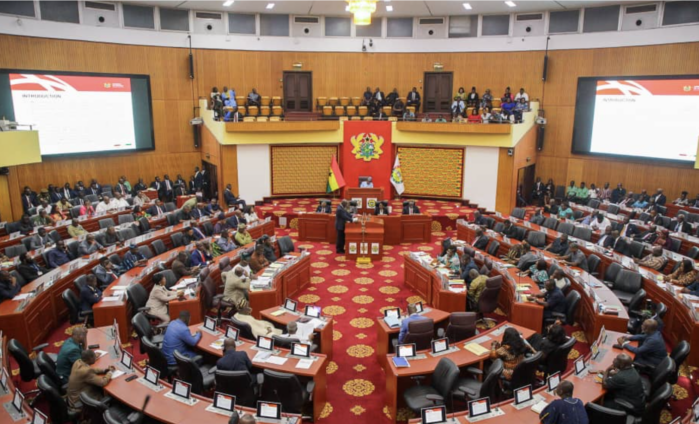
Relevance and results for the project was presented to the House on Thursday, July 16, 2026 in accordance with Article 181(2) of the 1992 Constitution.

The Credit Facility Agreement was subsequently referred to the Finance Committee for consideration and report in accordance with Order 226 of the Standing Orders of Parliament.

The Project comprises four main components:

i) Increasing equitable access to secondary education through rehabilitation, upgrading and construction of secondary schools, including completion of abandoned E-Block schools.

ii. Improving the quality and relevance of secondary education through teacher professional development, curriculum reforms, digital skills development, entrepreneurship education and stronger industry partnerships.

iii. Strengthening education systems through improved education management information systems, project monitoring and evaluation, communications, gender- based violence prevention and performance-based reforms.

iv. Providing a Contingent Emergency Response Component to enable rapid response to eligible emergencies.

The objective of the US$300 million IDA credit facility is to finance the Secondary Education Transformation for Access, Relevance, and Results for Jobs (STARR-J) Project.

Specifically, the facility aims to increase equitable access to secondary education and eliminate the double-track system; improve the quality and labour-market relevance of secondary and TVET programmes; and strengthen education systems, project management. communication, monitoring, evaluation and evidence-based decision-making.

Overall, it seeks to improve the quality, equity and relevance of secondary education through investments in school infrastructure, teaching quality and workforce readiness and also mainstream all students in order to end the current double-track system.

The Finance Committee in Parliament after considering the report on the loan facility accordingly recommended to the House to approve the Credit Facility Agreement between the Government of the Republic of Ghana (represented by the Ministry of Finance) and the International Development Association (IDA) of the World Bank Group.

Ghana government urged to tighten food imports to protect local farmers

Ghana government urged to tighten food imports to protect local farmers

Dr Charles Nyaaba, the Chief Executive Officer of the Upper East Farmers’ Cooperative Credit Union, has urged the government to tighten the importation of food commodities, particularly rice, to create a ready market for locally produced crops and protect Ghanaian farmers.

He said the influx of imported food products, much of which entered the country through unapproved border routes, was undermining local agricultural production by flooding markets and leaving farmers unable to sell their produce.

Speaking in an interview with the Ghana News Agency (GNA) in Bolgatanga, Dr Nyaaba expressed concern over the growing frustration among farmers who had invested heavily in production but could not find buyers.

“Our number one recommendation is that government should stop the influx of illegally imported rice that comes through unapproved borders. That is the major cause of the market challenges confronting our farmers,” he said.

He noted that despite government efforts through the National Food Buffer Stock Company (NAFCO) to purchase maize and rice from farmers, the quantities procured represented less than 10 per cent of the available produce.

“Government has started buying maize and rice from some farmer groups, and I commend that effort, but the quantity being purchased is highly insignificant compared to what is available,” he said.

Dr Nyaaba observed that large quantities of rice and maize remained in warehouses across farming communities because buyers were unavailable, discouraging many farmers from expanding production.

“I have travelled to farming communities in Bongo, Sandema and other districts, and you still find warehouses full of rice. Some farmers have even brought their produce outside to dry because it has remained unsold for so long,” he said.

He explained that the inability to market produce had become one of the biggest disincentives to farming, saying farmers questioned the value of increasing production when they could not recover their investments.

“Farmers are asking, ‘If I receive fertiliser, produce and still cannot sell, what is the essence?’ Agriculture is not just about production; it is about producing and earning income,” he said.

Dr Nyaaba urged government to strengthen border controls to curb the influx of imported food commodities, some of which, he claimed, entered the country illegally and in some cases had expired.

“If we stop the influx of these commodities, it will automatically create a huge market for local farmers. Once farmers are assured of a market, their enthusiasm to produce will increase,” he said.

He also suggested that government should regulate food imports based on the country’s production deficit rather than allowing unrestricted importation.

According to him, if local rice production fell short of national consumption requirements, government should only issue import licences to bridge the deficit while protecting local producers from unfair competition.

Drawing comparisons with neighbouring Burkina Faso, Dr Nyaaba said authorities there had implemented measures to protect local producers by restricting imports, a move he believed had contributed to the country’s agricultural growth.

He called on government to emulate such measures and ensure policies promoted domestic production and improved incomes for farmers.

Dr Nyaaba also urged the government to fulfil its commitment to source more food for the School Feeding Programme from local farmers, saying increased local procurement would significantly reduce post-harvest losses and stimulate agricultural production.

Source: GNA