Ghana’s food security situation has officially entered a crisis phase following a dry spell in eight of the country’s 16 regions.
In the middle of what is supposed to be the major rainy season, several parts of the country have had little to no rainfall over the last two months. “This situation prevented some farmers from preparing their farmlands for production while those who were able to prepare their land could not sow due to the absence of moisture
The farmers who took advantage of the early rains in June have experienced severe water stress on their farms.
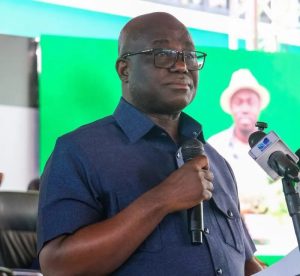
Most of the crops, especially maize and groundnut, have reached their critical wilting points,” Minister for Food and Agriculture Dr. Bryan Acheampong told a media briefing in Accra which he addressed alongside the Ministers of Finance and Defence.
At a place like Abease in the Bono Region, there was no rainfall between July 10 and Aug. 12, a continuous 5-week period of dryness. The Upper West Region has had only 575mm of rainfall this year compared to 982mm by the same period last year, an almost 50% reduction.
These droughts triggered by climate change are cyclical incidents that the nation grapples with repeatedly. I covered a similar dry spell situation in 2015 which we documented in this JoyNews Hotline documentary titled, LOST HARVEST.
At the ministers’ press briefing, a journalist with the Daily Searchlight Newspaper Nana Poku asked this very thoughtful question; “What long-term solutions, policies or programs are you putting in place to deal with this, because it is going to recur, so we will not come back and be asking for alms?” Just like many fellow Ghanaian citizens, I have some ideas on what should be done going forward and that prompted me to write this article.
But the truth is that these ideas are nothing new. Those in authority know what should be done but just don’t have the political will to act. I will still repeat them here.
But before I get to those, let’s lay bare the severity of the challenge at hand.What exactly is happening?871,000 hectares of cultivated farmlands across the country have been destroyed as a result of the dry spell as of Aug. 20, according to preliminary data from the Ministry of Food and Agriculture.
These farmlands belong to 435,872 farmers who invested a cumulative 3.5 billion Ghana Cedis (US$220 million) in their farming activities and were expecting to generate 10.4 billion Ghana Cedis (US$660 million) in revenue by the end of the farming season. But all that has been lost to the dry spell.
That 10.4 billion Ghana Cedis loss constitutes 5% of Ghana’s agricultural sector GDP. Farmers growing rice, yam, sorghum, millet, soybean, groundnut and yam have all been impacted. But that is not the full picture.
The government says almost one million (928,500) farmers cropping 1.8 million hectares of farmlands are at risk of having their crops destroyed. These farmers have invested 7.4 billion Ghana Cedis (US$471 million) in their farming activities since the start of the season and were expecting 22.2 billion Ghana Cedis (US$1.5 billion) in revenues.
They are at risk of losing it all. This projected loss is equivalent to 10% of Ghana’s agricultural GDP.
The government says it has been advised by experts that the dry spell will end soon. It will thus launch a replanting support program to provide farmers with fast-maturing seeds and other inputs, so they plant in the minor rainy season in the southern part of the country from September.
In the meantime, the government has banned the export of grains including maize, rice, and soybean until the situation normalizes.
The government says it will tap into the ECOWAS Grain Reserve and partner with the private sector to import 300,000 metric tons of maize and 150,000 metric tons of rice to provide food support to vulnerable farmers who have lost their crops. An additional 26,000 metric tons of poultry feed will be imported.
Discover more
Agriculture in Ghana
News
Farmer
The government says it will give about 928,523 farmers a cash cushioning amount of 1,000 Ghana Cedis (US$64) per hectare as partial cover for their lost investment.
The Finance Minister Dr. Mohammed Amin Adam says the government is raising 8 billion Ghana Cedis (US$500 million) to fund a crisis response program.
The government has already secured 2.4 billion Ghana Cedis (US$155 million) from development partners for the program and 2.5 billion Ghana Cedis (US$60 million) has been raised internally, whiles efforts continue to raise the rest.
So, how did we get here in the first place? And what should be done so we don’t run into worse food insecurity challenges when the next drought strikes?
Here are four recycled ideas.
Need for strategic food stocks
First, does it even make sense that as a nation, we have no strategic grain stocks and now find ourselves scrambling to import grains as an emergency measure after being hit with just two months of a dry spell?
The finance minister acknowledged at the press briefing that the imports will likely impact the country’s already weak Cedis.
As a country that’s highly dependent on agriculture and with our history of vulnerability to climatic fluctuations, there is no justification that we do not have strategic grain stocks to serve as a buffer against unexpected shortages.
One of the mandates of the National Food Buffer Stock Company (NAFCO) established in 2010 is to purchase surplus cereals from farmers at the end of farming seasons and release them during lean seasons to help manage price volatility.
If NAFCO was living up to its mandate, its stores shouldn’t be dry by now and should at least have some stocks of grains to push onto the local market.
NAFCO holds strategic food reserve stocks for the Economic Community of West African States (ECOWAS) under its Regional Food Security Reserve Program. Amazingly, the government has not seen the need to use NAFCO to do the same for Ghana so there are grains to rely on in times like this.
Going forward, the government must resource institutions like NAFCO to construct and maintain more grain storage facilities. Every nation must know that there will once in a while come tough times like this when the weather fails.
We need more storage facilities and an efficient distribution system to quickly release reserves to areas in need during emergencies.
We probably need a parliament-approved regulation to back the implementation of policies governing the management, maintenance, and usage of food stock reserves to ensure governments take it seriously.
Improve irrigation facilities
Ghana has had an Irrigation Development Authority since 1977 with a mandate to develop and construct small-scale irrigation systems for farmers.
Although it is under the supervision of the Ministry of Food and Agriculture, GIDA has a broad mandate and can borrow money from the open market for its development programs.
Unfortunately, after almost 50 years of establishment, and despite the countless natural water bodies available across the country, only about 3% of farmlands in Ghana are irrigated.
As the Minister for Food and Agriculture said in this recent World Bank article, “a lack of access to irrigation stifles the resilience of agriculture in Ghana.” The article co-authored with various World Bank officials observed; “Farmers bear the brunt of shifting weather patterns and extreme events as the farming system is predominantly rain-fed.” Relying solely on rain-fed agriculture for our food production in the face of increasing climate variability and unpredictable weather patterns leaves our food systems vulnerable.
Development and expansion of irrigation systems that can ensure a consistent water supply for crops regardless of rainfall patterns, can reduce the risks associated with droughts.
Additionally, integrating advanced techniques like soil moisture management and rainwater harvesting can further mitigate the risks associated with erratic weather.
Sadly, the much-touted One-Village One-Dam initiative the current administration rolled out in 2017 has become a ‘snafu’. If the promised dams were available, the dry spell would not be this bad because the dams would have held some water following the first rains.
Investment in seed systems
Seeds remain the fundamental building blocks of agriculture. They are the primary source from which plants grow. If you get every aspect of production right, have the appropriate irrigation facilities, use the right fertilizers, and do not use quality seeds, nothing much will be gained from the field. But if you grow quality seeds that have been improved to be drought tolerant, it is possible to still have okay yields even in the face of drought spells.
Seeds that are bred for specific environmental conditions, such as drought-tolerant, water-use efficient, and heat-resistant seeds, can help farmers adapt to climate change and its associated challenges. It matters less whether the seeds are open-pollinated varieties, hybrids, genetically modified organisms, or whatever.
Farmers simply need improved seeds that are climate resilient and perform better than landraces so that even in instances when rains fail, there will still be something to salvage on the fields. Statistics show less than 30% of farmers in the country grow improved seed varieties and government needs to take steps to help boost the numbers.
Unfortunately, state institutions like the Council for Scientific and Industrial Research, universities, and other research institutions developing improved seed varieties are not properly funded by the government.
Appropriate seed distribution systems are also non-existent.
This must change going forward if we will have the capacity to survive future drought spells. For maximum impact, these improved seeds should be coupled with supportive policies, effective extension services, and ongoing research to address the specific needs of different regions.
Let’s plant more trees and protect existing ones
This is a point I won’t belabour because it is a well-known fact that trees are integral to ensuring climate resilience. They have the ability to preserve climates and provide a cooling environment even in moments of dry spells to ensure productive farming.
Trees can soak up excess rainwater and increase the soil’s capacity to store water. Some native trees can send their roots deep into the soil to access groundwater and redistribute it through their root systems.
Enough of the destruction of forests through illegal mining and illegal logging. As the popular saying goes, when the last tree dies, the last man dies. Let’s work to preserve the environment as the sure way to protect our food production systems.
The Ministry of Food and Agriculture (MoFA) has called on corporate organizations, development partners and individuals to support Ghana’s agricultural transformation agenda through strategic partnerships and donations as preparations gather pace for the 42nd National Farmers Day celebration.
The Ministry believes stronger collaboration between government and the private sector will play a critical role in achieving food security, improving the livelihoods of farmers and driving sustainable agricultural development across the country.
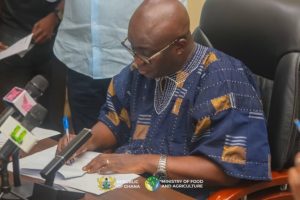
The appeal was made during the official presentation of the repainting of the Ministry’s national headquarters on Tuesday, July 14, 2026, by Three Trees Ghana Limited under its Brighten Ghana Initiative.
The project, undertaken at no cost to the Ministry, forms part of the company’s efforts to rehabilitate and modernize public institutions nationwide.
Speaking at the event, the Minister for Food and Agriculture, Eric Opoku, reiterated that agriculture remains the backbone of Ghana’s economy and stressed the government’s commitment to transforming the sector through President John Dramani Mahama’s Agriculture for Economic Transformation agenda.
He urged corporate Ghana, development partners and the general public to contribute meaningfully towards the successful organization of the 42nd National Farmers Day celebration and other initiatives aimed at strengthening the agricultural sector.
A representative of Three Trees Ghana Limited, together with its strategic partner UMB, said the company was delighted to support the Brighten Ghana Initiative, describing the partnership as an opportunity to contribute to the improvement of public institutions and national development.
The representative noted that the initiative reflects the private sector’s commitment to complementing government efforts by giving public facilities a renewed appearance while creating environments that inspire productivity and efficient service delivery.
The Brighten Ghana Initiative continues to encourage private sector participation in the rehabilitation of public infrastructure, with more public institutions expected to benefit from the programme in the coming months.
President John Dramani Mahama has announced that the government has identified 50 locations across the country for the establishment of Farmers Service Centres as part of efforts to modernise agriculture and improve support systems for farmers.
According to the President, 11 of the centres are expected to begin operations this year, marking the first phase of the initiative aimed at boosting agricultural productivity and strengthening food security.
President Mahama disclosed this when members of the Upper West Regional House of Chiefs paid a courtesy call on him at the Jubilee House.
He said the initiative forms part of the government’s broader strategy to transform the agricultural sector by providing farmers, particularly smallholder farmers, with improved access to essential services.
“Government has identified 50 locations nationwide for the establishment of farmer service centres, with 11 expected to begin this year,” he said.
President Mahama explained that the centres will provide farmers with easier access to agricultural inputs, machinery, technical assistance and other support services required to improve production.
He noted that strengthening agriculture remains central to the government’s development agenda, particularly because of the sector’s role in job creation, rural development and economic growth.
The President said the government is committed to expanding opportunities for citizens by investing in critical sectors that directly impact livelihoods.
“We will expand opportunities for our young people and strengthen key sectors, including agriculture, healthcare, and education, so that development reaches every community, every household, and every citizen,” he stated.
President Mahama also stressed the importance of maintaining peace and stability, describing security as a necessary foundation for sustainable development.
He said the government would continue to work closely with traditional leaders to promote unity and create the right environment for development.
“We will safeguard the peace and security of our nation, working hand in hand with our traditional authorities, so that we can deliver development to all our communities,” the President added.
He expressed appreciation to the Upper West Regional House of Chiefs and the people of the region for their support and continued partnership in advancing Ghana’s development agenda.
The Minister for Food and Agriculture, Eric Opoku, has projected that Ghana will experience a tomato glut within the next three to four months as government steps up efforts to boost local production and reduce the country’s reliance on imports.
Africans & Diaspora
Appearing before Parliament’s Committee on Assurances on Thursday, July 9, the Minister said a series of interventions being implemented under the government’s agricultural programme are expected to significantly increase tomato production across the country.
To prevent post-harvest losses, the Minister disclosed that government is putting in place an off-take system to guarantee a market for farmers, while engaging tomato processors to purchase the expected surplus.
Discover more
Agriculture & Forestry
News
food
He added that government is also investing in solar-powered boreholes to support year-round irrigation, enabling farmers to increase production beyond the traditional growing season.
“We have put in place a lot of measures and within the next three to four months, the results will be there for everyone to see. This is another big assurance. We are anticipating a glut of tomatoes in the coming months and are thinking about how we can get processors to off-take from our farmers. We are doing a lot of solar-powered boreholes across the country,” he said.
Fruits & Vegetables
The Minister expressed confidence that the measures will strengthen domestic tomato production, improve market opportunities for farmers and gradually reduce Ghana’s dependence on imported tomatoes while supporting the country’s broader food security agenda.
The Minister of Food and Agriculture, Eric Opoku, has stated that government interventions to boost local production of tomatoes will begin to yield visible results within the next four months and assured Ghanaians that the country’s dependence on imported tomatoes will soon be over.
He explained that the government had rolled out some interventions aimed at increasing domestic tomato production and reducing imports, particularly from neighbouring Burkina Faso.
“We have started working on that challenge, and we are bent on reversing that story. Within the next three or four months, the results will be out there for Ghanaians to testify,” he said.
Mr Opoku made the remarks when he appeared before Parliament’s Select Committee on Assurances.
It was to provide updates on commitments made by President John Dramani Mahama in the 2025 State of the Nation Address (SONA).
Mr Opoku explained that the government was investing in irrigation infrastructure, including the construction of solar-powered boreholes, to ensure year-round cultivation of tomatoes in major production centres across the country.
He stressed that interventions undertaken regarding the subject included drilling boreholes, installing solar-powered pumps to irrigate farmlands, and fencing farms in areas prone to livestock intrusion to protect crops, adding that irrigation projects were underway in several tomato-growing areas across the country.
“President Mahama himself has taken special interest in this, and he says that we should bring an end to the importation of tomatoes into this country, and we’ll do just that,” he stated.
Falling prices
Responding to concerns raised by the Chairman of the committee, Dominic Nitiwul, over falling food prices and the impact on farmers’ incomes, Mr Opoku acknowledged that while consumers were benefiting from cheaper food, many farmers were struggling to recover their production costs.
He described the situation as what agricultural economists referred to as “good-bad”, where abundant food production benefited consumers through lower prices but adversely affected farmers because increased supply depressed market prices.
“The bad-good is when there is a shortage of food in the system, like we witnessed in 2024 because of the dry spell. Then food prices started going up. A lot of people were pushed into abject poverty because of the rising food prices.
“But the farmers who were able to produce little made a lot of money because of the rising prices. So, for the farmers, it was good, but for the nation, it was bad. Now we find ourselves as a nation in this situation. I am a farmer. I am suffering. But the nation is the beneficiary,” he said.
To address the situation, Mr Opoku said the government had, therefore, submitted proposals to President Mahama and the Cabinet to cushion farmers against the effects of declining prices.
As part of the measures under consideration, he disclosed that the government had settled on the provision of free fertiliser as an emergency intervention to sustain farmers’ interest in production while pursuing long-term solutions through agro-processing and the creation of reliable markets.
He cautioned that prolonged low prices without adequate support could discourage many people from farming, emphasising the need to expand processing and value addition to absorb excess produce and guarantee stable incomes for farmers.
Minister for Food and Agriculture, Eric Opoku, has announced that the government has begun the nationwide distribution of fertiliser to support smallholder farmers, with each agricultural constituency receiving an allocation of 1,500 bags to boost food production.
Fertilizer
The minister disclosed the intervention when he appeared before Parliament’s Committee on Assurances on Thursday, July 9, where he provided an update on measures being implemented by the Ministry to improve access to agricultural inputs and enhance productivity across the country.
According to Mr. Opoku, the fertiliser distribution forms part of the government’s broader strategy to strengthen the agricultural sector by ensuring that farmers have timely access to essential inputs during the farming season.
He explained that the initiative is specifically targeted at supporting smallholder farmers, who constitute the majority of Ghana’s farming population and play a critical role in ensuring national food security.
“We are also looking at input distribution. We have recently distributed fertilisers to all the agricultural constituencies in this country. Every constituency has been given 1,500 bags. It is not even district, it is every constituency.
“Those who have not received, maybe the contractors are still supplying, so they will receive theirs. But it is believed that by the close of next week, every district will have received the quantities we have assigned to them.”