Oct 1, 2026
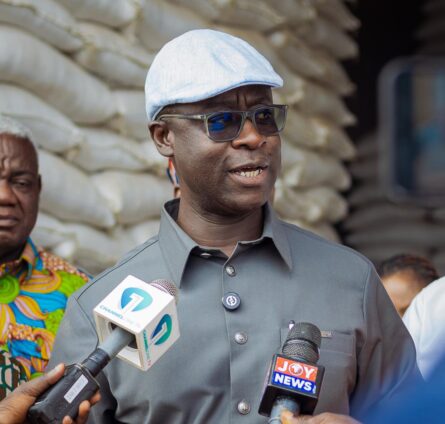
The Deputy Chief Executive Officer of the National Food Buffer Stock Company (NAFCO), Osmond Amuah, has called for urgent investment in Ghana’s food storage infrastructure, warning that the country’s current storage capacity is below 50,000 metric tonnes.
According to him, the limited storage capacity poses a challenge to Ghana’s ability to build adequate emergency food reserves in the event of disruptions to global food supply.
Mr Amuah said Ghana consumes more than six million metric tonnes of maize and rice annually, creating the need for significant storage capacity to ensure food security during emergencies.
He explained that Ghana should be able to maintain enough food reserves to feed the population for at least 90 days, which he described as an ideal global standard.
He said this is particularly important because disruptions such as pandemics, wars, prolonged droughts or interruptions along major international trade routes could affect the country’s ability to import food.
“If, God forbid, we have another COVID or the Strait of Hormuz gets closed, the Suez Canal also gets closed, and then there’s war within our neighbouring country or a long, prolonged spell of drought, how do we feel?” Mr. Amuah asked.
Mr Amuah said Ghana must maintain sufficient food stocks because importing food from other parts of the world can take several weeks.
“Typically, it will take eight to twelve weeks to bring produce from any part of the world,” he said.
He explained that the country therefore needs adequate reserves to sustain the population while waiting for imported food supplies to arrive.
According to him, Ghana’s monthly requirement for maize and rice alone is more than 500,000 metric tonnes when annual consumption is divided across the year.
However, the country’s current storage capacity remains far below that requirement.
“Now, as I speak, our storage capacity in terms of available warehouse is not up to fifty thousand metric tons,” he stated.
Mr Amuah said the significant gap between national food requirements and available storage capacity makes it urgent for government to invest in warehouses, silos and other storage infrastructure.
He noted that even if Ghana had enough resources to purchase food for an emergency reserve, the country would still face the challenge of where to store it.
“So that means that there’s a huge gap,” he said.
“We really need rapid development, rapid support in infrastructure so that at least as a nation, when any eventuality befalls us, at least we can be dignified by feeding our own citizenry.”
He called for support in the provision of additional warehouses, silos and appropriate equipment to strengthen Ghana’s capacity to store food.
Mr Amuah said NAFCO has already taken steps to improve its storage capacity using internally generated funds.
He explained that the company undertook extensive renovation of its storage facilities, increasing its functioning capacity from less than 10,000 or 12,000 metric tonnes to about 50,000 metric tonnes.
“We have demonstrated that even internally, using our internal IGFs, we’ve done massive renovation exercises,” he said.
He believes additional government support could enable NAFCO to significantly expand the country’s food storage capacity.
“You can imagine if we have the muscles behind us, what we can do. The possibilities would be endless,” he added.
Mr Amuah said strengthening national storage infrastructure would help Ghana build a more resilient food system and ensure that the country can continue feeding its population during major emergencies and disruptions to global food supplies.
Source:https://www.myjoyonline.com/

Oct 1, 2026
The National Food Buffer Stock Company Limited (NAFCO) recorded a significant improvement in its financial performance in 2025, with its gross profit margin increasing from 1.61% in 2024 to 13.96%.
The company’s Chief Executive Officer, George Abradu-Otoo, said the improvement was driven by stronger revenue growth and tighter cost management.
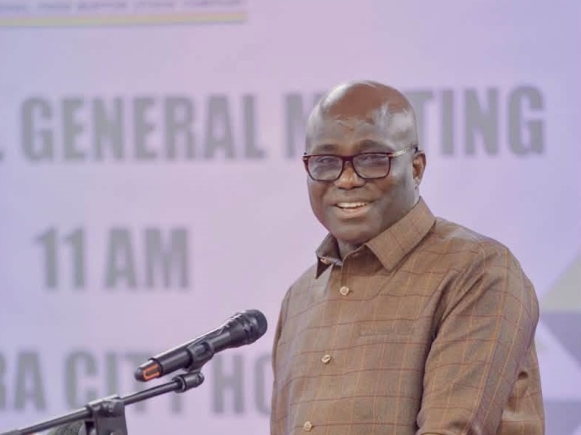
Speaking at the first Annual General Meeting of NAFCO’s shareholders, Mr Abradu-Otoo said the company recorded a net profit before tax of GH¢91.7 million in 2025, its highest profit since its establishment.
He said the profit reversed a GH¢19.4 million loss recorded in the previous year.
“The 2025 Net Profit Before Tax of GH 91.7 million, did not only erase a GHC 19.4 million loss posted the previous year, but it is the highest profit made by the company since its establishment in 2011. The Company’s gross profit margin surged from 1.61% in 2024 to 13.96% in 2025.Africans & Diaspora
“This reflects decisive cost discipline and robust revenue growth,” he said.
Mr Abradu-Otoo said NAFCO had recorded profits in several previous years, including 2018, 2019, 2020, 2022 and 2023, with the highest previously recorded profit being GH¢2.8 million in 2021.
He said the company’s return on operating assets also improved from negative 63.80% to a positive 26.29%, indicating an improvement in the deployment and management of its assets.
NAFCO also paid GH¢20.3 million in taxes to the state in 2025, which Mr Abradu-Otoo described as the highest annual tax contribution in the company’s 16-year history.
Despite the improved performance, he identified working capital management as one of the company’s key operational risks.
He said the company’s acid-test ratio remained marginal, although its liquidity was adequate, and called for measures to create a stronger buffer above 1.5 to reduce financial risk.
Mr Abradu-Otoo attributed the company’s improved performance partly to structural reforms in its corporate governance and operational systems.
He said the reforms included the establishment of a dedicated Procurement Department, strengthening of the Internal Audit and Food Safety departments, and the reconstitution of the Board and its sub-committees.
“The harmonious working relationship between the Board, Management and Staff proved equally decisive,” he said.
He said the company had also improved its regional operations, with all 16 regional offices now operational after the provision of vehicles, office equipment and additional staff.
National Food Reserve Programme
Mr Abradu-Otoo said NAFCO also revamped the National Food Reserve Programme in 2025 with an initial government funding of GH¢100 million.
He said the programme was introduced in response to a reported glut of grains, particularly rice and maize, in parts of the country.
According to him, by December 31, 2025, NAFCO had stocked 36,597 bags of maize, 21,287 bags of rice and 5,982 bags of gari in warehouses in Tamale, Badu, Kumbungu, Dzodze, Wenchi and Kumasi.
He said the programme required NAFCO to maintain food stocks that could be released when necessary, including during emergencies, disasters and periods of high food prices.
According to him, the programme was intended to help control inflation, reduce post-harvest losses and support the government’s agricultural interventions.
He said NAFCO worked with licensed buyers who purchased produce from local farmers and transported it to the company’s warehouses for cleaning and storage.
Source:https://www.citinewsroom.com/
Oct 1, 2026
The Parliamentary Committee on Food, Agriculture and Cocoa Affairs has commended the National Food Buffer Stock Company (NAFCO) for its significant financial turnaround, moving from a debt position of about GH¢20 million to recording more than GH¢96 million in profit in 2025.
Chairman of the Committee, Dr Godfred Seidu Jasaw, made the commendation during a working visit to NAFCO’s regional office in Kumasi.
He said the development demonstrated the company’s improved financial management and strengthened its capacity to deliver on its mandate of ensuring food security and managing strategic food reserves.
Dr Jasaw said the Committee was encouraged by the progress and stressed the importance of sustaining the gains made by NAFCO.
He urged the management and staff to continue implementing measures that promote efficiency, accountability and prudent use of resources while ensuring that the company remains responsive to the needs of farmers and consumers.
The working visit formed part of the Committee’s engagement with institutions under its oversight to assess their operations and performance.
The Committee said it would continue to support efforts that strengthen NAFCO’s operations and contribute to Ghana’s food security, while encouraging the company to build on its improved financial position.
Source:https://www.myjoyonline.com/

Sep 29, 2026
The meeting focused on deepening cooperation between the Ministry and traditional leaders, particularly in the dissemination of agricultural information and government interventions to farming communities.
The Minister for Food and Agriculture, Eric Opoku, has paid a courtesy call on the Ga Mantse, Nii Teiko Tsuru II, as part of efforts to strengthen collaboration between the Ministry and Traditional Authorities in promoting agriculture and food security.
The meeting focused on deepening cooperation between the Ministry and traditional leaders, particularly in the dissemination of agricultural information and government interventions to farming communities.
The Ga Mantse, Nii Teiko Tsuru II, called for closer collaboration between the Ministry and Traditional Authorities to ensure that farmers and communities receive timely and accurate information on agricultural programmes and opportunities.
He also urged the Ministry to prioritise maize production, noting the crop’s importance to the diet and livelihoods of the people of the Ga State.
The Ga Mantse assured the Minister of the continued support and cooperation of the Ga State and warmly welcomed him as a son of the soil.
Responding, Eric Opoku said the Ministry’s vision was to transform Ghanaian agriculture from subsistence farming into a profitable and attractive business capable of creating sustainable jobs, particularly for the youth.
He highlighted what he described as significant gains under the government’s Feed Ghana Programme, noting that Ghana’s maize production reached more than 4.6 million tonnes in 2025, compared with an estimated national demand of about 3.6 million tonnes.
The Minister said the government would continue to implement measures aimed at increasing agricultural productivity, improving food security and creating opportunities for young people to participate meaningfully in the sector.
The courtesy call forms part of the Ministry’s broader engagement with Traditional Authorities and other stakeholders to strengthen partnerships in advancing Ghana’s agricultural development and food security.
Sep 28, 2026
Adequate allocations will be made in next year’s budget for the construction of silos for the storage of grains, the Minister of Food and Agriculture, Eric Opoku, has disclosed.
He said the country produced 4.6 million tonnes of maize last year against an estimated national demand of 3.6 million tonnes, creating a surplus of about one million tonnes.
He, therefore, urged the Ghana Food Buffer Stock Company (NAFCO) to play a critical role in putting up many silos to store the growing level of cereal production in the country. Ghananews platform
Mr Opoku was speaking at the first Annual General Meeting of NAFCO in Accra last Thursday.
The AGM which was held on the theme, “Strengthening Food Security through Strategic Partnership,” provided an opportunity for the company to present its annual reports and financial statements for the financial years from December 31, 2010, through December 31 last year and account to shareholders on the stewardship of the board and management.
NAFCO’s reserve
He said strengthening NAFCO’s capacity to mop up excess production would help create a reliable market for farmers while ensuring that increased domestic production did not translate into losses for producers.
The minister said NAFCO currently had 20,443 tonnes of grains in storage, describing the stock as a step towards rebuilding the country’s strategic food reserves.
He said his ministry had worked with the board and management to strengthen NAFCO’s operations and rebuild its reserves after years of financial and operational constraints.
Mr Opoku also disclosed that the government had directed NAFCO to release 50,000 bags of grains to settle the country’s outstanding obligation to the Economic Community of West African States (ECOWAS).
He recounted that in 2018, the country borrowed grains from ECOWAS to support the School Feeding Programme.
“Today, by the grace of God and with the prudent management of the company, we have been able to procure enough, more than enough, for us to pay back what we borrowed,” he said.
The minister further directed NAFCO to ensure that suppliers contracted to support public feeding programmes purchased food directly from Ghanaian farmers rather than relying on imported produce.
Mr Opoku said purchasing imported food for programmes such as Free SHS undermined local production because the expenditure created jobs outside the country while reducing demand for locally produced food.
The Chief Executive Officer (CEO) of NAFCO, Mr George Abradu-Otoo, said NAFCO had recorded profits in some previous years, including 2018, 2019, 2020, 2022 and 2023, but the latest performance surpassed all previous results.
“The 2025 net profit before tax of GH¢91.7 million did not only erase a GH¢19.4 million loss posted the previous year, but it is the highest profit made by the company,” he said.
Mr Abradu-Otoo said the company’s gross profit margin also increased significantly from 1.61 per cent in 2024 to 13.96 per cent in 2025.
He attributed the improvement to stronger cost discipline and revenue growth.
He said NAFCO’s return on operating assets also rose from negative 63.80 per cent to positive 26.29 per cent, reflecting improved deployment and management of the company’s assets.
“Crowning these achievements, NAFCO paid GH¢20.3 million in taxes to the state in 2025, the highest annual tax contribution in its 16-year history,” he said.
Despite the improved financial performance, the CEO said the company continued to face operational risks, particularly in the area of working-capital management.
Source:https://www.graphic.com.gh/
Sep 25, 2026
President John Mahama says Ghana must urgently transition from exporting raw commodities while importing finished products that can increasingly be produced locally.
He says changing this pattern is critical to creating jobs, strengthening Ghanaian enterprises and expanding the productive base of the economy.
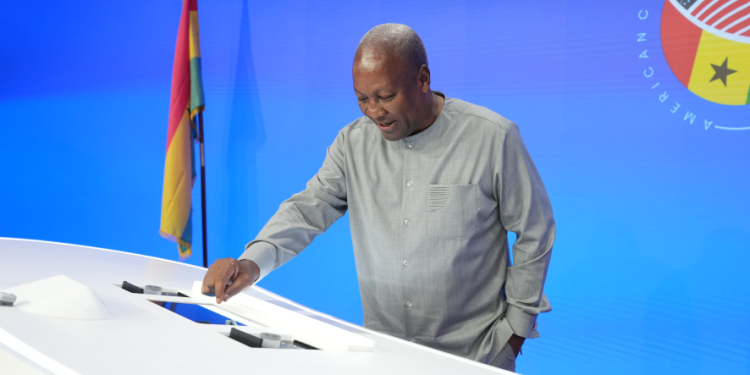
Speaking at the US-Ghana Presidential Roundtable, President Mahama said Ghana’s significant production of cocoa, gold, manganese and agricultural commodities must translate into greater value addition within the country.
“Ghana produces cocoa, gold, manganese, and many other commodities. Our farmers grow cashew nuts, shea fruits, vegetables, and grains, and yet too much still leaves our country in the raw form, while we import finished products that we could increasingly produce at home. This pattern must change if we are to create enough jobs and build stronger Ghanaian enterprises.”
He cited agriculture as a key area where Ghana can expand processing and manufacturing, particularly in cocoa, cashew, shea, horticulture, grains, poultry, livestock and food production.
According to President Mahama: “Processing more of what our farmers produce in Ghana creates a market for farmers, work for processors, businesses for suppliers, transporters, and jobs along the value chain.”
He also urged investors and Ghanaian businesses to look beyond the domestic market and position themselves to serve the wider African market.
President Mahama pointed to the African Continental Free Trade Area, AfCFTA, which brings together a continental market of more than 1.4 billion people, with its Secretariat headquartered in Accra.
He said companies establishing production capacity in Ghana should view the country as a base for accessing markets across West Africa and the wider continent as AfCFTA implementation progresses.
“Do not look at Ghana’s 34 million population only for what you can sell there.”
Source:https://www.citinewsroom.com/