Gyamfi says MoFA will publish the El Niño measures for farmers once its plan with GMet is finished in the coming days.
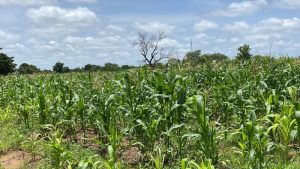
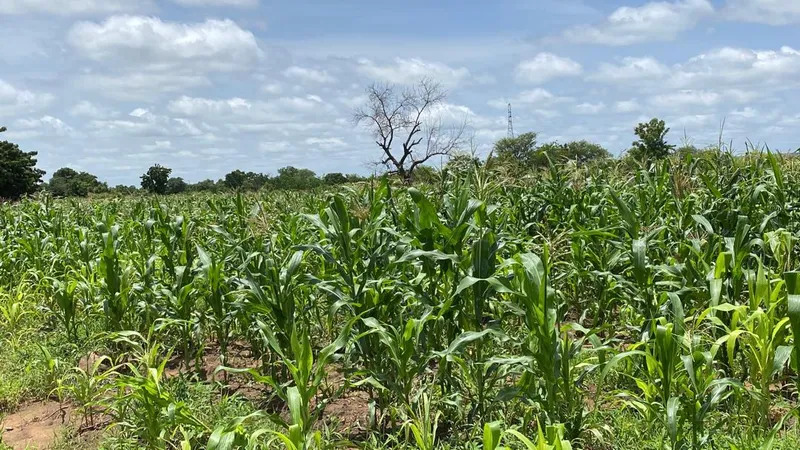
The Ministry of Food and Agriculture is drafting a national plan with the Ghana Meteorological Agency to limit the damage a very strong El Niño could do to farms.
The ministry’s Head of Public Affairs, Osei-Opoku Gyamfi, told the Ghana News Agency on Thursday, November 5, that management was working with GMet and expected to finish the plan in the coming days.
He said the specific measures would be announced only when the plan was ready. The plan follows an October technical brief from GMet, revised after the Governing Board’s scientific review on October 27.
The aim is to protect crops and livestock where long dry spells are most likely, alongside work the ministry already runs. The brief asks the ministries for agriculture, health, energy, water, local government and finance to prepare together.
What GMet has asked the ministry to do
GMet’s brief tells MoFA to make drought-tolerant and early-maturing seed available, to expand irrigation and water harvesting in the most exposed northern and transition-zone districts, and to strengthen national food and seed reserves.
It also asks the ministry to monitor the cocoa belt with the Ghana Cocoa Board, and to offer affected farmers extension help on shade and disease control. Rain-fed districts should receive dry-spell alerts and forecasts of when the rains start and end, sent through extension officers and mobile advisories.
Gyamfi has not confirmed that this list is the strategy. He said the ministry would set out its actions once the plan was final.
Hotter and drier from November to April
The brief says the tropical Pacific is in a very strong El Niño that is still intensifying. NOAA’s Climate Prediction Center, in an October 8 outlook, gave about a 96 per cent chance that its November 2026 to January 2027 index reaches very strong intensity, at 2.0°C or more.
3News reported that warning on October 31. For Ghana, the main concern runs from November 2026 to April 2027: a hotter, drier dry season in many areas, with bushfires, water stress and more dust.
Heat stress is expected to peak between February and April 2027, especially in the north.
Those effects will not be uniform. What Ghana gets also depends on the tropical Atlantic, and GMet says it cannot yet judge how severe the impact will be, or which districts will feel it most.
Ghana went through very strong episodes in 1982/83, 1997/98 and 2015/16, and a moderate one in 2023/24.
In that last episode, the brief says, cocoa output fell by an estimated 20 per cent after heavy rain from April to June 2023 and a harsh dry spell from November 2023 to February 2024.
Food prices, and the wait for farmer advice
Government Statistician Dr Alhassan Iddrisu has warned that too little rain could cut food supply and push prices up, and that cocoa is often among the crops hit. 3News reported the warning after October inflation rose to 5.5 per cent.
MoFA has not yet told farmers what to change on their farms. Gyamfi’s account is that the measures will be published when the plan is finished.
Until that notice, the practical steps in the brief are for ministries: place suitable seed in exposed districts and send farmers location-specific warnings in time.
GMet says it will issue fresh forecasts for the 2027 rainy seasons early next year. It has also asked government to convene a National El Niño and Dry-Season Preparedness Task Force, including the agriculture ministry and the Volta River Authority, reporting to Cabinet through the peak risk period.