
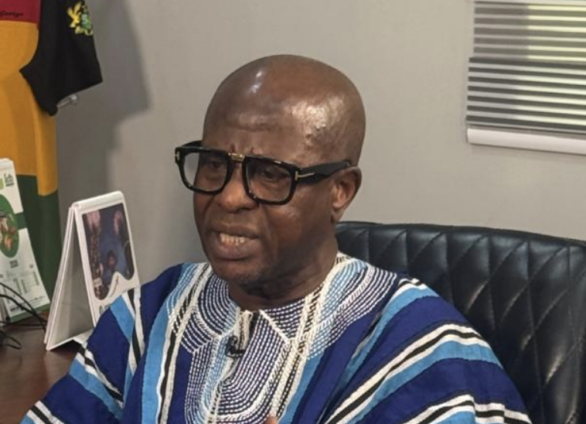
For years, Ghana stood out in West Africa for the wrong reason. It had no national food reserve system, even as neighbouring countries had already established theirs.
That revelation came from the CEO of the National Food Buffer Stock Company, George Abradu-Otoo, who described government’s recent efforts to build food reserves as a major policy shift despite severe funding constraints.
Speaking on JoyNews’ PM Express Business Edition on Thursday, Mr Abradu-Otoo said the company has so far received only ₵300 million for grain purchases, far below what is required to undertake a meaningful intervention.
“Last year, Minister of Finance Dr Ato Forson announced that they were giving us further ₵200 million to continue the good work that we were doing, so in other words, so far we had only ₵300 million,” he said.
According to him, the amount is insufficient for the scale of work expected from the Buffer Stock Company.
“If we need to do proper meaningful mopping up of excess grains, we need no less than ₵1.5 billion, so you can imagine what ₵300 million has done,” he stated.
Despite the shortfall, Mr Abradu-Otoo insisted the allocation represents an important first step toward establishing a national food reserve system.
“But it’s a good beginning because it hasn’t been done before. That’s where I draw my comfort from,” he said.
He noted that successive governments had never seriously pursued maintaining strategic food reserves, making the current initiative significant.
“It’s a good beginning for the government to even think in the first place that we need to have a national food reserve,” he added.
Mr Abradu-Otoo said Ghana’s absence from the list of countries with food reserves was particularly striking given developments elsewhere in the sub-region.
“Because if you take the West African sub-region, Ghana is the only country that did not have a food reserve, can you believe that?” he said.
He pointed to neighbouring countries that had already established such systems.
The Buffer Stock CEO’s comments come as government seeks to strengthen food security and stabilise prices by purchasing excess grains from farmers and storing them for future use.
However, his remarks suggest that achieving that objective on a meaningful scale will require substantially higher investments than those committed so far.
For now, Mr Abradu-Otoo believes the most important breakthrough is that Ghana has finally begun taking steps toward building a strategic food reserve, a policy many of its West African neighbours embraced years ago.