
The Peasant Farmers Association of Ghana (PFAG) says bigger harvests will not secure food supplies or farm incomes without storage, processing and reliable markets, in a World Food Day statement.
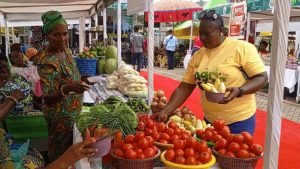
The group pointed to tomato growers in parts of the Volta Region and around Ada. It said seasonal gluts there have left farmers struggling to recover their costs despite higher output. It said rice and maize farmers face the same problem.
That warning sits awkwardly beside national price data. The Ghana Statistical Service reported that fresh tomato prices in September 2026 were 153.4 percent higher than a year earlier. Tomatoes were the single largest contributor to the month’s 5.2 percent inflation rate, accounting for 20.3 percent of it. Seasonal gluts in some districts and steep prices for consumers elsewhere point to the gap PFAG describes: a lack of storage and processing to carry produce from harvest to market.
Innovation farmers can afford
The statement marked World Food Day on 16 October, held this year under the Food and Agriculture Organization’s theme, “Innovate today. Nourish tomorrow.” PFAG’s Executive Director, Bismark Owusu Nortey, said agricultural innovation must solve farmers’ everyday problems and not focus on advanced technology most smallholders cannot afford.
He listed improved seeds, irrigation, climate information, digital extension support, soil-health practices, agroecology, storage and local processing as tools that could raise output and resilience. He warned that none would work without affordable access, proper implementation and dependable markets.
The association raised several regional pressures. Long dry spells and erratic rain in the Kassena area of the Upper East Region were threatening crop establishment and household food supplies. It called for timely weather information, drought-tolerant seed, suitable irrigation and practical extension services. It also asked for new ways to protect rice fields from migratory birds.
It said a shortage of affordable tractors, planters, harvesters and threshers kept farming labour-intensive and caused delays and post-harvest losses. It urged wider access to mechanisation, particularly for women and young farmers.
Government’s mechanisation drive
The government’s main response is the Feed Ghana Programme, launched in April 2025. It plans 50 Farmer Service Centres that will rent out tractors, harvesters and other machinery to farmers. Food and Agriculture Minister Eric Opoku said on 10 October that 15 centres were under construction and would be running by the end of the first quarter of 2027.
Delivery has been uneven. Farmer groups, including PFAG, complained in July that seeds, fertiliser and other inputs promised under the programme arrived months into the planting season.
PFAG urged government, development partners, universities, banks and private firms to invest in farm infrastructure and improve farmers’ access to land, finance, technology, training and markets. It said farmer organisations should help design and run agricultural programmes so that spending matches local conditions.
It also asked consumers to buy locally grown food and waste less.