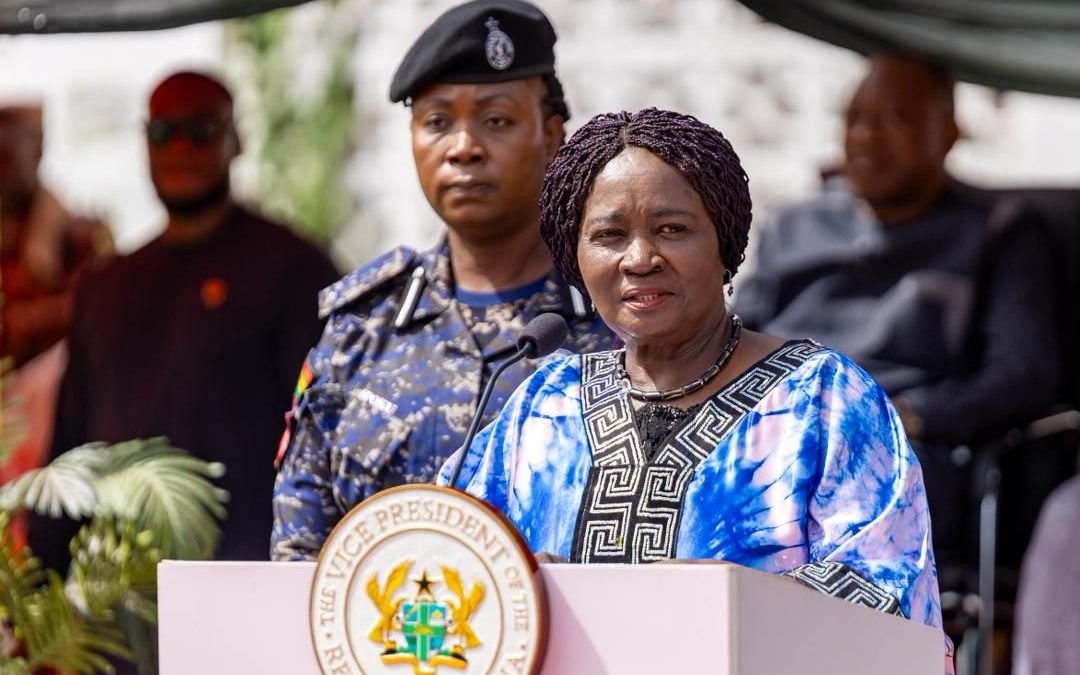
The Vice President, Prof. Naana Jane Opoku-Agyemang has called for large-scale investment across the rice value chain to transform agriculture, strengthen food security, and drive economic growth across West Africa.
Speaking on behalf of President John Mahama at the opening of the two-day West Africa Rice Investment Roundtable in Accra, on June 2, 2026, the Vice President said the gathering is not only about rice production but also about economic transformation, regional integration, and Africa’s ability to feed itself sustainably.
She noted that food security extends beyond agriculture and is closely linked to macroeconomic stability, social protection, national security, and geopolitical resilience.
“The disruptions of recent years, including climate shocks, export restrictions, trade tariffs, and geopolitical tensions, have exposed the fragility of global food systems,” she said. “Countries that import too much food also import vulnerability.”
Prof. Opoku-Agyemang highlighted West Africa’s vast agricultural potential, citing its fertile land, abundant water resources, entrepreneurial farmers, growing consumer markets, and youthful population. Despite these advantages, she observed that Africa continues to spend billions of dollars annually on food imports, including rice, while demand continues to rise.
According to her, the region’s challenge is not merely increasing rice production but mobilising the capital required to transform agriculture from subsistence farming into a modern commercial sector supported by integrated value chains.
“West Africa must see rice as a strategic economic asset,” she said, stressing that investment in the sector could create jobs, boost industrialisation, and strengthen economies against future global shocks.
The Vice President said Ghana’s Agriculture for Economic Transformation Agenda, which forms part of the government’s broader economic recovery programme, is focused on building integrated agricultural value chains and linking production to processing, logistics, exports, and agro-industrial development.
She noted that Ghana’s improving macroeconomic environment is helping to lay the foundation for agricultural transformation and attracting long-term investment.
Prof. Opoku-Agyemang emphasised that unlocking West Africa’s rice potential would require “transformational capital” that is patient, competitive, infrastructure-driven, and capable of strengthening entire agricultural systems.
She called for investments in irrigation, agro-processing, research, climate-smart agriculture, and other critical areas that would support sustainable production and value addition.