CSIR-SARI maize hybrids, including three vitamin A-rich yellow lines, held up through dry spells and late planting in trials in Upper East’s Bongo District.
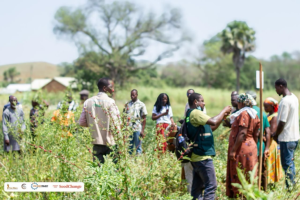
New maize hybrids from the Savanna Agricultural Research Institute held up through late planting and dry spells in trials at Moshie-Daboro, in Upper East’s Bongo District, farmers and scientists said.
The Council for Scientific and Industrial Research-Savanna Agricultural Research Institute (CSIR-SARI) planted the demonstration plots in late July 2026 on land the community normally uses for groundnuts. The work is funded by the African Agricultural Technology Foundation (AATF) through the Technologies for African Agricultural Transformation Phase II (TAAT II) Maize Compact.
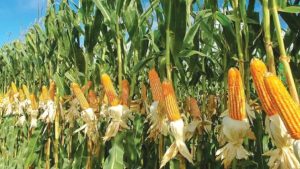
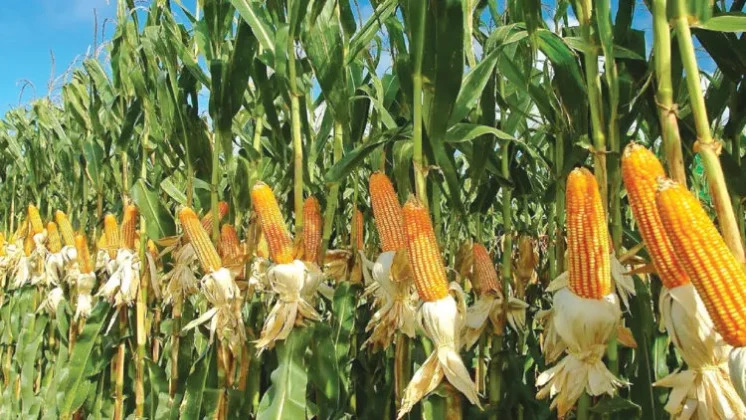
Farmers saw five hybrids at the field day. Two white varieties, CSIR-SARIMAZ 4 and CSIR-SARIMAZ 5, are already released for cultivation. The other three, LY1409, LY2205 and EPVAH-34, are yellow hybrids bred to carry more provitamin A, iron and zinc. They have not yet been approved for sale.
Why the north needs both traits
Northern Ghana has more micronutrient deficiencies than the rest of the country. The 2017 Ghana Micronutrient Survey, published in the peer-reviewed journal PLOS ONE in 2020, found that 20.8 per cent of children aged six months to five years lacked vitamin A. Deficiencies were more common in rural areas, in poor households and in the Northern Belt.
The weather is also getting harder for farmers. The Ghana Meteorological Agency’s National Climate Atlas projects that northern Ghana will warm faster than any other part of the country, and that the warming will be strongest between December and February. Inputs cost more too. Granular urea rose 53.7 per cent in March 2026, which has pushed CSIR-SARI to test fertilisers that need less nitrogen.
What the breeders found
Dr Isaac Kodzo Amegbor, a maize breeder at CSIR-SARI and Ghana lead for the TAAT II Maize Compact, said the two released hybrids kept growing well despite fall armyworm attacks on the demonstration fields. He told farmers that the yields depend on using the seed together with sound field practice and careful storage after harvest.
Dr Desmond Sunday Adogoba, the institute’s Innovation Scaling Specialist, said the hybrids coped with moisture stress, Striga weed and fall armyworm, the three main threats to maize across the north. Adding provitamin A, iron and zinc to a food that households already eat every day is a cheap way to improve diets, he said, especially for women and children.
Farmers compare plots
Andrews Atampugre, an agricultural extension officer with International Development Enterprises who helped set up the plots, said farmers could compare the new hybrids with their usual seed under the same poor rains. He said the hybrids showed good tolerance to Striga and fall armyworm.
Alayine Grace, a lead farmer at Moshie-Daboro, said the results had persuaded farmers to grow more of the hybrids once they are released. Abaabagre Halimatu, another farmer, said the yellow varieties could help rural women who need better nutrition during pregnancy and after childbirth.
In 2025, CSIR-SARI showed farmers other maize varieties in the Upper East Region. The yellow hybrids tested at Moshie-Daboro still need approval from the National Varietal Release and Registration Committee before seed can be sold to farmers.
Source:https://newsghana.com.gh