Jan 21, 2026
There are indications that barring any last-minute unforeseen changes, the country’s national food aggregator, the National Food Buffer Stock Company (NAFCO), could hold its first Annual General Meeting (AGM) since its establishment in 2010.
The holding of the proposed AGM is subject to approvals from the state entities’ regulator, the State Interest and Governance Authority (SIGA), and the company’s own governing board, and is expected to complete months of reforms after being engulfed in years of underperformance.
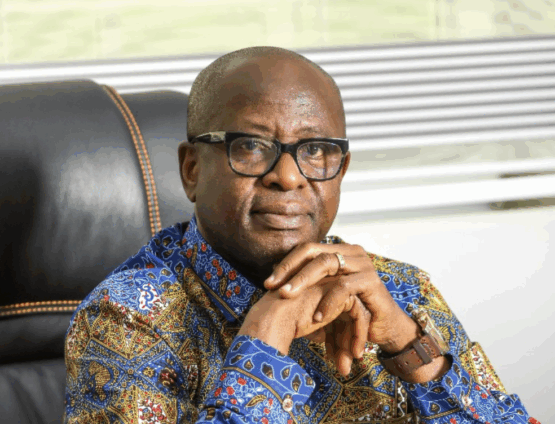
The company’s Chief Executive Officer, George Abradu-Otoo, who dropped the hint during the 2026 maiden staff interactions in Accra, also intimated that some “modest gains” were made in the year 2025, necessitating the urge to fulfil a major regulatory requirement by holding the AGM.
An Annual General Meeting (AGM) is a mandatory yearly gathering where a company’s directors report to shareholders on financial performance and future plans, allowing shareholders to exercise ownership rights by voting on key issues like board appointments, auditor selection, and dividends, ensuring transparency and legal compliance under specific statutes like the Companies Act.
It’s a vital governance mechanism for accountability and engagement between management and stakeholders, requiring formal procedures for notice, conduct, and minutes.
NAFCO is wholly owned by the government of Ghana and is required to hold Annual General Meetings (AGMs), per the provisions of the Companies Act, 2019 (Act 992).
Records from SIGA indicate that, over the years, NAFCO has been compliant with its up-to-date Audited Accounts, and holding a maiden AGM will consolidate its performance
It is yet to be known how the company performed financially in the year under review until the ongoing audits are completed, but there are indications that its 2025 performance improved over 2024.
In 2024, the company is reported to have incurred financial losses.
In terms of operations, the company seamlessly carried out food supply to schools under the Free Senior High School Programme and took on the major task of revamping the National Food Security Reserve (NFSR) after the government released GH¢100 million for its initial take-off.
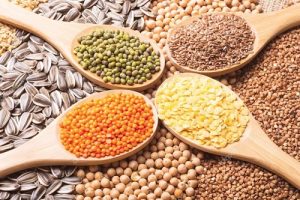
The NFSR entails mopping up excess grains from specific parts of the country where a glut has been reported.
Last year, Mr Abradu-Otoo spearheaded a series of institutional reforms, including the setting up of internal audit and entity tender committees to tighten oversight and ensure the company’s risk management, control, and governance processes are effective.
He commended staff for their dedication and urged them to brace themselves for what he termed “greater works”
Source:JoyOnline

Jan 12, 2026
In the run-up to the 2024 general election, the NDC and its flag bearer placed agriculture at the centre of their campaign and, indeed, prioritised it in government.
This has been seen in the launch of several interventions aimed at promoting various aspects of agriculture, including grains, legumes, tree crops, poultry and aquaculture.
It is expected that the collective success of all interventions will make the country food-secure, produce surpluses for export and maintain at least a three-month national food reserve.
It is also anticipated that the intervention will generate millions of jobs, reduce reliance on imports, modernise agriculture, eliminate post-harvest losses and bring food inflation under control.
The question now is: how do we ensure these interventions are sustained to maximise the gains?
What is required foremost is political commitment and a continuous demonstration of the same in the years ahead.
Glimpse of hope
For now, three instances give me hope. In early November, President Mahama instructed public educational institutions at all levels to buy only locally produced rice, maize and eggs.
Earlier, he had ordered the release of funds to the National Food Buffer Stock Company (NAFCO) to buy surplus grains from farmers and store them in the revamped National Food Reserve (NFR).
Much earlier, he had ordered the Ghana Education Service (GES) to mop up excess tomatoes in the Agogo enclave for use in schools.
We have a sector minister, Eric Opoku, who seems to share the President’s vision, dreams and aspirations and this alone gives me comfort.
Adequate funding
Beyond political commitment, it is essential to ensure adequate funding for the implementation of the interventions.
To mop up excess grains into the National Food Reserve, NAFCO, for instance, required an amount of at least GH¢770 million.
However, the government could make available only GH¢100 million for it, though additional funds are still expected to come in.
In the years ahead, we must plan based on forecasts and provide the necessary financial support to eliminate or mitigate post-harvest challenges. Let us increase funding for research and innovations.
I am also of the opinion that there will be a need for a well-thought-out plan and strategies to execute the interventions.
Local food
Such plans must encourage processing and value addition.
It must step up the campaign to change taste and preferences in favour of locally grown and processed foods, especially for students and young people.
Educational institutions must heed the President’s directive and insist on the consumption of local foods by students and teachers.
The strategy must include components to address the challenges of market linkages; producers must be shown where to find buyers and vice versa.
I am a firm believer in the Feed Ghana idea, the Nkoko nkitikiti initiative, local fertiliser production, the agro-industrial parks, as well as irrigation and mechanisation in the agricultural space and with the right policies, we must not fail in our quest to make Ghana the food basket of the continent.
The writer is the Head of Corporate Affairs, National Food Buffer Stock Company.
Dec 10, 2025
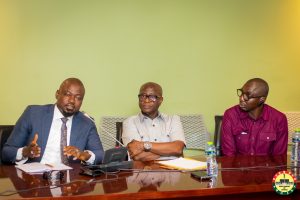
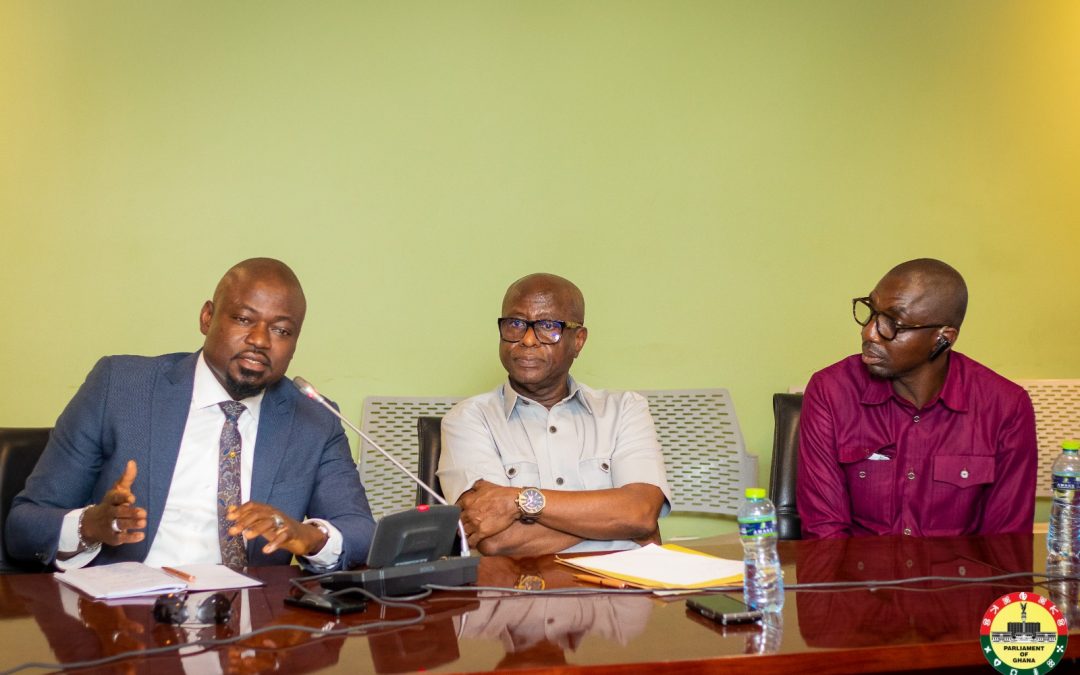
On Monday, our Chief Executive Office, Mr George Abradu-Otoo, accompanied by the management team briefed the Parliament Committee on Food, Agriculture and Cocoa Affairs on the food glut issue and the National Food Reserve.
Committee Chairman, Hon. Godfred Jasaw lauded NAFCO for good job so far.
Dec 3, 2025
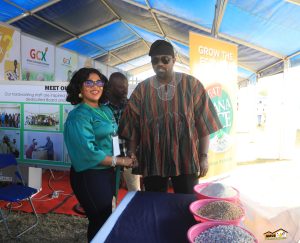
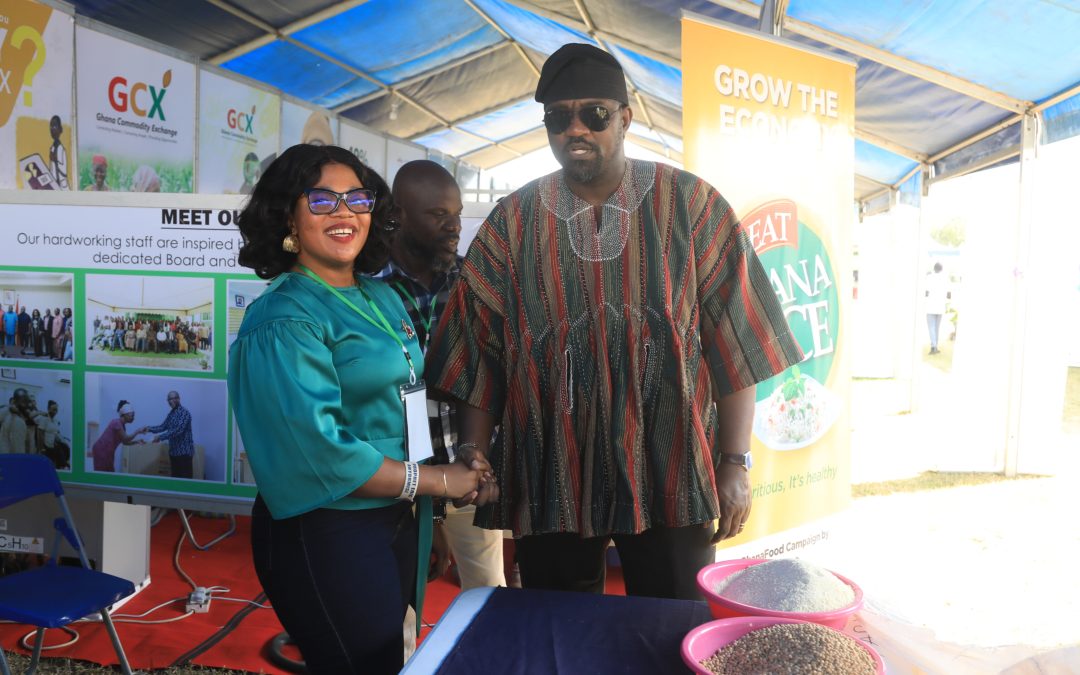
Deputy Minister for Food and Agriculture, John Dumelo, was among the many high-profile visitors who toured the exhibition stands of the National Food Buffer Stock Company (NAFCO) on Day Two of the national agricultural fair in Ho, the Volta Regional capital.
The Deputy Minister, accompanied by senior directors from the Ministry, had earlier interacted with several exhibitors before arriving at the NAFCO stands.
A Quality Control Officer, Sylvia Sowatey, briefed the delegation on NAFCO’s operations, including ongoing efforts to restock the national food reserve using surplus grains from local farmers.
She noted that the company also maintains stocks for the ECOWAS Regional Food Reserve in addition to serving as the lead supplier of non-perishable foods to public senior high schools under the Free SHS programme
Mr. Dumelo commended NAFCO for its role in strengthening the government’s food security agenda, describing its interventions as “timely and impactful.”
NAFCO is one of 21 government agencies exhibiting at the week-long fair, which showcases achievements across Ghana’s agriculture, fisheries and agribusiness sectors.
Some 250 exhibitors, including input dealers, development partners, seed producers, academia and financial institutions, are participating to promote agriculture as a dignified and rewarding profession.
The fair will climax on Friday with the 41st National Farmers Day celebration, where distinguished farmers, fishermen and other sector players will be honoured.
Sector Minister Eric Opoku officially opened the fair on Monday, reiterating the government’s commitment to prioritising agriculture. Also present were Regional Minister James Gunu and Council of State member Gabriel Kwamigah.
This year’s celebration is themed “Feed Ghana, Eat Ghana, Secure the Future.”
Source:MyJoyOnline
.
Nov 28, 2025
He said the move would mark a strategic shift towards seed sovereignty as a cornerstone of national food security.
“Without seed sovereignty, there can be no food security,” Mr Opoku said when he took his turn at the Government Accountability Series at the Presidency in Accra yesterday.
The minister outlined a comprehensive plan to end the recurring crisis of delayed imported seeds that often arrived after the planting season.
He stated that with the support of the Korea Plant Industries Association (KOPIA), Ghanaian farmers were undergoing intensive training in seed production. Simultaneously, Korea Rural Cooperation was also developing irrigation infrastructure on 100 hectares of land to support rice seed production.
To ensure sustainability and affordability, the Korea Institute for Advancement of Technology (KIAT) has commissioned a one-megawatt (1MW) solar farm to power the irrigation systems, with technical support from the Ministry of Energy, the minister detailed.
“This project is expected to be completed in 2027. It will produce 10,000 tonnes of high-quality rice seed, and Ghana will be well on its way to rice seed independence,” Mr Opoku said.
Further collaborations were underway with the Japan International Cooperation Agency, which is training rice seed producers in Wheta in the Ketu North District in the Volta Region, the Upper East Regional capital, Bolgatanga, and Tono in the Kassena-Nankana District, Upper East.
A Memorandum of Understanding (MoU) has also been signed with the government of The Netherlands to facilitate both technical and financial capacity building for the development of vegetable seed production in Ghana.
The minister also expressed the ministry’s “unqualified appreciation” to KOPIA for making available 300 tonnes of Agyapa Rice Seed, developed by the Council for Scientific and Industrial Research (CSIR), to support rice farmers free of charge.
Significant strides
The foundational work on seed sovereignty is part of a broader scientific overhaul.
“FAO, MoFA and the Soil Research Institute of CSIR are collaborating to build a reliable scientific foundation for sustainable soil management and agricultural planning in Ghana,” Mr Opoku stated.
On climate resilience, the Food and Agriculture Minister reported significant strides, noting the installation of 20 automated weather stations.
“These stations, unlike manual ones, collect data automatically 24/7, ensuring higher accuracy and consistency, faster data transmission and enhanced forecasting and climate modelling for disaster prevention and farm planning,” he explained.
This focus on seed sovereignty and climate resilience forms a critical part of the broader Agriculture for Economic Transformation Agenda, which is being implemented through the Feed Ghana Programme.
Mr Opoku added that the programme had now evolved into a national movement, with institutions such as the Ghana Armed Forces, the National Service Authority and over 413 schools actively engaged in institutional farming.
To support the agricultural transformation, the ministry was also aggressively expanding irrigation infrastructure, he added.
The Food and Agriculture Minister also highlighted major private sector involvement, announcing a €154 million investment by the government of Italy in partnership with BF International, aimed at transforming large-scale commercial agriculture in Ghana.
Under the initiative, he said, a 10,000-hectare irrigated model farm was being developed for the production of rice, maize, soya and tomato on an all-year-round basis.
Mr Opoku assured the nation of the ministry’s commitment to delivering results with urgency, integrity and accountability, framing the collective effort as a generational mandate to transform Ghana’s agricultural sector.
Poultry sector
Further solidifying the drive towards self-sufficiency, the government is executing a major revitalisation of Ghana’s poultry sector to curb the annual import bill of between $300 million and $400 million.
This is being pursued through a three-pronged strategy under the Poultry Industry Revitalisation Programme.
The programme comprises the Poultry Farm to the Table Project, which targets the production of four million birds through 50 anchor farmers; the Poultry Intensification Programme, which will empower 500 small-to-medium scale farmers to produce three million birds; and the ‘Nkoko Nketenkete’ Initiative, a backyard poultry farming programme focused on women and youth, also targeting three million birds.
The minister confirmed that the ‘Nkoko Nketenkete’ initiative, which had already successfully distributed 720,000 birds to 13,000 farmers in 12 districts as a pilot, would be fully launched for the immediate distribution of three million birds to all constituencies.
To manage the anticipated boom in local production, he said, the government would establish a poultry processing factory in Bechem, and that the sod would be cut on Thursday.
Mr Opoku announced that the procurement processes had been completed, and the sod-cutting ceremony would be performed by President John Dramani Mahama on Thursday.
“These coordinated interventions are designed to substantially reduce Ghana’s reliance on imported poultry, create sustainable jobs and improve access to affordable, protein-rich food for all Ghanaians,” Mr Opoku stated.
Source: graphic.com.gh