Sep 14, 2026
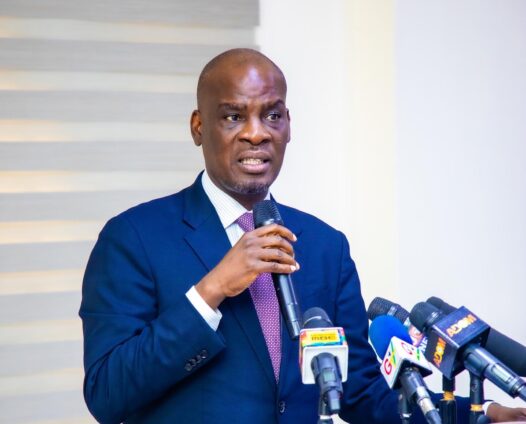
The Minister for Education, Haruna Iddrisu, says he has asked the Ghana Education Trust Fund (GETFUND) to allocate GH¢250 million this year to expand infrastructure in Category A senior high schools.
According to him, the additional investment will help ease pressure on some of the country’s most sought-after schools, which have experienced a sharp rise in student numbers under the Free Senior High School (Free SHS) programme.
Speaking on JoyNews’ Newsfile on Saturday, September 12, during a discussion on the SHS placement crisis, Mr Iddrisu said he had already discussed the matter with the GETFUND administrator.
“I’m also happy to note that I requested, and I had a discussion with the administrator of GETFUND, that he should make an allocation of 250 million this year,” he said.
The minister said the funds would be used to expand facilities in Category A schools, while other infrastructure needs would be addressed through the government’s planned World Bank-funded programme.
“Then we can expand the facilities in the Category A schools, while the World Bank focuses on other areas,” Mr Iddrisu said.
Mr Iddrisu said the planned expansion would cover some of the country’s leading senior high schools, including Achimota School, Wesley Girls’ High School, Wesley College, Presbyterian Boys’ Secondary School (PRESEC) and Prempeh College.
He said the government intends to provide additional classrooms and accommodation facilities to help the schools cope with increasing enrolment.
“We can start classrooms, two dormitories, male and female, at Achimota, Wesley Girls, Holy Child, Presec, and Prempeh,” he said.
The minister’s comments come amid growing concerns over the ability of some Category A schools to accommodate the number of students seeking admission.
The pressure has contributed to the difficulties experienced by some students and parents during the Computerised School Selection and Placement System (CSSPS) process, particularly where demand for places far exceeds available capacity.
Mr Iddrisu also defended the government’s decision to increase investment in community-based secondary education as part of a longer-term solution to the placement challenges.
He said President John Mahama had directed him to pursue the construction of model community day schools in selected areas.
“That’s what I said; the President has directed me. For instance, in Nima, Ayawaso, we’ll build a model community day school,” he said.
Mr Iddrisu said the project would also form part of the government’s broader infrastructure plans, adding that President Mahama would cut the sod for the $300 million project once procurement processes have been completed.
“That is where President Mahama will cut the sword for the Star J 300 million U.S. dollar project, as soon as we are done with procurement,” he said.
He also announced plans for special education facilities in other parts of the country.
“We’ll build special education in Ho, and then Sunyani, and we are considering one for Kintampo,” he said.
Beyond the immediate placement crisis, Mr Iddrisu said Ghana needs to reconsider how resources are distributed across the education sector.
He said he had taken note of suggestions from education experts, including Professor Adei and the late Professor Gyaama, who he said had written extensively on education.
“We are at it, but I take the advice from Professor Adei, and he and other persons, including the late Professor Jampa, wrote extensively on education,” he said.
the minister said that Ghana is spending too much on secondary education at the expense of foundational learning at the basic level.
“But, again, Ghana, we are spending too much on secondary education,” he said.
“That is the major damage that privatisation did to Ghana’s education system.”
Mr Iddrisu said education resources should instead be directed towards foundational learning, particularly literacy and numeracy.
“Everywhere in the world, focus, resources, and investment must be aligned to foundational learning, basic education, where literacy and numeracy are gained.”
“If a child gets literacy right, that child is more likely to succeed,” he said.
The minister also pointed to the government’s spending on the school feeding programme as an example of investment at the basic education level.
He said the government currently spends about GH¢3.4 billion on school feeding.
“But we are spending 3.4 billion on school feeding, in the name of pre-senior high school,” he said.
He added that, despite the broader concerns about education spending, the school feeding programme remains a positive intervention.
“At least, that’s a good thing we have also done as a government,” Mr Iddrisu said.
Source:https://www.myjoyonline.com/

Sep 14, 2026
President John Dramani Mahama has announced plans to establish a maize processing plant in the Sissala area of the Upper West Region as part of efforts to tackle the recurring glut faced by maize farmers.
The facility, he said, will create a reliable market for maize producers while adding value to the crop for both domestic consumption and export.
President Mahama said the initiative was intended to encourage increased production by ensuring farmers have a market for their harvest.
“We are going to set up a maize processing plant in the Sissala area. The plant will not only buy the maize, but it will also process the maize for the market and for export, and so I believe that this glut will become a thing of the past,” he said during a citizens’ engagement at the University of Business and Integrated Development Studies on Saturday, September 12.
President Mahama also announced plans to increase funding to the National Food Buffer Stock Company to enable it to purchase more surplus maize.
He said inadequate storage capacity had constrained the company’s ability to absorb excess production and disclosed that silos would be constructed at its storage centres to expand its capacity.
“Aside from that, we are increasing the amount of money that we are giving to Buffer Stock to off-take the excess maize,” he added.
Source:https://www.citinewsroom.com/

Sep 11, 2026
Investment in agricultural development and appropriate technology remains the surest pathway for Ghana to transform its economy, the Vice Chancellor of the University of Engineering and Agricultural Sciences (UEAS), Professor Mark Adom-Asamoah, has said.
He said countries that had successfully developed had done so on the back of agriculture and industry, stressing the need for Ghana to adopt a modern approach to agricultural education and production.
Professor Adom-Asamoah made the remarks yesterday when he led a three-member delegation from UEAS on a courtesy call on the management of the New Times Corporation (NTC), publishers of The Ghanaian Times and The Spectator.
Source:https://ghanaiantimes.com.gh/

Sep 10, 2026
The government has secured a $7 million grant from the Green Climate Fund to strengthen the resilience of smallholder farmers and vulnerable communities in Northern Ghana.
The seven-year project will be implemented across eight districts and will focus on climate-resilient agriculture, improved early warning systems and increased access to climate finance.
Minister for Environment, Science and Technology, Zanetor Agyeman-Rawlings, said the project was developed in response to climate-related challenges identified during engagements between the ministry and local communities.
Her statement was read by Ruth Dzokoto, Deputy Director of Administration at the Office of the Minister of State for Climate Change and Sustainability.
Agyeman-Rawlings said climate change was increasingly affecting agriculture, water resources, infrastructure, livelihoods and local economic activity, making it a development challenge rather than solely an environmental concern.
“Climate change is consistently identified not simply as an environmental issue but as a development and livelihood issue affecting agriculture, water resources, infrastructure, livelihoods and local economic growth,” she said.
According to the Minister, local authorities generally understand the climate challenges confronting their communities but often lack the technical capacity, institutional support and predictable financing required to develop practical solutions.
“We also heard very clearly that our local authorities understand the challenges confronting their communities but often require stronger technical capacity, institutional support and access to predictable climate finance to turn their knowledge into practical and bankable solutions,” she said.
The project, secured through the Environmental Protection Agency, will strengthen the capacity of district-level authorities to plan and budget for climate adaptation.
It will also improve access to climate information and early warning systems, while supporting climate-resilient agriculture and ecosystem-based adaptation.
The initiative will further facilitate access to climate finance and strengthen community knowledge and participation in climate adaptation efforts.
Agyeman-Rawlings called for stronger collaboration among government institutions, local authorities, development partners and communities to ensure that climate interventions deliver tangible improvements in livelihoods.
She said coordinated action was necessary to address the growing effects of climate change on vulnerable communities and build more resilient local economies.
Source: https://asaaseradio.com
Sep 7, 2026
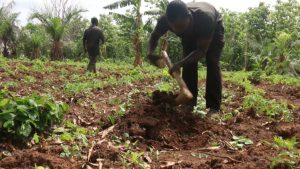
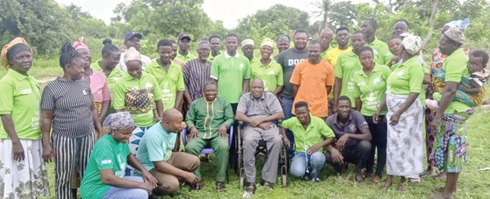
The Ministry of Food and Agriculture (MoFA), in partnership with the Forum for Natural Regeneration (FONAR), has launched a Striga control awareness campaign in the Upper East Region to tackle the growing threat of the parasitic weed to food production and rural livelihoods.
Striga, commonly known as witchweed, is a parasitic plant that attaches itself to the roots of cereal crops, including sorghum, millet, maize and rice, and deprives them of water and nutrients, negatively impacting yields.
In districts including Nabdam, Talensi, Bongo and Kassena-Nankana West, the infestation has become particularly severe, with some heavily affected farms recording crop losses of between 60 and 100 per cent.
The campaign on the theme: “Healthy Soils, Living Trees, Smart Practices Starve Striga – Regreen to Reclaim,” was held at Kparaboug in the Nabdam District, with funding support from Awaken Trees of Austria under the Farmer Managed Natural Regeneration for Women Empowerment and Livelihood Project (FMNR4WELIP).
The Executive Director of FONAR, Sumaila Saaka, said the weed had moved beyond being an ordinary agricultural pest to becoming a threat to household food security and rural incomes.
He explained that Striga could produce tens of thousands of seeds per plant, which could remain viable in the soil for many years, making the weed difficult to eradicate once a field became infested.
Mr Saaka said the situation was worsened by declining soil fertility, continuous cultivation of cereals, loss of tree cover, climate variability and the unintentional spread of Striga seeds through farm tools, animals, water runoff and contaminated crop residues.
He said the campaign was therefore designed to address both the weed and the underlying causes of land degradation.
Campaign
The campaign promotes Farmer Managed Natural Regeneration (FMNR), legume rotation and intercropping, application of compost and manure, early removal of Striga before seed production, and the use of tolerant crop varieties where available.
Mr Saaka said FONAR would provide farmer education materials, radio awareness messages, community sensitisation and school educational materials to improve the understanding of Striga and its control.
He said restoring soil health was central to the campaign because Striga thrived in degraded soils with low fertility.
“Lasting Striga control comes from combining several compatible practices consistently, season after season, across whole communities rather than single fields,” he said.
Targeting measurable results
The campaign seeks to ensure that at least 80 per cent of targeted farming communities can identify Striga, understand its life cycle and transmission pathways, and know at least three non-chemical control methods within the first year.
It also aims to increase the adoption of FMNR, legume rotation and soil fertility practices by 50 per cent in participating communities within two cropping seasons.
Over three years, the partners hope to achieve at least a 40 per cent reduction in Striga emergence and a 30 per cent reduction in associated cereal yield losses on participating and demonstration farms.
Mr Saaka said the Trans-Sahara WEFE Nexus Agroforestry initiative was being piloted in Tindongo and urged farmers to become “Striga control warriors” and called on district assemblies to include Striga management in their agricultural development plans.
Impact
The Nabdam District Crop Officer, Adams Musah, said Striga had become a serious threat to crop production in the district, with several farmers suffering substantial losses.
“Striga is a serious parasite that has affected crop yield in the Nabdam District, and we are grateful for this partnership with FONAR for this campaign,” he said.
Source: https://www.graphic.com.gh