Sep 17, 2026
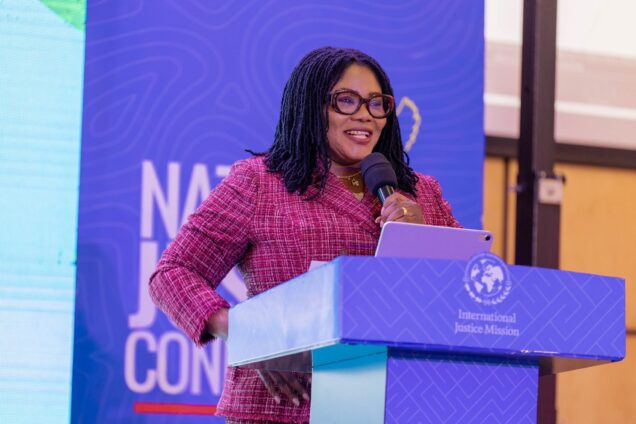
The government has allocated GH¢1.982 billion to the Ghana School Feeding Programme for 2026, with more than 4.5 million schoolchildren now receiving a hot meal every school day.
Minister for Gender, Children and Social Protection, Dr Agnes Naa Momo Lartey, said the programme currently covers 4,527,636 children, up from 4,029,580 in 2024.
She said the expansion demonstrates the government’s commitment to improving child nutrition while supporting school attendance and retention.
Dr Lartey said the allocation for the programme had increased from GH¢1.393 billion in 2024 to GH¢1.788 billion in 2025 and GH¢1.982 billion this year.
The feeding grant has also risen from GH¢1.50 to GH¢2 per child. “The amount used to be GH¢1.50 and that has been increased to GH¢2.”
She said government had also cleared caterer arrears from 2024 and paid the first and second terms of the 2025/26 academic year.
Monitoring has been expanded from 4,419 schools in 2025 to 8,270 this year, while 20,171 caterers and head cooks have received training in practical nutrition standards.
Dr Lartey has previously stressed that the government would not compromise on the quality and nutritional value of meals served to children.
Source:https://www.myjoyonline.com
Sep 16, 2026
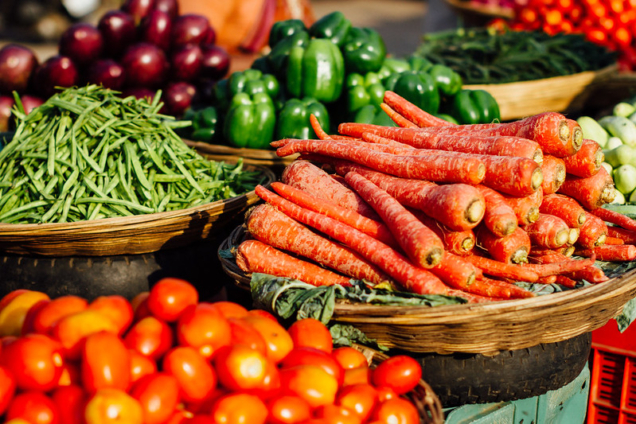
The latest AGRA Food Security Monitor report says food prices in Ghana remained largely stable in August compared to the previous month.
The August 2026 report says overall food price conditions remain relatively unchanged compared to July, with variations across food commodities such as rice, maize, and sorghum.
The report says the national average price of rice remained stable at GHS 11,100/MT, showing no month-on-month change.
“Prices were slightly higher than three months earlier (+0.9%) but remained 10.1% below six-month levels and 16.4% lower than a year earlier, reflecting adequate domestic and imported rice supplies.”
Click here to read the full report
The price of sorghum also remained stable during the month, with the national average price unchanged at GHS 5,833/MT.
“Prices were slightly lower than three months ago (-1.2%) and significantly below six-month levels (-10.3%), indicating improved market supplies compared to earlier in the year,” the report said.
However, prices remained 2.9% higher than a year earlier, suggesting that domestic market conditions are still somewhat firmer than those prevailing during the same period last year.
The report, however, notes the national average price of white maize increased by 8.9% month-on-month to GHS 3,141/MT.
“However, prices remained 8.9% lower than six months ago and 36.3% below year-earlier levels, suggesting that despite recent market tightening, overall supply conditions remain more favourable than a year ago.”
On broader cost-of-living trends, the report says Ghana experienced further increases in fuel prices in August.
Petrol prices rose by 3% and diesel prices by 1% compared with July. As a result, petrol and diesel prices stood 29% and 19% above March levels respectively, indicating sustained upward pressure in the domestic fuel market
The monthly Food Security Monitor tracks food security across 17 countries in Eastern, Southern, and Western Africa.
The report is produced by AGRA with support from the UK Government’s Foreign, Commonwealth & Development Office (FCDO) through the Africa Food Trade & Resilience Programme.
Regional and global trends
On regional trends, the report observes that in West and Central Africa, first-season maize production has generally remained near average, but agricultural conditions remain fragile across Nigeria’s Middle Belt, Mali, Burkina Faso, Benin, Chad, and parts of the Sahel due to highly variable rainfall distribution and localized moisture deficits.
Although seasonal forecasts suggest generally average rainfall across much of the region, drier-than-normal conditions are anticipated in some coastal zones and in central Nigeria, potentially affecting crop performance later in the season.
Across Africa, fertiliser prices remained elevated in several countries, particularly in East and Southern Africa, although recent declines in countries such as Zambia, Ghana, and Nigeria suggest easing price pressures and improving market conditions in some markets amidst policy interventions.
The report notes global commodity market trends in August 2026 were characterised by rising food and agricultural commodity prices amid tightening global supply conditions, strong demand, weather-related production concerns, and trade disruptions.
Global grain markets tightened further as 2026/27 production forecasts were reduced due to adverse weather conditions, particularly in Europe, while disruptions to Black Sea exports added upward pressure on prices.
Climate-related risks higher for upcoming farming season
The AGRA report says in West and Central Africa, agricultural production has generally remained near average, but variable rainfall, localised moisture deficits, conflict, displacement, and market disruptions continue to threaten livelihoods and food access.
Overall, the combination of El Niño-driven climate shocks, conflict, economic pressures, and displacement is expected to exacerbate food insecurity across the continent, underscoring the need for early preparedness, climate adaptation, and resilience-building measures.
The report cautions that a powerful El Niño event is developing in the Pacific Ocean and is projected to become one of the strongest on record during the 2026/27 season.
It notes that the U.S. National Oceanic and Atmospheric Administration (NOAA) estimates a greater than 90% probability of its continuation and a 69% chance of surpassing all El Niño events recorded since 1950. This is significantly increasing climate-related risks across Africa.
Source https://www.myjoyonline.com/
Sep 16, 2026
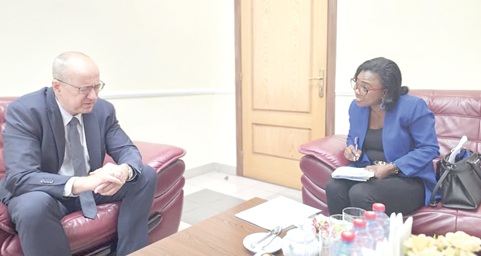
The Russian Embassy in Accra has issued scholarship opportunities to 97 specialist agriculture students as part of 237 scholarships awarded to Ghanaian students admitted to Russian institutions for the 2026/27 academic year.
The Russian Ambassador to Ghana, Andrei Ordash, who disclosed this in an interview with the Daily Graphic, explained that the concentration of the majority of the scholarships to agriculture students was because of Ghana’s interest in developing its agricultural sector, which he described as vital for the economy.
He said Russia consequently intended to help Ghana in that endeavour.
Mr Ordash said for Ghana to realise this ambition, it would need technologists and other specialists in that field, and that Russia, which had that expertise, was willing to offer the relevant help.
“Without qualified national specialists, it is impossible to implement any agricultural project, energy project, modern industrial programme, digital transformation or development of the mining sector,” he said.
Russia remains one of Ghana’s main trading partners, supplying Ghana with important commodities such as fertiliser for the agriculture sector.
Other supplies Ghana receives from Russia include grains and petroleum products.
Russian companies
Mr Ordash said Russian companies were already keen to expand their supplies of food and fertilisers to African markets, including Ghana.
He said that could include projects involving food processing, the supply of agricultural machinery and technology transfer.Newspapers
The Ambassador said the embassy had initially planned to give Ghanaian students 120 scholarships this year as part of a partnership to support Ghana’s development efforts, particularly in educating the youth.
However, he said, following assurances his government gave to Ghana’s Minister of Foreign Affairs, Samuel Okudzeto Ablakwa, during a recent trip to Moscow, that Russia would double the number of scholarships for young Ghanaians, the embassy decided to increase it by a further 117, including the 97 who would be trained in different faculties linked with agriculture.
Mr Ordash said over 900 young Ghanaians had applied for studies in Russia this year, adding that more than 500 Ghanaians were currently studying Russian at the University of Ghana alone.
He pointed out that education remained key in Russia’s cooperation with Ghana.Geographic Reference
Mr Ordash touched on a wide range of issues in the interview, including latest areas of focus in Russia-Ghana cooperation; trade and investment; Russia’s war with Ukraine and the upcoming Russia-Africa Summit in Moscow.
GraphicOnline, the online news platform of the Graphic Communications Group Ltd, published in August this year that Russia had doubled its annual scholarship allocation for Ghanaian students from 120 to 240.
Internal Audit Leadership Summit 4th Edition • Ghana • 2026 23rd–25th September, 2026 AUDIT REIMAGINED From Compliance To Consequence Bold Leadership. Foresight. Strategic Impact. CLICK TO REGISTER NOW!
The publication quoted Mr Ablakwa as saying that Ghana and Russia had also agreed to deepen cooperation in Ghana’s peace nuclear energy programme and green transition objectives.
Source:https://www.graphic.com.gh/
Sep 15, 2026
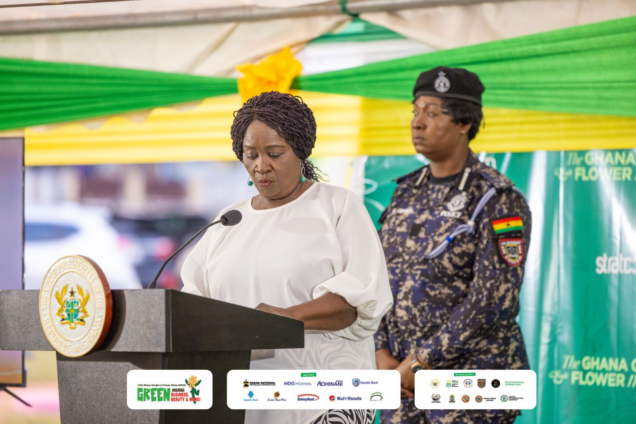
Vice President Prof Naana Jane Opoku-Agyemang has called for greater investment in Ghana’s horticulture sector, saying it can create jobs, build businesses and open new export opportunities for the country.
She said the sector must be viewed beyond the beauty of gardens and flowers, highlighting the broader economic activities that support the industry.
“Behind what we see are growers, skills, services, markets, and livelihoods,” she said.
Prof Naana Jane made the remarks on Friday when she opened the 14th Ghana Garden and Flower Show in Accra.
According to her, the opportunity lies in helping horticultural enterprises grow into sustainable businesses that can employ others, supply larger markets and compete internationally.
“The opportunity is to help more of these enterprises develop into sustainable businesses that can employ others, supply larger markets, and, where possible, compete beyond Ghana,” she said.
She pointed to Kenya as an example of what Ghana can achieve, insisting that the country has the potential to match or surpass such achievements.
“We know we can do same, if not more,” she said.
However, she stressed that developing the sector requires attention to the entire value chain, particularly because horticultural products can be highly perishable.
“Horticulture is demanding because much of what it produces sometimes is perishable,” she said.
She called for reliable transport, storage, quality standards, finance and access to markets to prevent value from being lost.
Under the government’s Feed Ghana Programme, she noted that vegetables are among the priority crops, with opportunities to expand production through irrigation, improved inputs, greenhouse production and better market access.
She also highlighted the establishment of farmer service centres across the country, which are expected to provide producers with export support, inputs, machinery, and market linkages.
Prof Naana Jane said horticulture also presents opportunities for young people by bringing together agriculture, technology, creativity and enterprise.
“The opportunity is not only to encourage young people to grow more, but also to help them to see the businesses they can build around their produce,” she said.
She further linked the growth of horticulture to Ghana’s environmental agenda, including the Tree for Life initiative and efforts to improve green spaces in towns and cities.
“Greening should therefore not be something we consider after development; greening should be part of development itself,” she said.
She urged local authorities, developers and businesses to create demand for green spaces while ensuring Ghanaian producers are equipped to serve the market and pursue export opportunities.
“Green means business,” she said, urging stakeholders to work together to make Ghana greener while creating businesses and livelihoods.
She also called on training institutions, financial institutions, the private sector and industry groups to play their respective roles in building the sector.
“Training institutions can develop the skills the sector needs. Financial institutions can support viable enterprises. The private sector can develop markets, and movements such as this one can continue bringing the industry together and making its possibilities visible,” she said.
Source:https://www.myjoyonline.com/

Sep 14, 2026
President John Dramani Mahama has reiterated his administration’s commitment to phase out the Double-Track System in the nation’s senior high schools (SHSs).
He said by the end of 2027, no school in Ghana should still be operating the double-track system, assuring that all students would attend school and vacate at the same time.
The President said this would increase contact hours between teachers and learners and improve educational outcomes.
President Mahama made the remarks during a Citizens’ Engagement held in Wa at the climax of his two-day Resetting Ghana Tour of the Upper West Region.
He noted that the Government had secured a 300-million-dollar facility from the World Bank to support efforts to eliminate the double-track system.
Touching on challenges in the education sector, President Mahama said his administration inherited a situation in which the Free Senior High School programme had been introduced without a dedicated funding source.
“As a result, schools depended on delayed budget releases every year. Headmasters constantly complained about inadequate funding and shortages of food,” he said.
He said some schools had to feed students with whatever food items were available because supplies arrived irregularly.
The President said the Government had since established dedicated funding for SHSs and student feeding programmes.
“Today, we have established dedicated funding for Senior High Schools. We have also created dedicated financing for student feeding, and complaints from headmasters have reduced considerably,” he said.
President Mahama also commented on the recent West Africa Senior School Certificate Examination (WASSCE) results, which he said had generated considerable public discussion.
“I do not wish to debate the statistics today because the figures are available for everyone to examine,” he said.
The President expressed satisfaction that the results reflected the genuine performance of students, attributing the development partly to improved invigilation and a reduction in organised examination malpractice.
“The era when students felt entitled to leaked answers and attacked teachers who enforced discipline must remain behind us,” President Mahama said.
“Our children must succeed because they have learned, and our teachers must teach with integrity,” he added.
Source:https://www.myjoyonline.com/