Jul 14, 2026
The Minister of Food and Agriculture, Eric Opoku, has stated that government interventions to boost local production of tomatoes will begin to yield visible results within the next four months and assured Ghanaians that the country’s dependence on imported tomatoes will soon be over.
He explained that the government had rolled out some interventions aimed at increasing domestic tomato production and reducing imports, particularly from neighbouring Burkina Faso.
“We have started working on that challenge, and we are bent on reversing that story. Within the next three or four months, the results will be out there for Ghanaians to testify,” he said.
Mr Opoku made the remarks when he appeared before Parliament’s Select Committee on Assurances.
It was to provide updates on commitments made by President John Dramani Mahama in the 2025 State of the Nation Address (SONA).
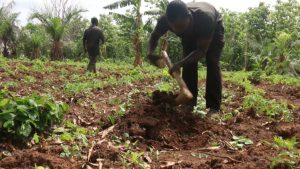
Mr Opoku explained that the government was investing in irrigation infrastructure, including the construction of solar-powered boreholes, to ensure year-round cultivation of tomatoes in major production centres across the country.
He stressed that interventions undertaken regarding the subject included drilling boreholes, installing solar-powered pumps to irrigate farmlands, and fencing farms in areas prone to livestock intrusion to protect crops, adding that irrigation projects were underway in several tomato-growing areas across the country.
“President Mahama himself has taken special interest in this, and he says that we should bring an end to the importation of tomatoes into this country, and we’ll do just that,” he stated.
Falling prices
Responding to concerns raised by the Chairman of the committee, Dominic Nitiwul, over falling food prices and the impact on farmers’ incomes, Mr Opoku acknowledged that while consumers were benefiting from cheaper food, many farmers were struggling to recover their production costs.
He described the situation as what agricultural economists referred to as “good-bad”, where abundant food production benefited consumers through lower prices but adversely affected farmers because increased supply depressed market prices.
“The bad-good is when there is a shortage of food in the system, like we witnessed in 2024 because of the dry spell. Then food prices started going up. A lot of people were pushed into abject poverty because of the rising food prices.
“But the farmers who were able to produce little made a lot of money because of the rising prices. So, for the farmers, it was good, but for the nation, it was bad. Now we find ourselves as a nation in this situation. I am a farmer. I am suffering. But the nation is the beneficiary,” he said.
To address the situation, Mr Opoku said the government had, therefore, submitted proposals to President Mahama and the Cabinet to cushion farmers against the effects of declining prices.
As part of the measures under consideration, he disclosed that the government had settled on the provision of free fertiliser as an emergency intervention to sustain farmers’ interest in production while pursuing long-term solutions through agro-processing and the creation of reliable markets.
He cautioned that prolonged low prices without adequate support could discourage many people from farming, emphasising the need to expand processing and value addition to absorb excess produce and guarantee stable incomes for farmers.

Jul 13, 2026
Minister for Food and Agriculture, Eric Opoku, has announced that the government has begun the nationwide distribution of fertiliser to support smallholder farmers, with each agricultural constituency receiving an allocation of 1,500 bags to boost food production.
Fertilizer
The minister disclosed the intervention when he appeared before Parliament’s Committee on Assurances on Thursday, July 9, where he provided an update on measures being implemented by the Ministry to improve access to agricultural inputs and enhance productivity across the country.
According to Mr. Opoku, the fertiliser distribution forms part of the government’s broader strategy to strengthen the agricultural sector by ensuring that farmers have timely access to essential inputs during the farming season.
He explained that the initiative is specifically targeted at supporting smallholder farmers, who constitute the majority of Ghana’s farming population and play a critical role in ensuring national food security.
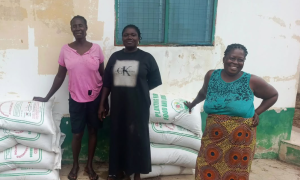
“We are also looking at input distribution. We have recently distributed fertilisers to all the agricultural constituencies in this country. Every constituency has been given 1,500 bags. It is not even district, it is every constituency.
“Those who have not received, maybe the contractors are still supplying, so they will receive theirs. But it is believed that by the close of next week, every district will have received the quantities we have assigned to them.”

Jul 13, 2026
The National Food Buffer Stock Company (NAFCO) has intensified efforts to secure additional storage facilities as it prepares for the next phase of the N
The programme is a government intervention designed to purchase surplus grains for storage and future use, while reducing post-harvest losses and protecting the livelihoods of local farmers.
Its initial rollout was hampered by inadequate funding and a shortage of suitable storage facilities, leaving many rice and maize farmers unable to sell their produce during periods of bumper harvests.
To address the challenge, NAFCO Chief Executive Officer, George Abradu-Otoo, has embarked on a nationwide tour to engage with state institutions to expand the country’s storage infrastructure.
During a two-day working visit to the Volta, Oti and Greater Accra regions, Mr Abradu-Otoo inspected a dilapidated 15,000-metric-ton warehouse in Tema owned by the Ministry of Food and Agriculture (MoFA).
Discussions are ongoing between NAFCO and the Ministry regarding the rehabilitation of the facility to support rice aggregation within the Shai Hills–Asutuare enclave.
At Juapong, the CEO inspected a warehouse at the defunct Volta Star Textiles Limited. Rehabilitation works have already begun following discussions between NAFCO and the Ministry of Trade, Industry and Agribusiness.
In Hohoe, Mr Abradu-Otoo assessed the condition of a 1,000-metric-ton warehouse constructed under the One District, One Warehouse initiative.
He directed that weeds be cleared, minor repairs undertaken and access routes improved to enable the facility to become operational immediately.
The NAFCO team also visited a 1,000-metric-ton warehouse in Pai-Katanga, Oti Region, with Regional Minister John Gyapong. The facility requires vegetation clearance and minor repairs before it can be put to use.
As part of the tour, the NAFCO delegation visited several senior high schools, including OLA Girls SHS in Ho, Worawora SHS, Kpando Technical Institute and EP Senior High School in Hohoe.
While school authorities reported that food supplies were adequate, they highlighted inadequate storage space as a major challenge in preserving food commodities.
The Regional Ministers for Volta and Oti, James Gunu and John Gyapong, commended NAFCO’s efforts to strengthen food security while protecting farmers’ incomes.
The latest tour follows similar visits undertaken earlier this year to the Eastern, Ashanti, Northern, Upper East, Upper West and Bono regions as NAFCO continues its nationwide drive to expand Ghana’s food storage capacity.

Jul 7, 2026
President John Dramani Mahama has visited the Belarusian industrial city of Brest as part of his state visit to Belarus, seeking to deepen cooperation in agriculture and explore solutions to strengthen Ghana’s food production and agro-processing sectors.
According to a statement from the Presidency, President Mahama toured one of Belarus’ largest agro-processing facilities, where he examined advanced dairy production technologies and processing systems used in the manufacture of baby food, milk, cheese, and milk powder for both domestic and international markets.
The President was received by Brest Governor Piotr Alexandrovich Parkhomchik and senior officials of the Belarusian Foreign Ministry.
Accompanied by his Advisor and Special Aide, Joyce Bawah Mogtari, and Ghana’s Ambassador to Moscow, Dr. Koma Steem Jehu-Appiah, President Mahama observed the company’s high-tech production processes and engaged management on opportunities for collaboration between Ghana and Belarus.
Speaking after the tour, President Mahama said Ghana was looking to leverage Belarus’ expertise as part of efforts to modernise its agricultural sector and achieve greater food self-sufficiency.
“We are here to tap into Belarus’ vast experience as we work to make Ghana self-sufficient in food production,” he said.
The President noted that reducing post-harvest losses remains a major priority for his administration, adding that the visit aimed to identify practical technological solutions that could help Ghanaian farmers preserve and add value to their produce.
According to the Presidency, the government is seeking to accelerate the transition from smallholder farming to large-scale commercial agriculture through the adoption of modern processing technologies and improved agricultural infrastructure.
The Managing Director of the agro-processing company, Aleksandr Savchits, said the firm generated more than $1.4 billion in revenue last year and has recently begun exporting dairy products to Ghana.
He expressed optimism about expanding exports to the Ghanaian market as economic and trade relations between the two countries continue to grow.
Savchits added that the company was interested in strengthening commercial ties with Ghana and exploring new opportunities for cooperation in the agricultural and food-processing sectors.
President Mahama used the occasion to invite Belarusian investors to partner with Ghanaian businesses and industry associations, stressing that such collaborations could create jobs, boost industrial growth, and enhance food security in Ghana.
The visit forms part of broader efforts by Ghana and Belarus to deepen bilateral cooperation in agriculture, industry, and trade.
Belarus is widely recognised as one of the world’s leading exporters of dairy products, including milk powder, butter, and cheese, with its dairy industry serving markets across Europe, Asia, Africa, and the Middle East.
Source: GNA

Jul 7, 2026
The Kingdom of Morocco has donated 2,000 metric tonnes of fertiliser to Ghana to support efforts aimed at boosting agricultural productivity and strengthening food security under the government’s flagship Feed Ghana initiative.
The donation, the second in a series, was officially presented at a brief ceremony held at the Ministry of Foreign Affairs in Accra.
Speaking at the event, the Minister for Foreign Affairs, Samuel Okudzeto Ablakwa, said the gesture reflects the deepening bilateral relations between Ghana and Morocco, as well as their shared commitment to strengthening agricultural resilience and food security, particularly in the wake of tensions in the Middle East.
“President John Dramani Mahama is investing in agriculture, particularly with the Feed Ghana Programme, in irrigation, improved seedlings and ‘Nkoko Nkitinkiti’ and other programmes to boost agricultural production. This donation is coming at an opportune time where we seek to boost agricultural production and improve our capacity for food security,” he said.
Ghana and Morocco have in recent years strengthened cooperation across several sectors, with agriculture emerging as a key area of partnership.
Morocco, which holds some of the world’s largest phosphate reserves and is a major global fertiliser producer, has positioned itself as a strategic partner for African countries seeking to enhance agricultural productivity.