Jul 7, 2026
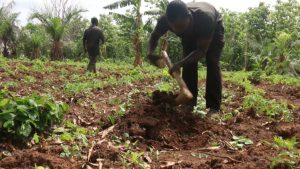
Government says it is repositioning agriculture as a modern and commercially viable sector to drive economic growth, create jobs and strengthen Ghana’s food security as part of its broader development agenda.
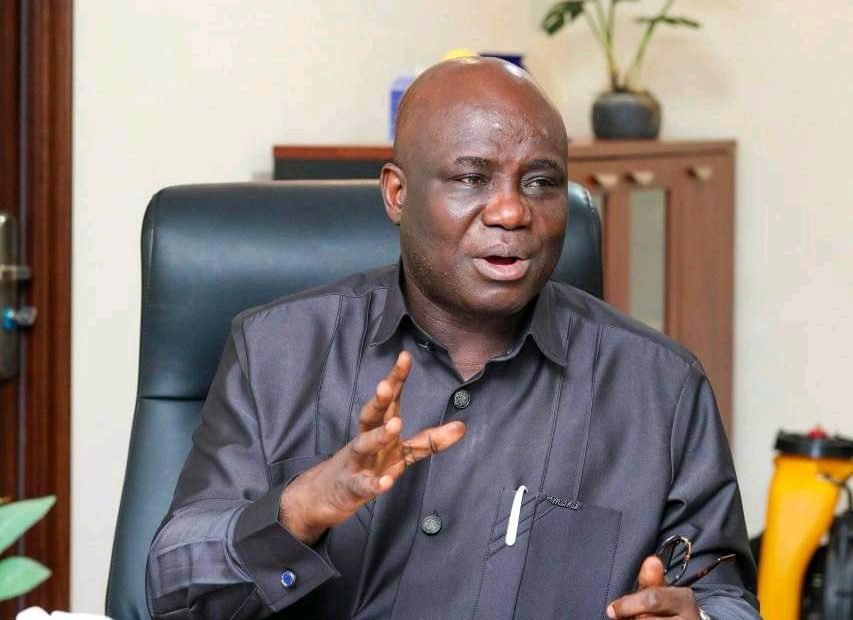
According to the Minister for Food and Agriculture, Eric Opoku, agriculture remains the backbone of the economy, contributing not only to food production but also to employment, industrial development and foreign exchange earnings.
Speaking at the launch of the 42nd National Farmers’ Day Celebration in Accra, Eric Opoku said the country’s economic transformation will depend on sustained investment in agriculture.
“Agriculture remains the foundation of Ghana’s development. It feeds our people, employs our youth, provides raw materials for industry, earns foreign exchange, supports rural economies and gives meaning to our national aspiration for increasing growth. No country has achieved true transformation by neglecting agriculture.”
The Minister said government is determined to make farming more attractive to young people while creating a sector that is profitable for farmers and dependable for local industries.
“No nation can secure its future while depending helplessly on others for the food that it can produce. That is why under the vision of His Excellency the President, government is working to reposition agriculture as a modern, profitable and top-grading enterprise. We are determined to make agriculture attractive to the youth, rewarding to farmers, reliable for industry and dependable for our dear nation.”
This year’s 42nd National Farmers’ Day, themed “Our Farmers, Our Food, Our Future,” will be celebrated in Sunyani in the Bono Region on Friday, December 4, 2026. Activities lined up for the celebration include a national agricultural fair, a farmers’ forum, innovation and research exhibitions, regional showcase events and the National Farmers’ Awards.
Eric Opoku said the theme reflects government’s belief that investing in farmers is ultimately an investment in Ghana’s future.
“The future of Ghana is tied to the strength of our farmers. It tells us that when we support the farmer, we secure our food. When we secure our food, we protect our people. And when we protect our people, we safeguard the future of our nation.”
Jul 6, 2026
Since the global pandemic, COVID-19 struck in 2019, the issue of food security globally has been a major concern.
Coupled with the devastating effect of climate change on food production, a number of measures have been adopted at various country level to contain the situation.
It was in the light of this that the Emergency Support to Rural Livelihoods & Food Systems Exposed to COVID-19 (ESRF) project was introduced by the government in response to the COVID-19 pandemic’s impact on smallholder farmers and food systems in 2019.
Funded by the International Fund for Agricultural Development (IFAD), this initiative aims to mitigate the effects of the pandemic on vulnerable populations and maintain food security in the country.
Project goals:
The overall goal of the ESRF project is to protect the livelihoods, incomes, and resilience of target groups from the impacts of the COVID-19 pandemic and climate change.
Through its three main components and various sub-components, the project aims to protect against hunger, build resilient livelihoods, and strengthen rural marketing linkages and food security in the country.
Financing and partnerships:
The total funding for the project is $40.1 million. The breakdown of the amount includes an IFAD loan of $20.0 million, an estimated co-financing from the Government of Ghana (through exemptions on taxes and duties) amounting to $5.3 million, representing 12.6 per cent of the total cost.
Additionally, there is a beneficiary contribution of $11.2 million, which represents 27 per cent of the total cost, and contributions from other development partners such as the World Food Programme (WFP), the UN Food and Agricultural Organization (FAO), the Government of Canada (GoC), among others.
Key interventions
The ESRF project demonstrates the commitment of the government and its partners to safeguard vulnerable populations and maintain food security amidst the challenges posed by the COVID-19 pandemic and climate change.
Over the past three years, the ESRF project has made significant strides in addressing the challenges faced by smallholder farmers and food systems in the country.
As the project draws its curtains down in August this year, four years since it was introduced, a number of smallholder farmers and families have been impacted positively.
For instance, the project has provided personal protective equipment (PPEs) to various departments and facilities, as well as sensitization campaigns and billboards to raise awareness about COVID-19 prevention measures.
In all, a total of 26,700 agric supply chain actors in 61 districts have been supported with PPEs and sensitization, while about 24,782 smallholder farmers across 14 regions have received agricultural inputs such as fertilizer and improved seeds for rice, maize, soya, and vegetables.
This has helped maintain and increase their production, food security, and climate change resilience.
Cash transfers have been provided to about 4,790 vulnerable beneficiaries, including 19 per cent females and five per cent persons with disabilities, to overcome hunger and prevent nutritional deficiencies.
Current project intervention
Poultry intervention aims to improve the livelihoods and nutrition security of targeted households by supporting smallholder farmers with production packs, training, and best broiler management practices across 11 districts in the Ashanti, Bono, Greater Accra, and Volta regions.
Digital extension support is promoting digital extension services through private and public extension agents, focusing on crop production practices, food conservation/preservation, and animal production practices.
Smallholder processing groups, particularly women and youth groups, are being supported with livelihood equipment and training to enhance their capacity in the conservation, preservation, and processing of food.
The project is constructing water harvesting schemes, commodity drying platforms, and boreholes in selected districts to promote environmentally friendly practices, conserve water resources, and optimize post-harvest processes for higher-quality rice production.
These interventions demonstrate the ESRF project’s commitment to addressing the challenges faced by rural livelihoods and food systems in Ghana, fostering resilience, and ensuring food security amidst the ongoing pandemic and climate change.
Working in synergy
Before the assumption of office by Dr. Bryan Acheampong as the Minister of Food and Agriculture, many projects in the agriculture sector were running in an uncoordinated manner. It took the efforts of the minister to ensure the agricultural sector thrived.
To achieve this, it was crucial to coordinate and harmonize projects within the sector to work together towards a common objective.
In addressing this phenomenon Dr. Bryan needed the sector to bounce back strongly and so, he consequently carried out an assessment of ongoing projects, to help in understanding the status and areas that needed improvement.
The outcome guided the steps that were taken to ensure that projects under the sector including the ESRF were aligned with the overall objectives of the agricultural sector to be executed through the Planting for Food and Jobs Phase II (PFJ 2.0).
At the end of the day, the necessary adjustments were made to ensure that the projects worked in synergy and contributed to a common objective.

Jul 6, 2026
A total of 500 Agricultural Extension Officers under the Feed Ghana Brigade are set to graduate from the Tesano Police Training School as part of government efforts to strengthen agricultural extension services and boost food production across the country.
The officers have undergone specialised training to support the implementation of the government’s Feed Ghana Programme, which seeks to increase agricultural productivity, enhance food security and create sustainable livelihoods.
Upon deployment, the graduates will provide advanced technical guidance to farmers and communities in all 276 agricultural constituencies.
Their responsibilities will include supporting backyard gardening, the Nkokonkitinkiti initiative, school-based agricultural projects and other interventions aimed at increasing local food production.
The initiative forms part of the Ministry of Food and Agriculture’s (MOFA) broader strategy to modernise agriculture by improving farmers’ access to extension services and promoting climate-smart farming practices.
The deployment of the officers is expected to bridge the gap between agricultural research and farming communities by providing timely technical support, promoting improved farming methods and encouraging greater youth participation in agriculture.
The graduation of the Feed Ghana Brigade also aligns with activities marking the 42nd National Farmers’ Day, underscoring government’s commitment to strengthening the agricultural sector and ensuring national food security through effective extension service delivery.
Jul 6, 2026
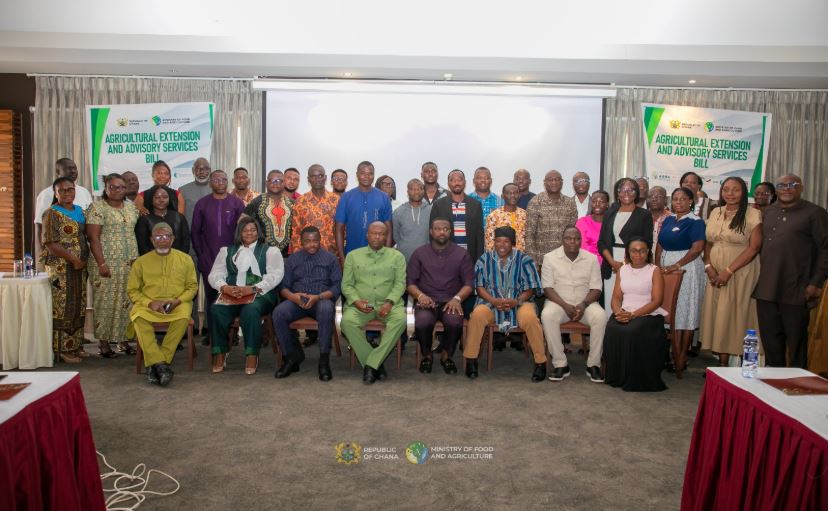
The Ministry of Food and Agriculture (MoFA) has reaffirmed its commitment to strengthening Ghana’s agricultural extension system through the proposed Agricultural Extension and Advisory Services Bill, a legislative framework aimed at modernizing extension service delivery and to support the successful implementation of the Feed Ghana Programme.
At a stakeholder engagement on the Bill held on the 25th of June, 2026 at the Peduase Valley Resort, the Deputy Minister for Food and Agriculture, Hon. John Setor Dumelo, highlighted the vital role extension plays in Ghana’s economy.
He observed that despite its importance, the sector continues to face challenges including low productivity, limited adoption of improved technologies, inadequate access to information, weak farmer support systems, poor market linkages, and increasing climate-related risks. According to him, addressing these challenges requires a strong, modern, and responsive agricultural extension system capable of providing farmers with the knowledge, technologies, and market information needed to improve productivity and incomes.
Hon. Dumelo explained that the proposed Bill seeks to establish a clear legal and regulatory framework for the delivery of agricultural extension and advisory services across the country.
“A key component of the legislation is the establishment of a National Agricultural Extension and Advisory Services Council to regulate extension professionals, set standards, prescribe codes of ethics, and ensure proper training, accreditation, and certification of practitioners” he stated.
The Bill also proposes the creation of a Regulatory Unit within the Directorate of Agricultural Extension Services to oversee the registration, accreditation, monitoring, and evaluation of institutions and organizations providing extension and advisory services. This, he noted, will help ensure that service providers operate in line with national standards and contribute effectively to agricultural transformation.
According to the Minister, extension officers play a critical role in agricultural development, serving not only as providers of information but also as technical advisors, trainers, facilitators, innovators, and trusted partners to farmers. He stressed the need to equip them with the necessary skills and professional support to deliver quality services.
He further noted that the legislation goes beyond increasing the number of extension officers and seeks to transform the entire agricultural support system to better serve farmers and strengthen the agricultural sector.
Hon. Dumelo commended the Alliance for a Green Revolution in Africa (AGRA) for its technical and financial support in the development of the Bill and called on stakeholders to provide practical and constructive recommendations to strengthen the proposed legislation.
He expressed confidence that the Bill, once passed and implemented, will modernize agricultural service delivery, empower farmers, strengthen institutions, and contribute significantly to building a more productive, resilient, and competitive agricultural sector in Ghana.
Jul 2, 2026
The Ministry of Food and Agriculture says it is intensifying efforts to stabilise food prices while protecting farmers from losses by expanding buffer stock purchases and improving market access for agricultural produce.
Speaking on the Asaase Breakfast Show on Thursday (2 July), Special Aide to the Minister for Food and Agriculture, Dr Michael Boakye, said government had introduced measures to ensure farmers receive fair prices for their produce despite increased harvests.
He said while prices of staples such as maize, rice and soya had declined compared with previous years, government was aware that many farmers were struggling to sell their produce at profitable prices.
“Every farmer goes into farming expecting a market. If they invest all their energy and resources and cannot get value for their produce, then agriculture cannot remain the backbone of the economy,” he said.
Boakye disclosed that government had strengthened the National Food Buffer Stock Company to purchase surplus produce directly from farmers.
“The Ministry of Finance has released funds to the buffer stock system to buy surplus maize, rice and soybeans from farmers at prices that will sustain their investments.”
He said the intervention is expected to provide a ready market, improve farmers’ incomes and strengthen Ghana’s food security.
According to him, implementation of the programme is at an advanced stage and farmers should begin benefiting within weeks.
He also attributed high food prices in urban centres partly to transportation costs, noting that much of Ghana’s food is produced in regions far from major consumption hubs such as Accra and Kumasi.
“When produce has to travel long distances without efficient road infrastructure, transport costs are added to the final price consumers pay.”
Boakye said government is investing in road networks linking farming communities to markets under its infrastructure programme to reduce transportation costs and improve food distribution.
He maintained that recent reductions in food prices demonstrate that government interventions are beginning to yield results.
“There is leadership in place to ensure Ghanaians have access to food while farmers also receive value for their hard work.”