Jun 19, 2026
The CEO of the National Food Buffer Stock Company (NAFCO), George Abradu-Otoo, says government’s decision to commit ¢300 million towards building a national grain reserve marks the beginning of a new era for food security in Ghana.
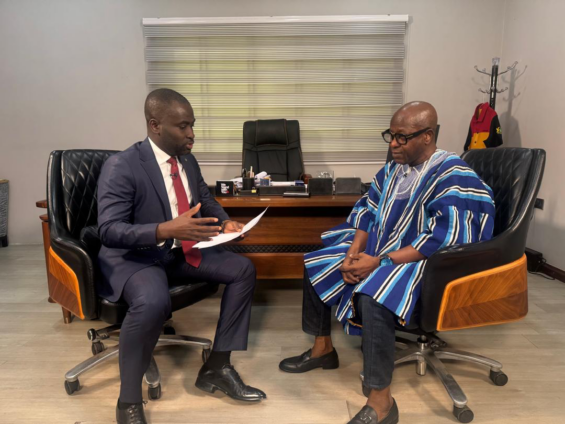
Speaking on JoyNews’ PM Express Business Edition on Thursday, he described the intervention as unprecedented and a major policy shift, even though the amount falls far short of what is required to make a significant impact.
“Last year, Minister of Finance Dr Ato Forson announced that they were giving us further ¢200 million to continue the good work that we were doing, so in other words, so far we had only ¢300 million,” he said.
Mr Abradu-Otoo explained that the resources available to the Buffer Stock Company remain inadequate for large-scale grain purchases aimed at stabilising prices and protecting farmers from post-harvest losses.
“If we need to do proper meaningful mopping up of excess grains, we need no less than ¢1.5 billion, so you can imagine what ¢300 million has done,” he noted.
Despite the funding gap, he insisted the allocation should be viewed as an important first step.
“But it’s a good beginning because it hasn’t been done before. That’s where I draw my comfort from,” he said.
According to him, the significance of the initiative lies not only in the money committed but in government’s recognition of the need for a strategic national food reserve.
“It’s a good beginning for the government to even think in the first place that we need to have a national food reserve,” he stressed.
Mr Abradu-Otoo revealed that Ghana has long been an outlier within the West African sub-region for lacking a formal food reserve system.
“Because if you take the West African sub-region, Ghana is the only country that did not have a food reserve, can you believe that?” he said.
He added that even countries facing security and economic challenges have maintained grain reserves to cushion their populations against supply disruptions and food shortages.
“Interesting, we can also have Mali, etc, have a national food reserve,” he observed.
The Buffer Stock CEO believes that establishing a grain reserve will strengthen Ghana’s ability to respond to food production shocks, support farmers by purchasing surplus harvests, and improve national food security over the long term.
For him, the challenge now is to build on the initial investment and mobilise the additional resources needed to expand grain purchases to meaningful levels.
Jun 19, 2026
For years, Ghana stood out in West Africa for the wrong reason. It had no national food reserve system, even as neighbouring countries had already established theirs.
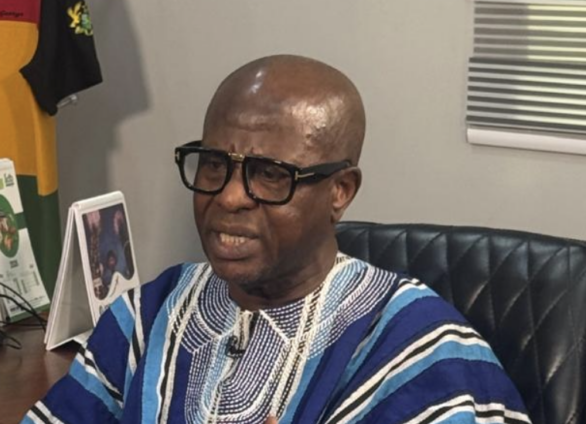
That revelation came from the CEO of the National Food Buffer Stock Company, George Abradu-Otoo, who described government’s recent efforts to build food reserves as a major policy shift despite severe funding constraints.
Speaking on JoyNews’ PM Express Business Edition on Thursday, Mr Abradu-Otoo said the company has so far received only ₵300 million for grain purchases, far below what is required to undertake a meaningful intervention.
“Last year, Minister of Finance Dr Ato Forson announced that they were giving us further ₵200 million to continue the good work that we were doing, so in other words, so far we had only ₵300 million,” he said.
According to him, the amount is insufficient for the scale of work expected from the Buffer Stock Company.
“If we need to do proper meaningful mopping up of excess grains, we need no less than ₵1.5 billion, so you can imagine what ₵300 million has done,” he stated.
Despite the shortfall, Mr Abradu-Otoo insisted the allocation represents an important first step toward establishing a national food reserve system.
“But it’s a good beginning because it hasn’t been done before. That’s where I draw my comfort from,” he said.
He noted that successive governments had never seriously pursued maintaining strategic food reserves, making the current initiative significant.
“It’s a good beginning for the government to even think in the first place that we need to have a national food reserve,” he added.
Mr Abradu-Otoo said Ghana’s absence from the list of countries with food reserves was particularly striking given developments elsewhere in the sub-region.
“Because if you take the West African sub-region, Ghana is the only country that did not have a food reserve, can you believe that?” he said.
He pointed to neighbouring countries that had already established such systems.
The Buffer Stock CEO’s comments come as government seeks to strengthen food security and stabilise prices by purchasing excess grains from farmers and storing them for future use.
However, his remarks suggest that achieving that objective on a meaningful scale will require substantially higher investments than those committed so far.
For now, Mr Abradu-Otoo believes the most important breakthrough is that Ghana has finally begun taking steps toward building a strategic food reserve, a policy many of its West African neighbours embraced years ago.

Jun 19, 2026
Ghana needs at least ¢1.5 billion to build a meaningful national food reserve system, far above the ¢300 million currently available to the National Food Buffer Stock Company, its CEO, George Abradu-Otoo, has said.
Speaking on JoyNews’ PM Express Business Edition on Thursday, he said the amount allocated so far is inadequate for large-scale purchases of surplus grains from farmers.
“Last year, Minister of Finance Dr Ato Forson announced that they were giving us further ¢200 million to continue the good work that we were doing, so in other words, so far we had only ¢300 million,” Mr Abradu-Otoo said.
He explained that while the funding has enabled the company to begin building reserves, it falls far short of what is required to make a real impact.
“If we need to do proper meaningful mopping up of excess grains, we need no less than ¢1.5 billion, so you can imagine what ¢300 million has done,” he stated.
Mr Abradu-Otoo, however, described the government’s intervention as an important first step towards strengthening the country’s food security system.“But it’s a good beginning because it hasn’t been done before. That’s where I draw my comfort from,” he said.
According to him, the government’s decision to prioritise establishing food reserves marks a significant policy shift.
“It’s a good beginning for the government to even think in the first place that we need to have a national food reserve,” he noted.

Jun 19, 2026
Ghana needs at least ¢1.5 billion to build a meaningful national food reserve system, far above the ¢300 million currently available to the National Food Buffer Stock Company, its CEO, George Abradu-Otoo, has said.
Speaking on JoyNews’ PM Express Business Edition on Thursday, he said the amount allocated so far is inadequate for large-scale purchases of surplus grains from farmers.
“Last year, Minister of Finance Dr Ato Forson announced that they were giving us further ¢200 million to continue the good work that we were doing, so in other words, so far we had only ¢300 million,” Mr Abradu-Otoo said.
He explained that while the funding has enabled the company to begin building reserves, it falls far short of what is required to make a real impact.
“If we need to do proper meaningful mopping up of excess grains, we need no less than ¢1.5 billion, so you can imagine what ¢300 million has done,” he stated.
Mr Abradu-Otoo, however, described the government’s intervention as an important first step towards strengthening the country’s food security system.
“But it’s a good beginning because it hasn’t been done before. That’s where I draw my comfort from,” he said.
According to him, the government’s decision to prioritise establishing food reserves marks a significant policy shift.
“It’s a good beginning for the government to even think in the first place that we need to have a national food reserve,” he noted.
He said Ghana has lagged behind its neighbours in setting up strategic food reserves despite being a major agricultural producer.
“Because if you take the West African sub-region, Ghana is the only country that did not have a food reserve, can you believe that?” he said.
Mr Abradu-Otoo pointed out that several countries in the region have long recognised the importance of maintaining food stocks to cushion their populations against supply shocks and price volatility.
“Interestingly, we can also have Mali, etc, have a national food reserve,” he added.
His comments come as concerns grow over food security, post-harvest losses and the need for government interventions to stabilise grain markets and support farmers during bumper harvests.
The Buffer Stock CEO believes that scaling up funding for the programme would enable the company to buy larger quantities of excess grain, reduce waste, and provide the country with a stronger buffer against future food shortages.

Jun 19, 2026
The Ghana Education Service (GES) has dismissed reports suggesting that students under the Free Senior High School (Free SHS) policy are being charged feeding fees, insisting that no school has been authorised to collect money from parents or students under any guise.
In a statement issued by management, the GES described circulating claims that schools were demanding GH¢1,700 for feeding as false and misleading.
The statement followed a radio broadcast in which allegations were made that the Free SHS policy was no longer entirely free, with some schools allegedly charging students for meals.
The GES stressed that the government’s commitment to sustaining and improving the flagship education policy remained unchanged and warned that any attempt to undermine it would be treated seriously.
“Management of the Ghana Education Service has not authorised or sanctioned any school to charge fees — under any name or in any form — from students or parents,” the statement said.
The GES urged the public to disregard what it described as unsubstantiated claims being circulated by persons seeking to misinform the public.
While denying any official approval for such charges, the GES acknowledged the possibility that some schools may be acting independently and cautioned that any institution found charging feeding fees would be operating unlawfully.
“Any school found to be charging money under the guise of feeding fees, as alleged, is acting unlawfully and without the approval of Management,” the statement emphasised.
The GES further warned that clandestine fee collection and the spread of misinformation about the Free SHS policy amounted to actions contrary to national interest.
“Government’s commitment to not only maintain the Free SHS policy, but improve upon it, has not changed,” the statement added.
The GES advised parents and students who may have been asked to pay unauthorised fees to report the matter to management for investigation and possible sanctions against offending schools.
The Free SHS policy, introduced in 2017, remains one of Ghana’s most significant social intervention programmes, providing tuition, accommodation and feeding support for students in public senior high schools across the country.
Although the programme has faced periodic concerns over funding, infrastructure and logistics, successive governments have maintained public assurances of their commitment to sustaining it.