Jun 19, 2026
The Minister for Education, Haruna Iddrisu, has expressed satisfaction with improvements in Ghana’s school feeding programme, noting that schools are currently not experiencing the food shortages that have affected the sector in previous years.
Speaking on June 9 at Aburi Girls’ Senior High School, the Minister said the situation marked a significant turnaround in the management of food supply in schools across the country.
“I’m also happy to note that at least for the first time in many years we are not suffering from food shortages in school,” he stated.
He attributed the improvement to the government’s decision to decap the Ghana Education Trust Fund (GETFund), which he said had strengthened the financing of school feeding operations through the Ghana Commodity Exchange and the Buffer Stock Company.
“Thanks to the de-capping of the GETFund, the GETFund through Ghana Commodity Exchange and the Buffer Stock is adequately making sufficient provisions for food,” Mr. Iddrisu explained.
According to him, the feeding component of the Free Senior High School programme is now being more effectively managed through sustained GETFund support.
“At least the feeding component of the Free Senior High School is now being managed well with GETFund funding,” he added.
The Minister further disclosed that the government has allocated GH¢4 billion this year specifically to cater to school feeding across the country.
Mr. Iddrisu also announced plans for a major expansion of educational infrastructure, indicating that the World Bank is expected to consider approval for the initiative on the 16th of this month.
“Only next week the World Bank will meet on the 16th of this month to give approval to what we have promised of expanded infrastructure,” he noted.
He explained that under the proposed programme, 30 Category C schools would be upgraded to Category B, while 20 Category B schools would be elevated to Category A, supported by a US$300 million investment.
“We intend to convert 30 category C schools to B and 20 category B schools to A with 300 million U.S. dollars for expanded infrastructure across the country,” the Minister said.
He added that Category A schools would also receive additional infrastructure support under the new plan.
“We will make a special provision for category A schools so that you benefit from an added infrastructure,” he stated.
Mr Iddrisu commended the leadership of Aburi Girls’ School, particularly the headmistress, for her role in maintaining discipline and supporting academic development
Jun 19, 2026
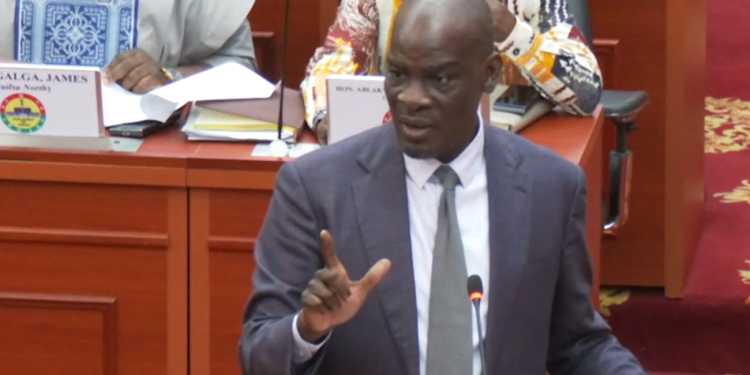
Education Minister Haruna Iddrisu has disclosed that the government has allocated 42% of the 2026 GETFund budget to the Free Senior High School (Free SHS) programme, with the funds largely dedicated to student feeding.
Speaking in Parliament on Thursday, June 18, 2026, Mr Iddrisu said the size of the allocation raises concerns about the sustainability of using GETFund resources to finance school feeding while also meeting the fund’s core obligations, including infrastructure development and support for basic education.
“Currently, the GETFund has allocated 42% of its local budget revenue to school feeding under the Free SHS Programme,” he said.
“What then will be left for infrastructure, basic education, and the others? That is why I have advised that we should realign the financing of GETFund to focus more on basic foundational learning, such as numeracy skills and literacy, which are important for the future learning success of our people.”
The minister suggested that the financing structure of GETFund should be reviewed to ensure greater emphasis on foundational education while preserving resources for infrastructure and other priority areas within the sector.
His comments came during parliamentary discussions on education financing and the long-term sustainability of key government programmes.
Meanwhile, the Member of Parliament for Atiwa East, Abena Osei-Asare, questioned the use of a significant portion of GETFund resources for school feeding, arguing that it falls outside the fund’s primary mandate.
“If you take 42% of their revenue for the school feeding programme, which is not part of their core mandate, then you ask yourself, how much is put down for infrastructure,” she said.
The debate highlights growing concerns over competing demands on GETFund resources, as policymakers seek to balance funding for Free SHS, school infrastructure, and foundational education initiatives.
GETFund was established to provide dedicated funding for educational development in Ghana, including infrastructure projects, scholarships and other interventions aimed at improving access to quality education.
Jun 17, 2026
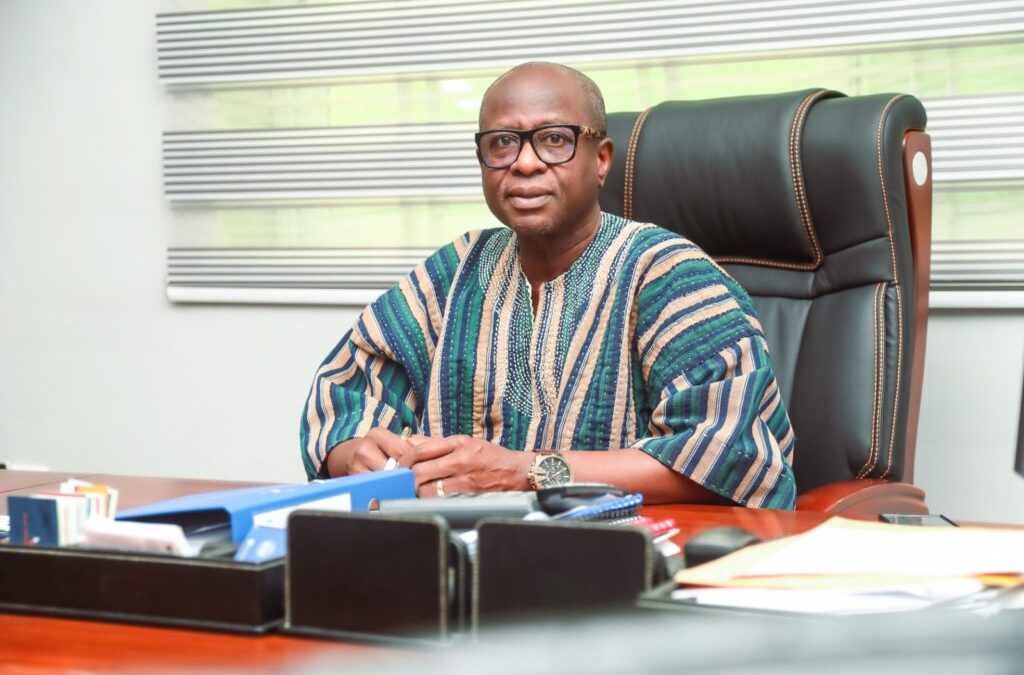
The State Interests and Governance Authority (SIGA) commends the National Food Buffer Stock Company (NAFCO) for one of the most remarkable financial recoveries ever recorded by a State-Owned Enterprise in Ghana. In 2025, NAFCO erased a loss of GH 19 million posted in 2024 and replaced it with a net profit of GH 91.7 million. This is a testament to the transformative power of disciplined governance, strategic leadership, and institutional resolve.
A FINANCIAL TRANSFORMATION BY THE NUMBERS
According to NAFCO’s 2025 Audited Accounts submitted to SIGA, the Company’s gross profit margin surged from 1.61% in 2024 to 13.96% in 2025. This reflects decisive cost discipline and robust revenue growth. Return on Operating Assets rose dramatically from negative 63.80% to a positive 26.29%, signalling a profound improvement in how the company’s assets are deployed and managed. Crowning these achievements, NAFCO paid GH 20.3 million in taxes to the State in 2025, the highest annual tax contribution in its 16-year history.
GOVERNANCE AT THE HEART OF SUCCESS
These gains were no accident. SIGA recognises that NAFCO’s turnaround was forged through a series of purposeful structural reforms: the establishment of a dedicated Procurement Department, a strengthened Internal Audit function, a fortified Food Safety Department, and the reconstitution of the Board and its sub-committees. The harmonious working relationship between the Board, Management and Staff proved equally decisive. In recognition of this milestone, the Board has approved the convening of NAFCO’s first-ever Annual General Meeting, which will be a landmark moment since the Company’s founding in 2010.
SERVING THE NATION BEYOND PROFIT
Profitability tells only part of the story. NAFCO remains an indispensable pillar of Ghana’s food security architecture. It is helping to stabilise food prices, reduce post-harvest losses, support smallholder farmers, which underpins critical government programmes including the Free Senior High School feeding and the National Food Reserve Initiatives. Its extensive storage network and food reserve operations continue to protect millions of Ghanaians from the volatility of food supply shocks.
“NAFCO’s achievement is a compelling demonstration of what Ghanaian public institutions can accomplish when governance principles are rigorously applied. It is a model we call upon all Specified Entities to emulate.”
— Prof. Michael Kpessa-Whyte, Director-General, SIGA
SIGA reaffirms its commitment to working closely with all Specified Entities to deepen corporate governance, enforce accountability, and ensure that every cedis of state investment generates maximum value for the people of Ghana. The Authority will continue to provide intensified regulatory oversight to sustain and build upon NAFCO’s hard-won gains.
Issued by:
Corporate Affairs Unit
State Interests and Governance Authority (SIGA)
Accra, Ghana
info@siga.gov.gh
Jun 17, 2026
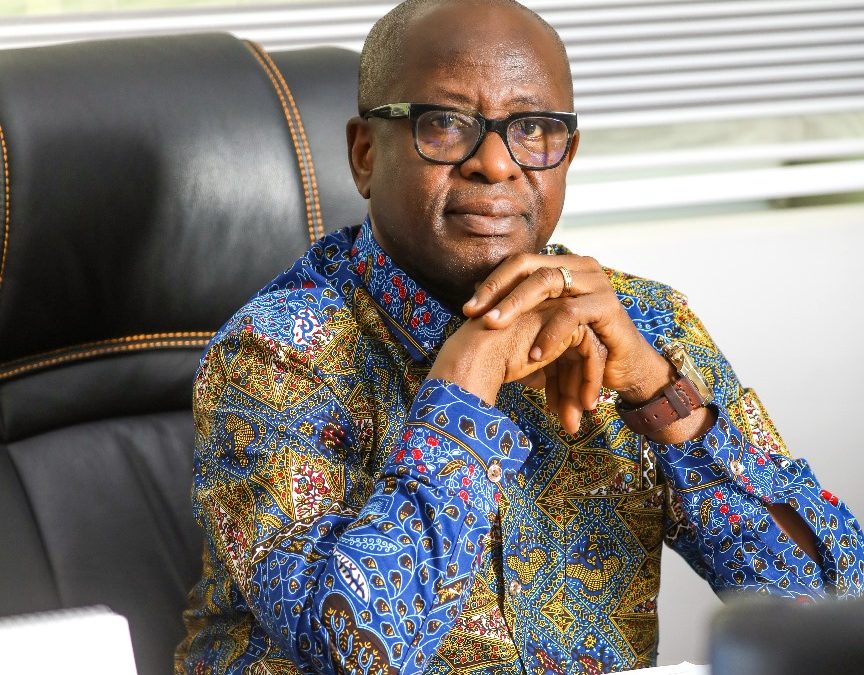
The State Interests and Governance Authority (SIGA) commends the National Food Buffer Stock Company (NAFCO) for one of the most remarkable financial recoveries ever recorded by a State-Owned Enterprise in Ghana. In 2025, NAFCO erased a loss of GH 19 million posted in 2024 and replaced it with a net profit of GH 91.7 million. This is a testament to the transformative power of disciplined governance, strategic leadership, and institutional resolve.
A FINANCIAL TRANSFORMATION BY THE NUMBERS
According to NAFCO’s 2025 Audited Accounts submitted to SIGA, the Company’s gross profit margin surged from 1.61% in 2024 to 13.96% in 2025. This reflects decisive cost discipline and robust revenue growth. Return on Operating Assets rose dramatically from negative 63.80% to a positive 26.29%, signalling a profound improvement in how the company’s assets are deployed and managed. Crowning these achievements, NAFCO paid GH 20.3 million in taxes to the State in 2025, the highest annual tax contribution in its 16-year history.
GOVERNANCE AT THE HEART OF SUCCESS
These gains were no accident. SIGA recognises that NAFCO’s turnaround was forged through a series of purposeful structural reforms: the establishment of a dedicated Procurement Department, a strengthened Internal Audit function, a fortified Food Safety Department, and the reconstitution of the Board and its sub-committees. The harmonious working relationship between the Board, Management and Staff proved equally decisive. In recognition of this milestone, the Board has approved the convening of NAFCO’s first-ever Annual General Meeting, which will be a landmark moment since the Company’s founding in 2010.
SERVING THE NATION BEYOND PROFIT
Profitability tells only part of the story. NAFCO remains an indispensable pillar of Ghana’s food security architecture. It is helping to stabilise food prices, reduce post-harvest losses, support smallholder farmers, which underpins critical government programmes including the Free Senior High School feeding and the National Food Reserve Initiatives. Its extensive storage network and food reserve operations continue to protect millions of Ghanaians from the volatility of food supply shocks.
“NAFCO’s achievement is a compelling demonstration of what Ghanaian public institutions can accomplish when governance principles are rigorously applied. It is a model we call upon all Specified Entities to emulate.”
— Prof. Michael Kpessa-Whyte, Director-General, SIGA
SIGA reaffirms its commitment to working closely with all Specified Entities to deepen corporate governance, enforce accountability, and ensure that every cedis of state investment generates maximum value for the people of Ghana. The Authority will continue to provide intensified regulatory oversight to sustain and build upon NAFCO’s hard-won gains.
Issued by:
Corporate Affairs Unit
State Interests and Governance Authority (SIGA)
Accra, Ghana
info@siga.gov.gh
Jun 17, 2026
The State Interests and Governance Authority (SIGA) commends the National Food Buffer Stock Company (NAFCO) for one of the most remarkable financial recoveries ever recorded by a State-Owned Enterprise in Ghana. In 2025, NAFCO erased a loss of GH 19 million posted in 2024 and replaced it with a net profit of GH 91.7 million. This is a testament to the transformative power of disciplined governance, strategic leadership, and institutional resolve.
Ghana travel guide
A FINANCIAL TRANSFORMATION BY THE NUMBERS
According to NAFCO’s 2025 Audited Accounts submitted to SIGA, the Company’s gross profit margin surged from 1.61% in 2024 to 13.96% in 2025. This reflects decisive cost discipline and robust revenue growth. Return on Operating Assets rose dramatically from negative 63.80% to a positive 26.29%, signalling a profound improvement in how the company’s assets are deployed and managed. Crowning these achievements, NAFCO paid GH 20.3 million in taxes to the State in 2025, the highest annual tax contribution in its 16-year history.
GOVERNANCE AT THE HEART OF SUCCESS
These gains were no accident. SIGA recognises that NAFCO’s turnaround was forged through a series of purposeful structural reforms: the establishment of a dedicated Procurement Department, a strengthened Internal Audit function, a fortified Food Safety Department, and the reconstitution of the Board and its sub-committees. The harmonious working relationship between the Board, Management and Staff proved equally decisive. In recognition of this milestone, the Board has approved the convening of NAFCO’s first-ever Annual General Meeting, which will be a landmark moment since the Company’s founding in 2010.
SERVING THE NATION BEYOND PROFIT
Profitability tells only part of the story. NAFCO remains an indispensable pillar of Ghana’s food security architecture. It is helping to stabilise food prices, reduce post-harvest losses, support smallholder farmers, which underpins critical government programmes including the Free Senior High School feeding and the National Food Reserve Initiatives. Its extensive storage network and food reserve operations continue to protect millions of Ghanaians from the volatility of food supply shocks.
“NAFCO’s achievement is a compelling demonstration of what Ghanaian public institutions can accomplish when governance principles are rigorously applied. It is a model we call upon all Specified Entities to emulate.”
— Prof. Michael Kpessa-Whyte, Director-General, SIGA
SIGA reaffirms its commitment to working closely with all Specified Entities to deepen corporate governance, enforce accountability, and ensure that every cedis of state investment generates maximum value for the people of Ghana. The Authority will continue to provide intensified regulatory oversight to sustain and build upon NAFCO’s hard-won gains.
Issued by:
Corporate Affairs Unit
State Interests and Governance Authority (SIGA)
Accra, Ghana
info@siga.gov.gh