Nov 17, 2025
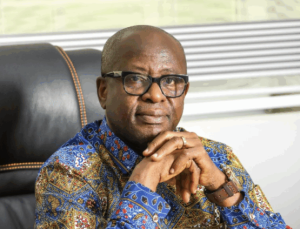
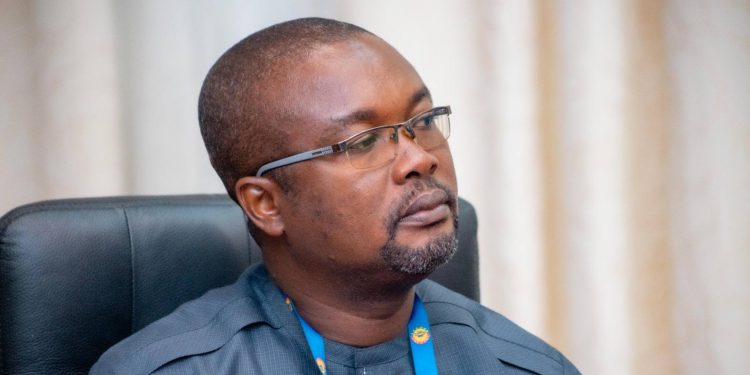
Member of Parliament for Ekumfi, Dr. Othniel Ekow Kwainoe, has called for increased investment in the agricultural sector, emphasising its critical role in Ghana’s economy and the livelihoods of citizens.
Speaking on Channel One Newsroom on Saturday, November 15, Dr. Kwainoe highlighted government initiatives such as the Farmer Service Centres, the retooling of farmers, and the Big Push programme, which will target roads, as positive steps.
However, he stressed that more investment is needed to fully harness the sector’s potential.
He noted that enhanced support for agriculture would create jobs, particularly for the youth, and strengthen socio-economic development across constituencies like Ekumfi.
“The decisions the government has taken, especially in the agricultural sector, give me a lot of comfort. Looking at my constituency, farming remains a very important factor in our socio-economic lives, so if the government is doing that for us, it is one thing I am really going to commend the government for.
“I believe that there should be more investment into the agricultural sector because today, it has been a big influence on our inflation, exchange rate and literally the producer price of everything in Ghana. For me the agricultural side is key,” he stated.
Source: CitiNewsRoom

Nov 17, 2025
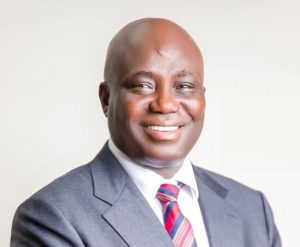
The Deputy Minister for Food and Agriculture , John Dumelo , speaking on GTV’s breakfast show on November 14, 2025 outlined how the government is leveraging technology, mechanization, and value-chain initiatives to make farming more profitable and sustainable. “Efficiency drives productivity. It drives profitability. With these interventions, we’re not just planting crops, we’re building the future of Ghana’s agriculture,” he said.
A key pillar of this transformation is the Feed Ghana program, which aims to equip both institutional and smallholder farmers with the tools and knowledge they need to succeed.
He added that , this year alone, 50 farm service centers are set to be established nationwide, providing access to tractors, combine harvesters, irrigation systems, improved seeds, and expert agricultural guidance. These centers will decentralize support, giving farmers in even the most remote areas the resources to maximize productivity.
The government is also tackling post-harvest losses through the establishment of processing facilities for key crops. A newly commissioned tomato processing factory in Agogo converts excess harvests into paste and ketchup, with similar initiatives underway for onions. These efforts aim to reduce post-harvest losses from as high as 40% to below 15% in coming years.
Technology is playing a central role in this revolution. AI-driven devices such as FarmSense allow farmers to analyze soil composition and apply fertilizers with precision, while modern tractors and irrigation systems are equipped with AI to optimize water and nutrient use. Tailor-made solutions ensure each region’s unique soil and climate conditions are accounted for, improving crop yields and efficiency across the board.
Other sectors are not left behind. Investments in poultry, fisheries, and oil palm plantations are creating jobs and reducing import dependence, while establishing complete value chains for local production. The oil palm initiative alone is projected to generate over 250,000 jobs while producing locally refined edible oils.
The Minister emphasized that Ghana’s agricultural transformation is not only about increasing output, it’s about creating a resilient, modern, and profitable sector that can attract youth participation, reduce reliance on imports, and build export capacity.
With technology, mechanization, and value-chain innovation at the heart of these reforms, Ghana is positioning itself to become a model for agricultural efficiency and sustainability in Ghana.
Source: CitiNewsRoom
Nov 14, 2025
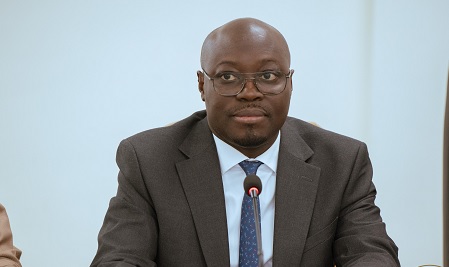
Ghana’s agriculture sector recorded strong growth of 6 per cent in the first half of 2025, more than doubling the 2.9 per cent growth from the previous year.
The expansion was broad-based, led by crops (6.2 per cent), livestock (5.8 per cent ), and fishing (7.7 per cent).
This was revealed by the Finance Minister, Dr Cassiel Ato Forson while presenting the 2026 Budget Statement and Economic Policy of Government for the year ending 31 December 2026, in Parliament on Thursday, November 13.
He said a key highlight was the recovery in cocoa production, which bounced back from a 21.4 per cent contraction in 2024 to 2.8 per cent growth in 2025.
Dr Ato Forson said the rebound was attributed to improved pest control, timely fertilizer distribution, and continued investment in farmer support programmes.
He added that agriculture’s performance underscores Ghana’s broader and more resilient growth, supported by higher household consumption, rising exports, and disciplined government spending — signalling a steady, job-creating recovery rooted in productivity and inclusiveness.
“Agriculture also delivered a robust performance, growing by 6.0 percent in the first half of 2025, compared to 2.9 percent a year earlier. Growth was broad-based, with crops expanding by 6.2 percent, livestock by 5.8 percent, and fishing by 7.7 percent,” he said.
“Most notably, cocoa production rebounded from a sharp contraction of 21.4 percent in the first half of 2024 to a positive 2.8 percent growth in 2025. This recovery was made possible by improved pest control, timely fertilizer distribution, and sustained investment in farmer support programmes.”
“Mr Speaker, these developments confirm that Ghana’s growth in 2025 is broader, stronger, and more resilient than a year ago, anchored in sectors that create jobs, add value, and stimulate inclusive prosperity,” he added.
He further mentioned that Ghana’s economy showed stronger momentum in 2025, with GDP expanding by 6.3 per cent in the first half of the year.
Growth, he said was driven by rising private consumption, prudent fiscal management, and increased exports.
He said total consumption expenditure rose by 6.7 per cent, reflecting renewed household confidence and government efforts to stabilize prices, create jobs, and boost real incomes.
“Mr Speaker, in summary, the expenditure-side growth story of 2025 is one of balance and responsibility: households are spending and thriving again, government is consolidating with discipline, and exports are driving national income. This is the kind of growth that sustains stability, creates jobs, and keeps Ghana firmly on course toward The Ghana We Want.”
Source: GRAPHIC ONLINE
Nov 13, 2025
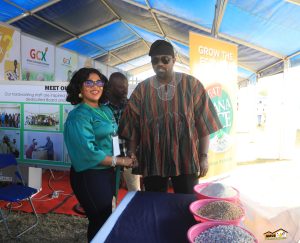
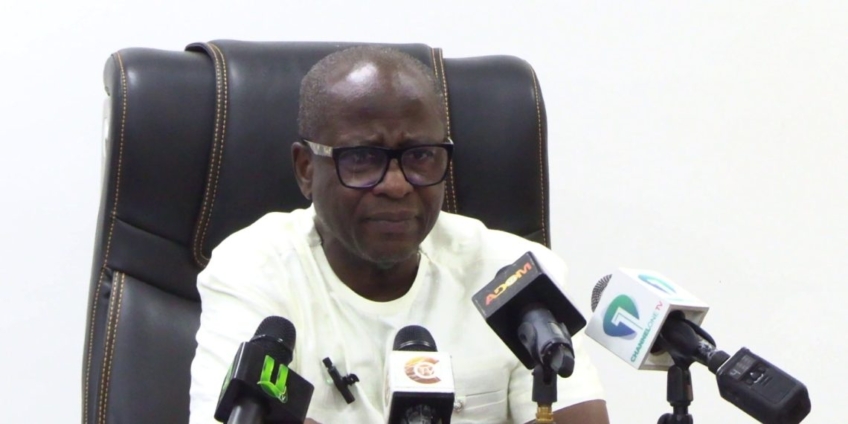
The National Food Buffer Stock Company (NAFCO) has disclosed that it has requested at least GH¢770 million to effectively address the ongoing food glut being experienced nationwide.
Although the company expects an allocation of GH¢200 million in the 2026 national budget, its Chief Executive Officer, George Abradu-Otoo, describes the amount as “a drop in the ocean.”
Speaking to the media, Mr Abradu-Otoo said the current glut has exposed long-standing funding challenges facing the Buffer Stock Company, which has historically lacked direct financial support to buy excess produce from farmers.
He disclosed that despite the limited funds, the company has deployed its contracted agents to farm gates to purchase surplus food crops for storage in its warehouses.
“Initially, we were given GH¢100 million. The minister wrote to me recently that they have added another GH¢100 million. I hear in the next budget that will be read on Thursday, there’s some GH¢200 million that will come. It’s like a drop in the ocean, but I am happy because this is the first time this is happening,” Mr Abradu-Otoo said.
He added that for many years, no government had ever provided direct funding for Buffer Stock to mop up excess produce.
“This is the beginning. The amount of money I requested is far higher than what they have given us now, but I am steadfast in the comfort that it is a modest beginning,” he stated.
“We are in the field now, and very soon the noise will go down. Initially, we requested GH¢770 million minimally, but so far they have given us GH¢100 million.”
There have been widespread reports of food gluts across key farming areas, with farmers struggling to find ready markets for their produce, leading to significant post-harvest losses.
Source: JoyOnline
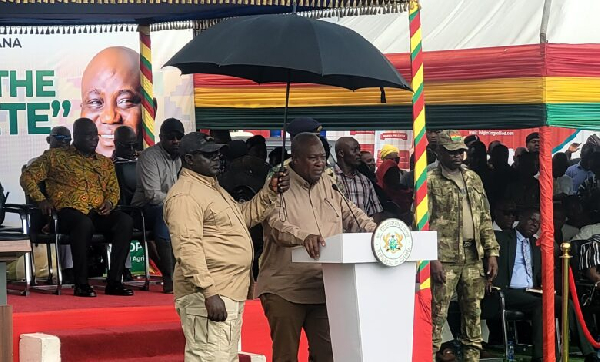
Nov 13, 2025
By; Ama Joycelyn Tseyiboe
President John Dramani Mahama has launched a major national program aimed at revitalizing the country’s poultry industry and enhancing household food security which was held on Wednesday, November 12, 2025, in Kumasi . The initiative, known as the Nkoko Nkitikiti Household and Backyard Poultry Production Initiative, was officially launched in Kumasi, described by officials as the birthplace of enterprise and innovation.
Speaking at the launch, the president emphasized that the initiative goes beyond being a mere government intervention , “it is a national movement to restore food self-sufficiency, strengthen household resilience, and create sustainable livelihoods for thousands of Ghanaians, especially women, youth, and vulnerable families” he said.
The Nkoko nkitikiti Initiative forms part of the government’s broader Poultry Industry Revitalization Program, a flagship component under the Feed Ghana Program and the National Plan for Agricultural Transformation, Food Security, and Shared Prosperity.
For years, Ghana’s poultry sector has faced several challenges, including high feed costs, limited access to improved breeds, inadequate processing facilities, and heavy dependence on imports. In 2023 alone, Ghana spent over $350 million importing poultry products , a situation government says is unsustainable.
“We must, and we will, reverse this trend. The time has come for Ghana to reclaim the pride of producing, processing, and consuming what we ourselves grow,” the president said.
Under the Feed Ghana Program, government is implementing a three-pronged strategy to rebuild the poultry value chain from household to commercial scale. These include the Poultry Farm to Table Project, Anchor Farmers, and the Ag Grower Support Scheme.
As part of this approach, 50 Anchor Farmers have been selected across the country, each expected to receive 80,000 birds, housing, logistics, and technical support. Together, these Anchor Farmers will produce an estimated 4 million birds, boosting local feed demand and linking producers directly to processors, he added.
Additionally, through the Food Systems Resilience Program, government is supporting 500 small and medium-scale poultry farmers nationwide to produce 3 million birds, bridging the gap between large-scale and community-level producers.
Source: gbcghanaonline