Oct 7, 2026
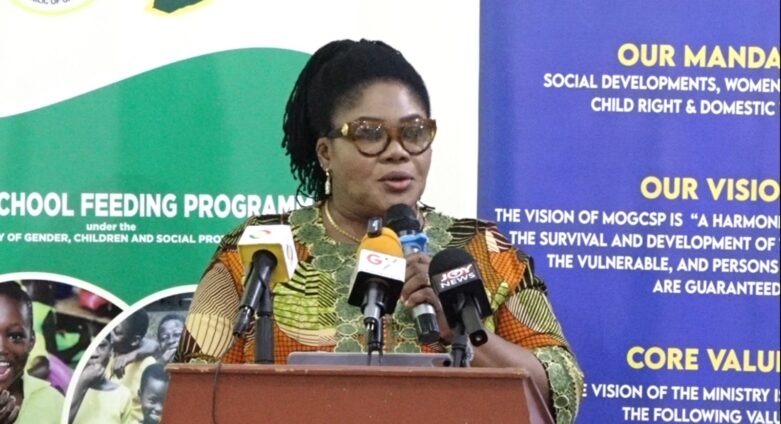
Minister for Gender, Children and Social Protection, Dr Agnes Naa Momo Lartey, has highlighted increased government investment and reforms in the Ghana School Feeding Programme under the administration of President John Dramani Mahama.
More than 4.5 million children are enrolled in the programme and receive one hot meal every school day.
Government funding for the programme has increased from GH¢1.393 billion in 2024 to GH¢1.788 billion in 2025 and GH¢1.982 billion in 2026.
The feeding grant per child has also been increased from GH¢1.50 to GH¢2 per child per day, with the government saying the increase will enable caterers to provide better-quality meals.
“Every school day, more than 4.5 million children sit down to enjoy a hot meal under the Ghana School Feeding Programme.
“For many of them, it is the most dependable meal of the day. It brings children to school, keeps them in class, and helps them to learn.
“These are significant investments at a time of limited public resources. They require us to ensure that every cedi provides a real child in a real classroom with a real meal,” she added.
The School Feeding Programme employs thousands of caterers and head cooks who provide meals for about 4.5 million children in basic schools.
The programme has, over the years, faced challenges including delays in the payment of caterers and inadequate supervision.
Dr Lartey, however, said arrears owed to caterers were now a thing of the past, following efforts by the government to ensure prompt payment.
She said the government had cleared the 2024 arrears it inherited and was ensuring up-to-date payments to caterers for the 2025-2026 academic year.
Dr Lartey also highlighted measures to improve the quality and monitoring of the programme, saying 20,171 caterers and head cooks had been trained in practical nutrition standards.
She said compliance monitoring had also nearly doubled, from 4,419 schools in 2025 to 8,270 schools in 2026.
“First, funding. The Ghana School Feeding allocation increased from 1.393 billion in 2024 to 1.788 billion in 2025. And this year, 2026, it increased further to 1.982 billion.
“Secondly, the feeding grant. We increased it from 1 cedi 50 pesewas to 2 cedis per child per day, enabling caterers to serve better meals. Thirdly, payments. We cleared the 2024 arrears we inherited and have continued paying caterers for the 2025-2026 academic year.
“Fourthly, quality. We trained 20,171 caterers and head cooks in practical nutrition standards and nearly doubled compliance monitoring from 4,419 schools last year to 8,270 this year, 2026.”
She was addressing a meeting of education directors from the Ashanti and Western North regions.
Dr Lartey, who emphasised the need for verified and accurate data from education stakeholders, called on education directors to support efforts to provide accurate enrolment figures.
She also called for strict reporting timelines and the designation of specific officers in every district to oversee transparency in school feeding data.
Meanwhile, National Coordinator of the Ghana School Feeding Programme, Hajia Fati Forgor, called for stronger collaboration with the Ghana Education Service.
“The school feeding programme started in the year 2005 with 10 schools, then 1,900 children benefiting from the programme.
“As we all know, it has evolved over the years and today, we can say close to 70% of Ghana public schools, KG and primary, are currently benefiting from the programme.
“We are looking at 4,527,000 children benefiting from that. We are looking at caterers who number 13,500 and 27,000 cooks who have also gotten jobs by way of providing this service to Mother Ghana.”
The Ghana School Feeding Programme is seeking stronger collaboration with the Ministries of Education, Agriculture, Health and Finance, among others.
Oct 6, 2026
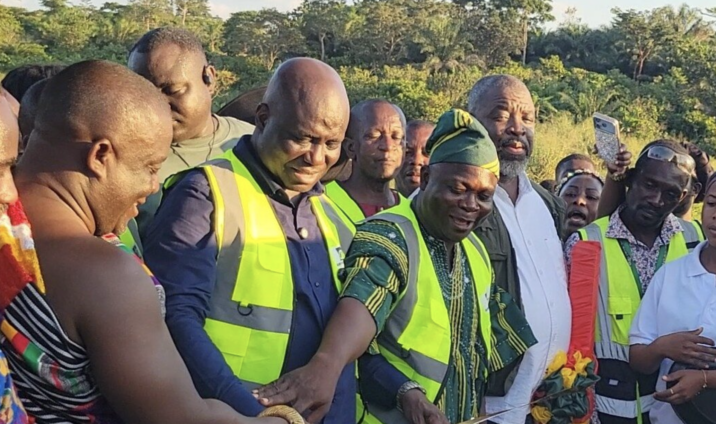
Eric Opoku, the Minister for Food and Agriculture, has cut the sod for the construction of an Inland Valley project at Aninkroma, near Barekese in the Atwima Nwabiagya North district.
The GHS 4.1 million cedis project, is expected to be completed within 16 months, to provide reliable year-round water supply to farmers, who would be engaged in the implementation of the Food Systems Resilience Project ( FSRP) being implemented by the Ministry of Food and Agriculture and the Atwima Nwabiagya North District Assembly.
The FSRP is designed to improve agricultural production and water management, strengthen food security, create sustainable livelihood opportunities for farmers, and favorable conditions for rice cultivation in the area.
Mr Opoku announced that in 2026, the National Best Farmer would get GHS 1.2 million brand-new pick-up vehicle, a tractor and enjoy a free research trip to Italy, as motivation.
He said the government would continue to invest in agriculture through the provision of infrastructure and support for farmers to help increase productivity, food security, improved income generation, and sustainable livelihoods.
Mr Opoku, therefore, urged all citizens, particularly the youth, to take keen interest in agriculture and venture into it, to improve their incomes and contribute to the economic growth of the nation.
Mr Mba Zechariah Alenbilla, the District Chief Executive (DCE), commended the government and the Ministry for choosing the district for the project, saying it would open a new chapter for the residents to enjoy the benefits.
He pledged to ensure the smooth execution of the project and its successful implementation to help achieve the intended purpose for the people.
Nana Gyedu Kumanin IV, the Amakyebarehene, who chaired the function, commended the government for the initiative.
Oct 5, 2026
The CEO of the National Food Buffer Stock Company (NAFCO), George Abradu-Otoo, has called for increased investment in technology to strengthen food security interventions across Africa.
According to him, greater deployment of technology in agriculture is critical to achieving the continent’s food sufficiency goals.
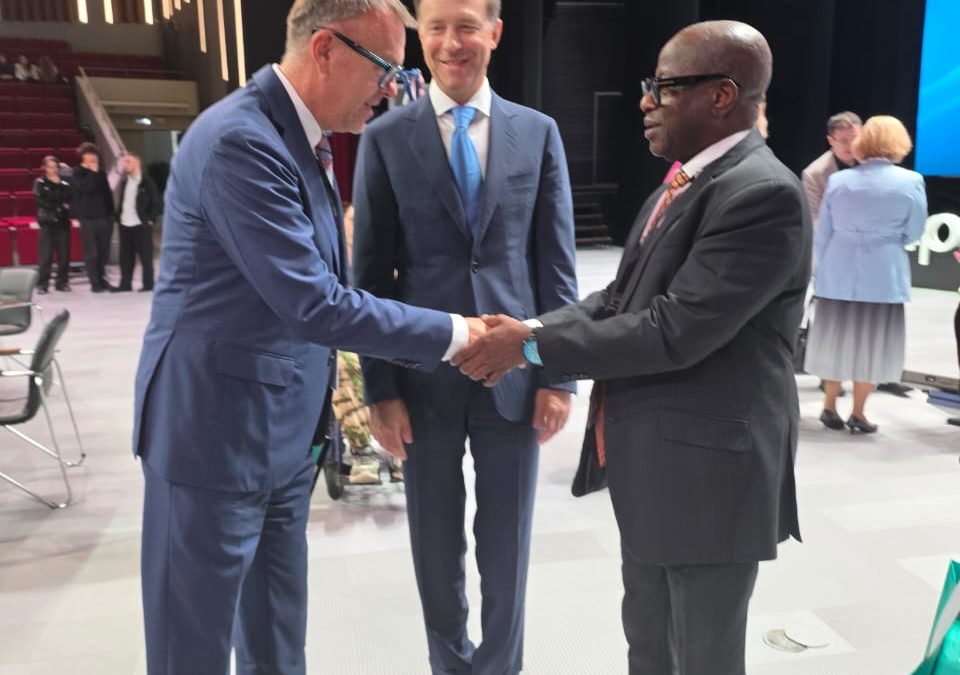
Mr Abradu-Otoo made the call at a forum on biotechnology, ecosystems and food security during the 2026 International Forum on Industry and Technologies for Humans in Gelendzhik, Russia.
The two-day event, known as BIOPROM 2026, brought together scientists, policymakers, government officials and trade experts to examine the impact of biotechnology on health, science and food security.
Mr Abradu-Otoo identified Artificial Intelligence, drones, climate sensors, and advanced irrigation systems as technologies that could help improve agricultural productivity and strengthen food self-sufficiency.
He also commended the Ghanaian government for strengthening public policy on agriculture through initiatives aimed at stimulating and increasing production, including the Agriculture for Economic Transformation programme.
The forum was opened by Russia’s Deputy Prime Minister, Denis Manturov, who reiterated the government’s commitment to addressing challenges contributing to food insecurity in the region.
Mr Abradu-Otoo subsequently held discussions with Mr Manturov and other Russian government officials on issues related to agriculture, technology and food security.
Oct 5, 2026
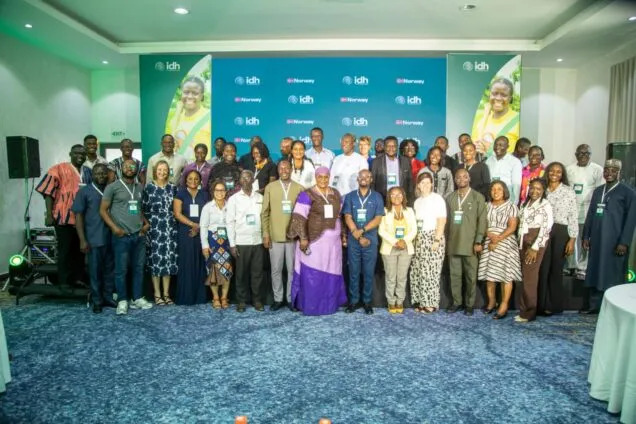
The Norwegian government is supporting a programme aimed at making agrifood markets more accessible to soybean farmers and strengthening the soybean value chain in Ghana.
The €3 million initiative, known as the Making Agrifood Markets Accessible (MAMA) programme, is being implemented by IDH, AGRA, IITA and YARA.
Programme Director, Africa Food System Transformation at IDH, Ms Mascha Middlebeck, speaking at the launch of the MAMA programme, said the programme would build on earlier interventions to improve market access for small and medium-sized farmers and enterprises.
IDH, the lead implementer, will coordinate the programme; AGRA will lead policy dialogue and sector convening; IITA will provide agronomy, seed system and climate-smart extension support; while YARA will provide input supply and crop nutrition.
The three-year programme targets 10,000 smallholder farmers, with 60 per cent being women, creating 20,750 jobs and partnering with six SMEs to improve market access.
She said the programme had emerged from previous efforts that strengthened relationships among small and medium-sized enterprises (SMEs), farmers and other stakeholders to improve access to soybean markets.
Ms Middlebeck said partnerships had also been strengthened with organisations including YARA, AGRA and the International Institute of Tropical Agriculture (IITA) to support the transformation of Ghana’s agrifood system.
She said soybean had become an important crop in Ghana, contributing to agriculture, food security, animal feed production and incomes, particularly for women and rural households.
She said despite its potential, smallholder farmers, SMEs, women and young people continued to face challenges, including limited access to finance, quality inputs, mechanisation, extension services and structured markets.
“Above all, there is limited access to structured, fair and competitive markets. Without access to markets, no incentives can be placed on farms and no incentives can change farming practices,” she said.
Ms Middlebeck said the MAMA programme would therefore establish stronger linkages between soybean farmers and major buyers while improving access to quality inputs, extension services and improved farming practices.
She said the programme would promote inclusive growth by increasing the participation of women and young people and ensuring equitable access to resources, markets and opportunities across the value chain.
Senior Programme Manager at IDH, Mr Rusmond Anyinah, said the programme would be implemented in 16 districts across the five northern regions, building on gains made through previous interventions.
He said earlier interventions had improved productivity through access to better seeds, fertiliser, farmer training and linkages between farmers and input suppliers.
Mr Anyinah said the programme was also projected to create about 20,000 on-farm and 750 off-farm jobs, supporting activities along the soybean value chain.
He said the programme had broader national economic significance, particularly in strengthening food security, creating employment, improving soil health and increasing the competitiveness of Ghana’s soybean production.
He said IDH would continue working with government institutions, development partners, private-sector actors and farmers to ensure that the programme delivered sustainable benefits and strengthened the soybean value chain.
Mr John Mikal Kvistad, the Norwegian Ambassador to Ghana, said the support, funded by Norwegian taxpayers, was aimed at improving market access and creating better returns for farmers and local businesses.
He said the initiative would improve access to quality seeds, better farming practices, markets and business opportunities, while contributing to food security, job creation and reduced dependence on imports.
The Ambassador said the success of the programme would depend on sustained collaboration among government, farmers, businesses and development partners.
Source:https://www.myjoyonline.com/norwegian-government-strengthens-soybean-value-chain-to-expand-market-access-for-farmers/
Oct 2, 2026
He said they are proposing changes to the procurement laws to require those spending public money to buy food from Ghanaian farmers.
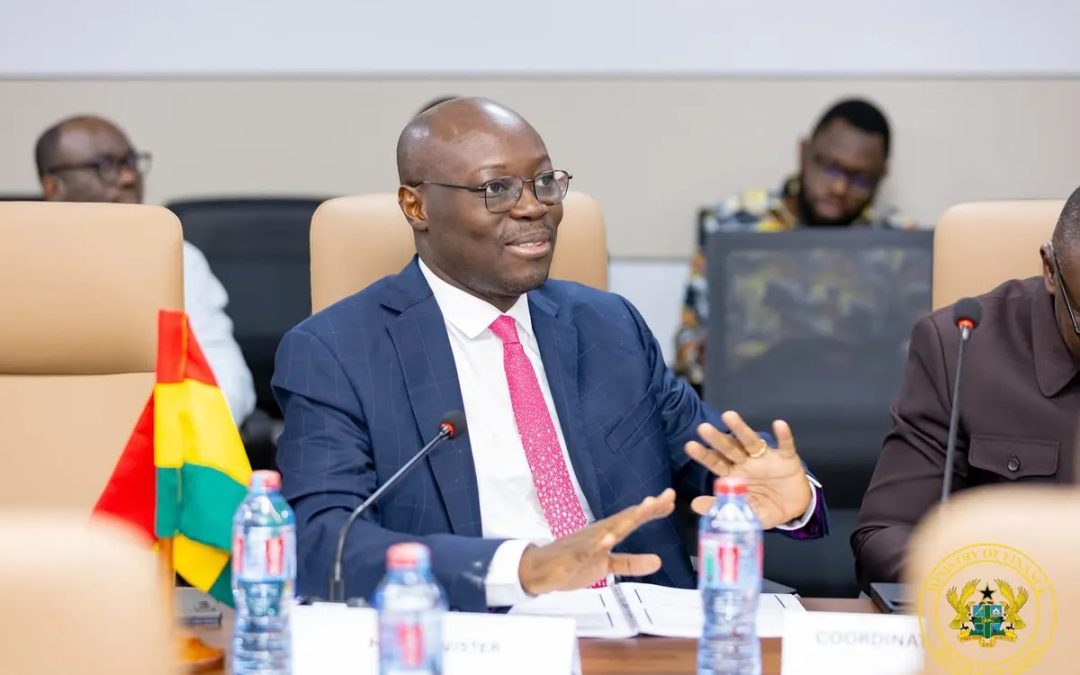
The Minister of Finance Dr Cassiel Ato Forson, has said that the Ministry is proposing changes to the procurement laws to require those spending public money to buy food from Ghanaian farmers.
He makes the point that government money must support Ghanaian farmers and create Ghanaian jobs; hence this proposal.
In a post on his X page, the Finance Minister said “We are proposing changes to the procurement laws to require those spending public money to buy food from Ghanaian farmers. Government money must support Ghanaian farmers and create Ghanaian jobs.”
Dr Forson earlier urged businesses to invest with confidence, assuring them that the Government will sustain the gains made in stabilising Ghana’s economy.
Speaking during a meeting with the leadership of the Association of Ghana Industries and leading captains of industry, Dr Forson said the Government’s new blueprint for economic transformation would be announced in the 2027 Budget.
“Feel free to invest because we will sustain the gains. The golden era for Ghana is beginning, and our new blueprint will be announced in the 2027 Budget,” he said.
The Finance Minister said the substantial improvements in the macroeconomic environment would be protected and strengthened.
“That is why the 2027 Budget will move Ghana from stability to transformation,” he stated.
Dr Forson noted that President John Dramani Mahama had already announced plans to invest US$10 billion in strategic sectors over the next four years.
“We want to produce more, add value and create more jobs for the Ghanaian economy. This means addressing the fundamental challenges we face as a country,” he said.
He added that the Government had deliberately reduced the cost of capital and would continue working to drive it down further to support business expansion and investment.
Dr Forson also called on industry to support domestic revenue mobilisation to reduce the Government’s reliance on excessive borrowing.
“We need your support to raise the necessary revenue so that the Government does not borrow beyond its means, as we saw in 2022,” he said.
Source:https://3news.com/