Oct 16, 2026
The Ministry of Food and Agriculture has endorsed efforts to improve agricultural logistics through private sector investment, stressing that affordable vehicle financing and reliable after-sales support will be critical to moving produce efficiently from farms to markets.
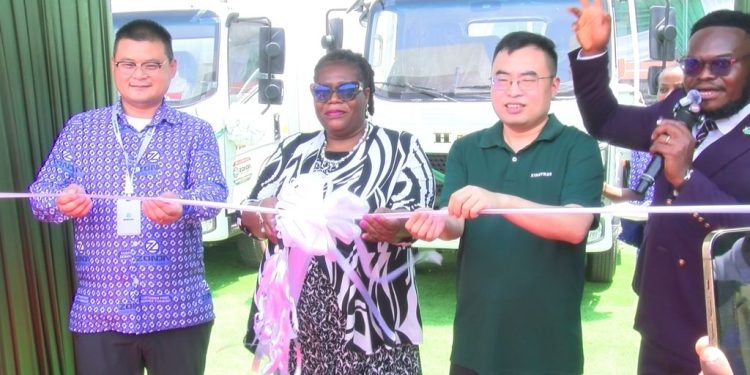
Speaking at the launch of the HOWO T3M light-duty truck by Zonda Tec Ghana in Accra, Deputy Director of Policy Planning at the Ministry, Ruby Neils-Palme, said efficient transportation must complement efforts to increase agricultural production under the government’s Feed Ghana Programme.
She noted that higher production alone would not deliver the desired economic benefits without effective systems for transporting, storing, processing and distributing produce.
“How do we move agricultural produce from where it is grown to where it is needed, at the right time, in good condition and at an affordable cost?” she asked.
The Ministry said the launch reflects an opportunity for private sector players to support the agricultural value chain, but emphasised that the usefulness of such vehicles would depend on their affordability, reliability and suitability for real operating conditions.
Neils-Palme said financing remains a major consideration for farmers and agribusinesses that need transport but may struggle to meet the full purchase price of a vehicle.
She proposed financing arrangements such as leasing and hire-purchase, alongside partnerships involving vehicle suppliers, banks, insurers and agricultural enterprises, to make commercial transport more accessible.
The Ministry also highlighted opportunities for cooperatives and producer groups to share vehicles, while specialised transport businesses could help farmers collect and deliver produce on schedule.
It further stressed the need for dependable after-sales services, including spare parts, trained technicians, warranties and maintenance support, warning that vehicle breakdowns during harvest periods could disrupt deliveries and lead to produce deterioration.
The HOWO T3M is a light-duty truck available in cargo and box-van configurations, targeting businesses requiring transport for goods and supplies.
The Ministry said further engagement with agricultural operators would help establish the truck’s suitability for different commodities, routes and operating costs, as well as the availability of technical support.
The launch comes as Ghana seeks to strengthen agricultural value chains and ensure that increased production translates into better market access, stronger business activity and improved returns for farmers.
Oct 13, 2026
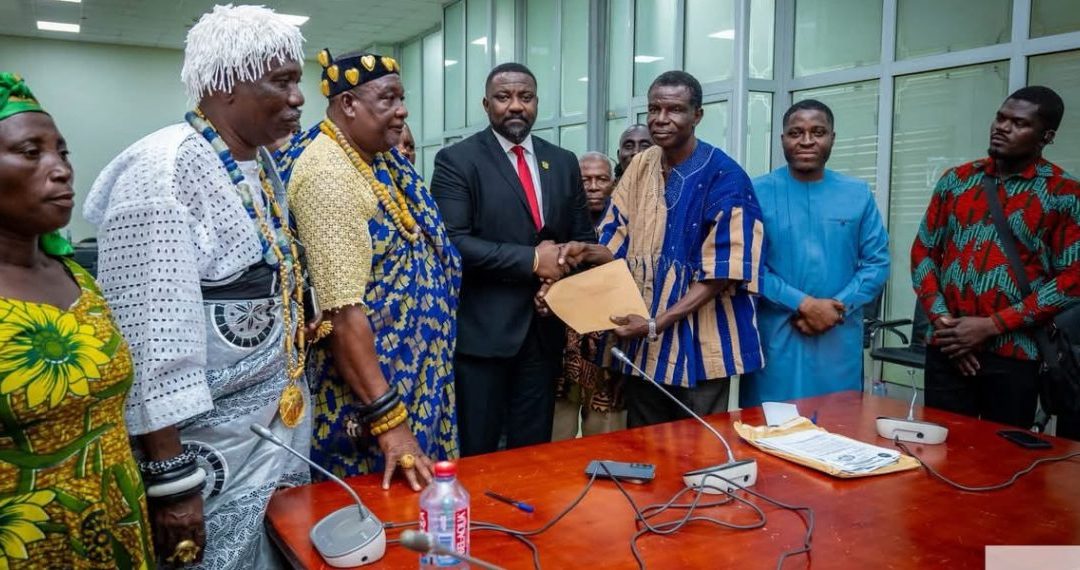
A delegation of chiefs, rice farmers and concerned youth from Weta has presented a petition to the Ministry of Food and Agriculture, demanding urgent action to address the challenges confronting the Weta Irrigation Scheme.
The farmers say the destruction of their rice fields has severely affected their livelihoods and are calling on the government to urgently address the concerns raised in the petition.
Gideon Kokroko, a member of the concerned youth of the Weta Irrigation Project, has also appealed to the government to provide financial assistance to farmers whose crops and livelihoods have been destroyed by the floods.
“1,203 farmers registered for the project. So far, we have invested a lot in it, but the floods came and consumed everything. We are appealing to the government, as a matter of urgency, to rehabilitate the project for us and provide financial support so that we can feed ourselves while waiting for the next farming season. We are suffering, and we are hungry,” he said.
The petition was received on behalf of the Minister by the Deputy Minister of Food and Agriculture, Hon. John Dumelo, who assured the delegation of the government’s commitment to rehabilitating the scheme and supporting farmers to restore the once-thriving agricultural project.
“I was informed by your Member of Parliament, Edem Agbana, that some farmers from his constituency wanted to meet me later today. I had an idea of what was contained in the petition. What I can assure you is that it is something that can be done and will be done,” John Dumelo said.
The farmers are demanding the urgent rehabilitation of the facility to restore farmlands severely affected by years of challenges. With more than 1,200 families affected, they are also appealing for appropriate compensation to help them recover their livelihoods.
Additionally, they have called for a thorough investigation into the utilisation of World Bank funds allocated for the redevelopment of the facility.
The situation demands urgent and decisive intervention. The Weta Irrigation Scheme is a critical agricultural asset with enormous potential to boost rice production, create jobs and strengthen Ghana’s food security. Its continued deterioration has come at a significant cost to farmers and their families. Further delays in addressing these challenges could worsen their plight.Ghana Business Insights
Meanwhile, the Member of Parliament for Ketu North, Edem Agbana, has assured his constituents of his commitment to sustained advocacy to ensure their concerns are addressed.
Speaking at the meeting to present the petition, Mr Agbana said he would continue engaging the relevant authorities to secure concrete action.
“I have assured the delegation that I will continue to engage the relevant authorities and push for concrete, measurable action. The concerns raised must translate into a clear rehabilitation plan, accountability for funds committed to the project, and a credible pathway towards restoring the livelihoods of affected farmers,” he said.
Source:https://www.citinewsroom.com/

Oct 12, 2026
The Farmers Services Centres initiative under the Feed Ghana Programme will be a game change for the nation’s agriculture, President John Dramani Mahama has said.
He noted that when all the 50 Farmers Services Centres across the country become fully operational, Ghanaians would see a revolution in the nation’s agricultural practices.
The President stated this in his remarks during an inspection tour of the Asunafo North Farmers Services Centre on day two of his two-day Resetting Ghana Tour of the Ahafo Region.
He said under the initiative, mechanised agriculture equipment would be placed at each Farmers Services Centre to provide services to the farmers.
The Government plans to roll out 50 Farmer Service Centres across agricultural districts nationwide, beginning with the first facility launched at Takoratwene in the Afram Plains in the Eastern Region.
Mr Eric Opoku, the Minister of Food and Agriculture, said construction works were underway currently on 15 out of the 50 Farmers Services Centre, which would be operationalized by the end of the first quarter of 2027.
Source:https://www.myjoyonline.com

Oct 12, 2026
President John Dramani Mahama has inspected ongoing works on the Poultry, Meat and Feed Processing Plant at Bechem in the Ahafo Region, as part of his Resetting Ghana tour, Ahafo Region edition.
The President, who cut the sod for the project about a year ago, expressed satisfaction with the progress of work, which he was told had reached about 50 per cent.
“When you award a contract to someone for a project like this, there is a need to monitor it and inspect it from time to time.
So, this visit is to monitor the progress of the factory.
As I came, I have seen that they are about 50 per cent into it, and I must commend Architecture and Engineering Services Limited (AESL), the consultants for the project,” President Mahama said.
He stated that when completed, the factory would position Bechem as the chicken capital of Ghana.
“When this factory is completed, Bechem will become the chicken capital of Ghana, and so I encourage all the youth in and around Bechem to take up poultry farming, take advantage of the Feed Ghana programme.
“Along the poultry value chain, the youth could even buy processed chicken from the factory for sale in other parts of the country,” he added.
Briefing the President, the Minister of Agriculture, Eric Opoku, said “work is around 50 per cent, and we don’t have any certificate that has not been paid. Even though we encountered some delays, now everything is paid.”
He said the contractor had given the assurance that by the close of the first quarter of 2027, the project would be completed and operationalised.
Mr Opoku said the plant would have two processing lines, including one for layers with a combined capacity of 6,000 eggs per hour.
He explained that when operational, the factory would require a constant supply of chickens to keep running for 24 hours, hence plans were afoot for the facility to enter into contract agreements with farmers across the Ashanti, Bono, Upper East and other regions for the off-taking and processing of their produce for the market.
The factory, he added, would also provide cold storage for the farmers.
Poultry production rises to 22%
Touting the gains of the ‘Nkokɔ Nketenkete’ programme, the Agric Minister disclosed that the country’s domestic poultry production had increased from 4.7 per cent, which the government inherited, to 22 per cent as of May 2026, describing the feat as unprecedented in the history of the country.
“This has never happened in the history of our country,” he said, adding that the programme had also resulted in a sustained glut of eggs in the country for almost one year.
“We want to ensure sustainability of the programme, which is making significant impact in the poultry sector of our country,” Mr Opoku said.
The Minister of Food and Agriculture recounted that following a directive by the President, he and the Minister of Trade, Agribusiness and Industry travelled to Burkina Faso for negotiations to export Ghana’s eggs, and upon the conclusion of talks, over 20 trucks of eggs that had been stranded at the borders were allowed entry.
“Since then, Ghana has been exporting eggs to Burkina Faso.
But that is insufficient to clear the glut that we are witnessing now. We are now going to implement the directive that you issued to us that we should add eggs to the School Feeding Programme for all schools under the programme.
We are working with the Minister of Education for implementation,” he stated.
Mr Opoku stated that the evidence of the egg glut was visible on the streets, with sellers offering two eggs for GH¢5.
Feed, hatchery, trucks
The Minister of Food and Agriculture further disclosed that the Bechem facility would include a feed production component, with the shells from the processing lines to be used in feed production, as well as a hatchery to produce day-old chicks for distribution to farmers to sustain the programme.
Additionally, Mr Opoku said two trucks were being procured under the contract for the distribution of packaged and branded broilers to the market.
He said a private operator would manage the facility to maximise efficiency, in line with the President’s directive.
Inspection
President Mahama also inspected a number of projects, including a CHPS Compound at Ahyiaem in the Tano North Municipality.
Oct 12, 2026
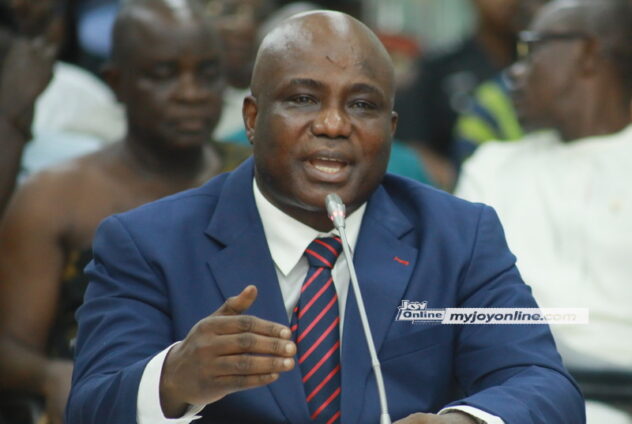
The Minister for Food and Agriculture, Eric Opoku, says Ghana has started exporting eggs to Burkina Faso as the government explores ways to address a sustained surplus in domestic production.
He said the exports followed negotiations with Burkina Faso after President John Mahama directed him and the Minister for Trade to secure access to the neighbouring country’s market.
According to Mr Opoku, the delegation encountered more than 20 trucks loaded with eggs at the border during the negotiations, and clearance was subsequently granted for the trucks to enter Burkina Faso.
“Immediately after our negotiations, they allowed all of them to enter; and since then, Ghana has been exporting eggs to Burkina Faso,” he said.
However, the Minister said the exports were insufficient to absorb the surplus, prompting the government to consider additional measures to expand the domestic market.
He said his ministry is working with the Minister for Education to implement the President’s directive to include eggs in meals served under the School Feeding Programme.
The Minister made the remarks during an inspection of a poultry, meat and feed processing facility under construction at Bechem in the Ahafo region.
He said the facility would have two processing lines, one for broilers and another for layers, with a combined capacity of 6,000 birds per hour.
To ensure a steady supply of birds, Mr Opoku said the government plans to establish contractual arrangements with poultry farmers in the Ashanti, Upper East and surrounding regions, under which the factory will purchase and process their output for the market.
The facility will also include three cold rooms, a feed mill and a hatchery to support production and improve the sustainability of the poultry programme.
Mr Opoku said the hatchery will produce birds for distribution to farmers, who would in turn supply the processing facility.
The government is also procuring two trucks to distribute the factory’s packaged and branded products to the market.
He disclosed that work on the project was approximately 50 per cent complete, adding that all outstanding certificates had been paid despite earlier delays.
According to Mr Opoku, the contractor has assured the government that the facility will be completed and become operational by the end of the first quarter of 2027.
Oct 12, 2026
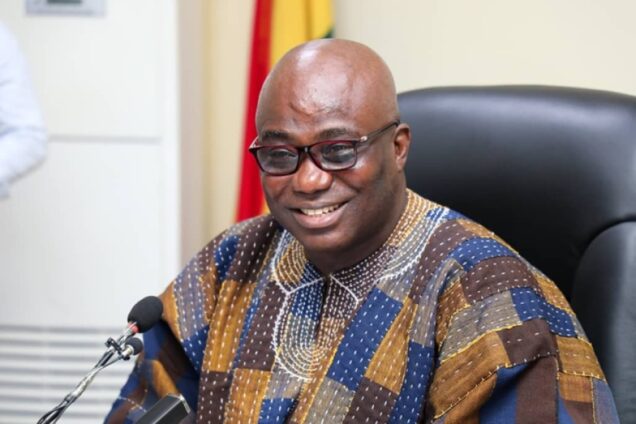
The government’s Nkoko Nketenkete programme has helped increase Ghana’s domestic poultry production from 4.6% to 22% as of May 2026, Minister for Food and Agriculture Eric Opoku has said.
Speaking during an inspection of a poultry, meat and feed processing factory at Bechem in the Ahafo Region by President Mahama, Mr Opoku said the increase has been recorded after the first year of implementing the programme.
“Your Excellency, after one year of the implementation of the programme, Ghana’s domestic poultry production has increased from 4.6%, as we inherited, to 22% as of May 2026. Twenty-two per cent. This has never happened in the history of our country,” he said.
Mr Opoku said the programme has also contributed to a sustained surplus of eggs in the local market for almost a year, prompting the government to explore additional markets for producers.
He explained that President John Mahama had directed him and the Minister for Trade to engage Burkina Faso on the export of Ghanaian eggs.
According to the minister, the delegation encountered more than 20 trucks loaded with eggs at the border during the negotiations. He said clearance was subsequently granted for the trucks to enter Burkina Faso, paving the way for Ghanaian egg exports.
However, he said exports alone would not be sufficient to absorb the excess supply.
The government is therefore working with the Ministry of Education to implement the President’s directive to include eggs in meals served under the School Feeding Programme.
Mr Opoku cited the widespread sale of eggs on the streets as evidence of the increased supply.
“The evidence is seen on our streets. Everywhere you go in this country today, eggs are being sold two for five cedis. And even that, the sellers add pepper and onion free of charge,” he said.
He added that the processing factory and its accompanying feed mill would support efforts to sustain the programme and strengthen the domestic poultry value chain.
Mr Opoku said the feed mill would also use eggshells in feed preparation, providing an additional use for the by-product.