Oct 9, 2026
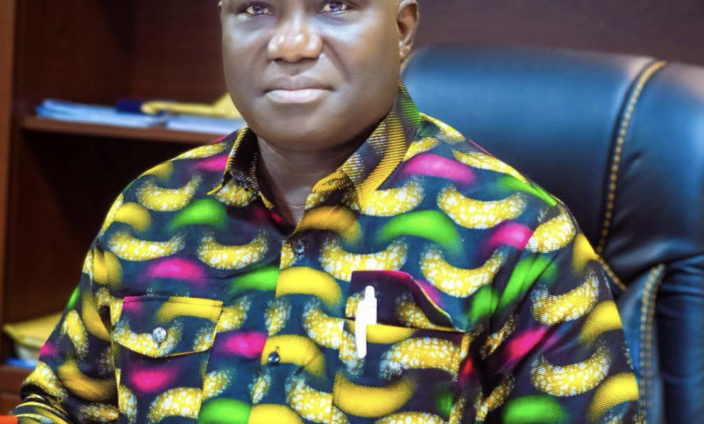
The Volta Youth in Agriculture has congratulated the Minister for Food and Agriculture, Mr Eric Opoku, on his dedicated leadership and efforts to advance agricultural production.
The youth group, however, appealed for markets for young cassava farmers in the region.
Madam Joy Fiamawle, the Public Relations Officer of the group, in an interview, commended the Minister for his commitment to make agriculture more productive, resilient and attractive to the youth in general.
“The Minister’s emphasis on increasing food production, supporting farmers, promoting agricultural value chains and building the capacity of young people to take part meaningfully in the sector is an important step towards a stronger and more sustainable agricultural economy,” she said.
Madam Fiamawle described agriculture as more than an economic activity, and called it a powerful vehicle for job creation, youth empowerment, food security, poverty reduction and national development.
She explained that the group appreciated initiatives and policies that placed farmers and young agricultural entrepreneurs at the centre of Ghana’s development agenda.
She said: As a group, we also welcome the Minister’s efforts to improve access to agricultural inputs, irrigation, mechanisation, markets, technology, and other resources needed to raise productivity.
“We believe that, with the right support, young people can become the next generation of commercial farmers, agribusiness owners, processors, exporters and agricultural innovators.”
She encouraged the Ministry to keep prioritising youth-led agriculture, particularly in regions such as the Volta, which the group said has significant potential for crop production, livestock, aquaculture, agro-processing, and agribusiness.
According to the group, a deliberate national programme that gives young farmers access to land, affordable financing, irrigation, improved seeds, mechanisation, extension services, storage and processing facilities, and guaranteed markets would significantly accelerate the transformation of the sector.
The group further suggested that stronger links between farmers and institutional buyers, including schools, hospitals, hotels, restaurants, and food processors, could create sustainable markets for locally produced commodities.
The group raised a specific concern about young cassava producers, adding that “many are becoming discouraged because they cannot find buyers for what they grow. We demand initiatives to secure markets for them.”
The Volta Youth in Agriculture assured the Minister of its willingness to work with the government and other stakeholders to promote agriculture among the youth, and pledged to continue to champion the message that agriculture is a business, a source of employment, and a pathway to prosperity.
The group said it was confident that with sustained leadership, collaboration and investment, the country could reduce its dependence on imported food, increase domestic production and build a competitive agricultural sector that could feed the nation and create wealth.
They said that the future of agriculture in the country would be brighter and that the youth must be at its heart.
Source:https://www.myjoyonline.com

Oct 9, 2026
The government has set a target for 2028 to make the country fully self-sufficient in rice production, with a total paddy production of 3.31 million tonnes.
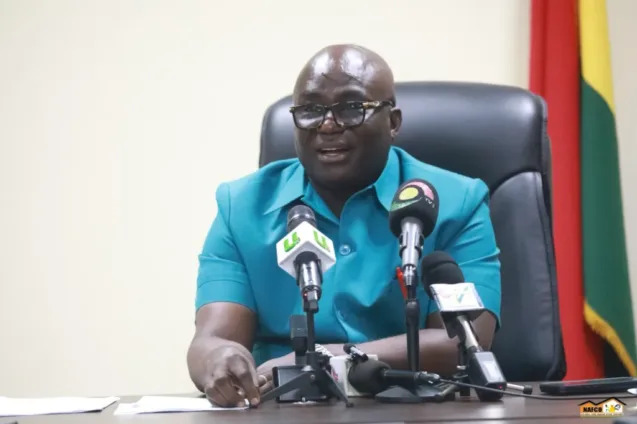
The Minister of Food and Agriculture, Eric Opoku, announced this at a press conference in Accra yesterday, on a Regional West African Resilient Rice Value Chains (REWARD) project.
“We have a gap of 44 per cent to fill, and our goal, our determination, is to fill this gap by the end of 2028,” he said.
Mr Opoku said rice was now the country’s second most important cereal after maize, and that population growth, urbanisation and changing consumer preferences had pushed demand well ahead of what local farmers could produce.
He said milled rice production had risen from about 650,000 tonnes in 2024 to 960,000 tonnes in 2025, yet local production met only about 56 per cent of national demand, with 44 per cent still imported at a cost of about $500 million annually.
“That is money that could be earned by Ghanaian farmers, millers, and traders,” the minister said.
Project
The minister said the REWARD project was an $18.8 million grant from the African Development Bank (AfDB), designed to remove bottlenecks holding back the rice value chain.
He described the project as a “Feed Ghana in action for rice”, in line with the Feed Ghana programme launched by President John Dramani Mahama in Techiman, on April 12, last year.
Mr Opoku said under the project, the government would support policy and regulatory reforms, develop 3,200 hectares of land for rice production in the northern savannah ecological zone, equip selected seed centres with seed cleaners, provide quality seed and mechanisation to raise yields from 3.5 to 4.5 tonnes per hectare, and also supply machinery, including rotary tillers, seed drills, combined harvesters, rice transplanters and boom sprayers.
Ten strategically located rice processing centres would be identified and equipped with parboiling vessels and hermetic storage cocoons to reduce post-harvest losses and link farmers to markets and the private sector.
“The project will reach more than 20,000 smallholder farmers in the Tamale metropolis, Mion, Savelugu, East Mamprusi, West Gonja, Bawku West, Wa Municipal, Sissala East and Nandom,” Mr Opoku added.
The project is expected to be launched in the first week of November this year, and would be implemented in the 2027 production season.
Mr Opoku further announced a shift in import policy, saying import quotas would be linked to local investment, with importers required to show verifiable partnerships with local producers before import permits were granted.
“We are not banning imports, which will only hurt consumers. Instead, we are channelling the value of imports into local production and empowering our farmers,” he said.
The minister expressed appreciation to Japan for a $2.5 million grant to supply equipment, which would include eight combined harvesters, trucks, 11 seed cleaning machines, maintenance tools and transformers.
They are expected to arrive in the country in November this year. There will also be training for value chain actors.
Source:https://www.graphic.com.gh
Oct 7, 2026
Ghana is targeting full self-sufficiency in rice production by 2028 as the government steps up efforts to close the country’s 44% rice supply gap.
Minister of Food and Agriculture, Eric Opoku, says the government is targeting total paddy rice production of 3.31 million metric tonnes by 2028, with the aim of ending the country’s reliance on rice imports.
Speaking at a press briefing on the Regional West African Resilient Rice Value Chains Project, the Minister said Ghana’s rice production has increased significantly, but local output remains insufficient to meet national demand.
“Rice is now Ghana’s second most important area after maize. Population growth, urbanization, and changing consumer preferences have pushed demand well ahead of what we produce,” Mr Opoku said.
According to him, milled rice production increased from about 650,000 tonnes in 2024 to 960,000 tonnes in 2025.
Despite the increase, he said local production currently meets only about 56% of national demand, leaving about 44% to be supplied through imports.
“This gap comes at a cost. Ghana spends approximately 500 million US dollars every year on rice imports. That is money that could be earned by Ghanaian farmers, millers, and traders,” he said.
The Minister said the government is determined to close the production gap within the next two years.
“Our national target is to become self-sufficient in rice by 2028, just two years ahead of us, with total paddy production of 3.31 million metric tons,” he said.
The government is also leveraging an $18.8 million grant from the African Development Bank (AfDB) under the Regional West African Resilient Rice Value Chains Project, known as REWARD, to support the rice sector.
Mr Opoku stressed that the funding is a grant and not a loan.
“We have received 18.8 million dollars for the development of our rice value chain, and this is a grant. It’s not a loan. A grant from the African Development Bank ,” he said.
The project will support policy and regulatory reforms, develop 3,200 hectares of land for rice production in the northern savanna ecological zone and improve access to quality seeds and mechanisation.
The intervention will also provide farm machinery, improve rice processing centres, reduce post-harvest losses and strengthen links between farmers, markets and the private sector.
The project is expected to reach more than 20,000 smallholder farmers across selected districts, while creating opportunities for aggregators, processors and service providers.
Mr Opoku said the initiative forms part of the government’s broader Feed Ghana programme.
“REWARD is Feed Ghana in action for rice. It is a deliberate intervention in the rice value chain to raise local output and reduce the national import bill,” he said.
The Minister said rice produced under the project will also help supply schools, prisons and other public institutions with quality locally produced rice.
Oct 7, 2026
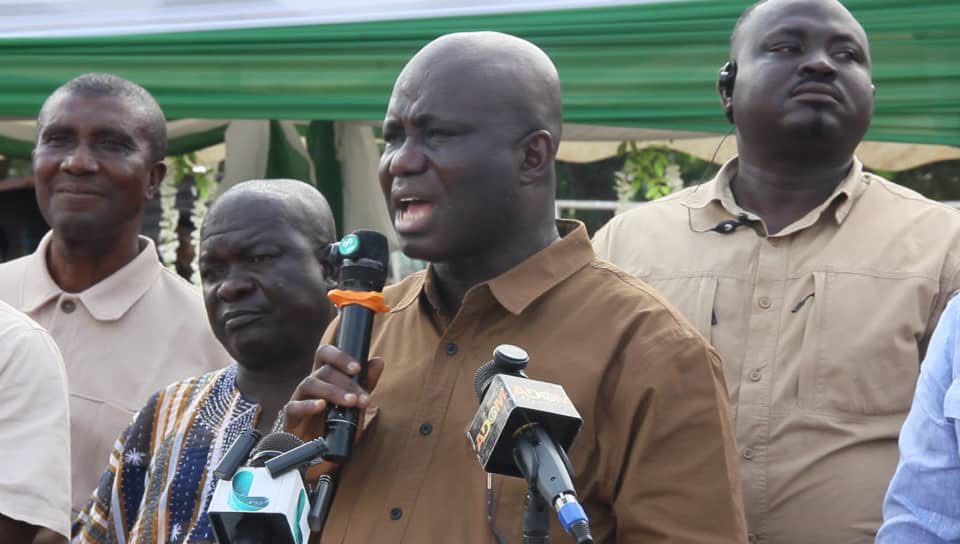
The Food and Agriculture Minister and MP for Asunafo South in the Ahafo Region, Dr. Eric Opoku, has called on the people in the region to desist from buying imported chicken; instead, they should buy the locally made ones to boost the poultry industry.
Dr. Eric Opoku made the call at Pomaakrom in the Asunafo North Municipality in an engagement with farmers and also the presentation of irrigation equipment and bags of fertilizers to vegetable farmers.
In his address, the buying of imported chicken improves the economy of the countries the chicken comes from, meaning economically Ghana gains nothing and becomes the loser.
According to him, the purchasing of the locally made chicken means famers will expand their farmers to employ more people especially the youth to reduce unemployment and also the economy will grow as expected, therefore it’s proper for residents to start buying the home made ones.
Speaking on vegetable related issues, the Agric Minister however revealed that henceforth Ghana under the leadership of President John Dramani Mahama will not import tomatoes from Burkina Faso, therefore the irrigation equipment donated to the farmers to be used during the dry season must the used meaningfully.
He mentioned that government is set to provide more irrigation equipment under terms and conditions to help farmers to produce all year round.
Source:https://www.adomonline.com
Oct 7, 2026
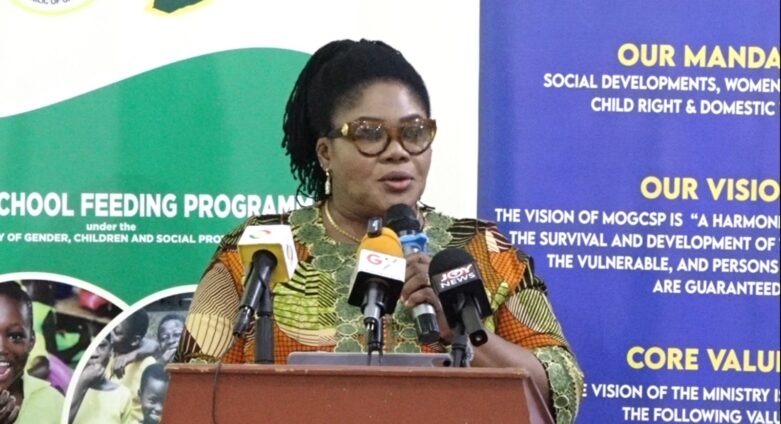
Minister for Gender, Children and Social Protection, Dr Agnes Naa Momo Lartey, has highlighted increased government investment and reforms in the Ghana School Feeding Programme under the administration of President John Dramani Mahama.
More than 4.5 million children are enrolled in the programme and receive one hot meal every school day.
Government funding for the programme has increased from GH¢1.393 billion in 2024 to GH¢1.788 billion in 2025 and GH¢1.982 billion in 2026.
The feeding grant per child has also been increased from GH¢1.50 to GH¢2 per child per day, with the government saying the increase will enable caterers to provide better-quality meals.
“Every school day, more than 4.5 million children sit down to enjoy a hot meal under the Ghana School Feeding Programme.
“For many of them, it is the most dependable meal of the day. It brings children to school, keeps them in class, and helps them to learn.
“These are significant investments at a time of limited public resources. They require us to ensure that every cedi provides a real child in a real classroom with a real meal,” she added.
The School Feeding Programme employs thousands of caterers and head cooks who provide meals for about 4.5 million children in basic schools.
The programme has, over the years, faced challenges including delays in the payment of caterers and inadequate supervision.
Dr Lartey, however, said arrears owed to caterers were now a thing of the past, following efforts by the government to ensure prompt payment.
She said the government had cleared the 2024 arrears it inherited and was ensuring up-to-date payments to caterers for the 2025-2026 academic year.
Dr Lartey also highlighted measures to improve the quality and monitoring of the programme, saying 20,171 caterers and head cooks had been trained in practical nutrition standards.
She said compliance monitoring had also nearly doubled, from 4,419 schools in 2025 to 8,270 schools in 2026.
“First, funding. The Ghana School Feeding allocation increased from 1.393 billion in 2024 to 1.788 billion in 2025. And this year, 2026, it increased further to 1.982 billion.
“Secondly, the feeding grant. We increased it from 1 cedi 50 pesewas to 2 cedis per child per day, enabling caterers to serve better meals. Thirdly, payments. We cleared the 2024 arrears we inherited and have continued paying caterers for the 2025-2026 academic year.
“Fourthly, quality. We trained 20,171 caterers and head cooks in practical nutrition standards and nearly doubled compliance monitoring from 4,419 schools last year to 8,270 this year, 2026.”
She was addressing a meeting of education directors from the Ashanti and Western North regions.
Dr Lartey, who emphasised the need for verified and accurate data from education stakeholders, called on education directors to support efforts to provide accurate enrolment figures.
She also called for strict reporting timelines and the designation of specific officers in every district to oversee transparency in school feeding data.
Meanwhile, National Coordinator of the Ghana School Feeding Programme, Hajia Fati Forgor, called for stronger collaboration with the Ghana Education Service.
“The school feeding programme started in the year 2005 with 10 schools, then 1,900 children benefiting from the programme.
“As we all know, it has evolved over the years and today, we can say close to 70% of Ghana public schools, KG and primary, are currently benefiting from the programme.
“We are looking at 4,527,000 children benefiting from that. We are looking at caterers who number 13,500 and 27,000 cooks who have also gotten jobs by way of providing this service to Mother Ghana.”
The Ghana School Feeding Programme is seeking stronger collaboration with the Ministries of Education, Agriculture, Health and Finance, among others.
Oct 6, 2026
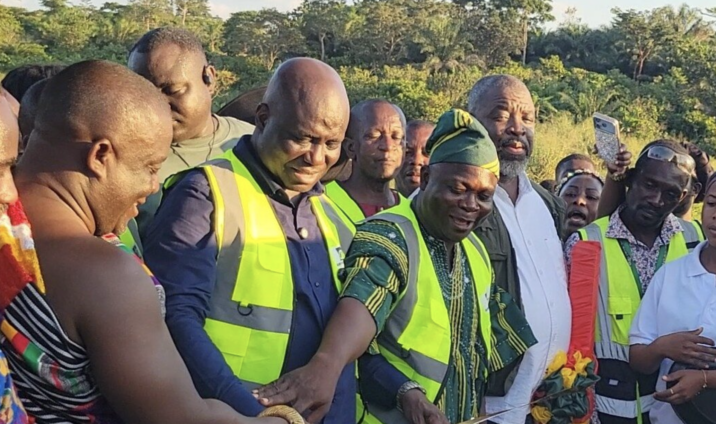
Eric Opoku, the Minister for Food and Agriculture, has cut the sod for the construction of an Inland Valley project at Aninkroma, near Barekese in the Atwima Nwabiagya North district.
The GHS 4.1 million cedis project, is expected to be completed within 16 months, to provide reliable year-round water supply to farmers, who would be engaged in the implementation of the Food Systems Resilience Project ( FSRP) being implemented by the Ministry of Food and Agriculture and the Atwima Nwabiagya North District Assembly.
The FSRP is designed to improve agricultural production and water management, strengthen food security, create sustainable livelihood opportunities for farmers, and favorable conditions for rice cultivation in the area.
Mr Opoku announced that in 2026, the National Best Farmer would get GHS 1.2 million brand-new pick-up vehicle, a tractor and enjoy a free research trip to Italy, as motivation.
He said the government would continue to invest in agriculture through the provision of infrastructure and support for farmers to help increase productivity, food security, improved income generation, and sustainable livelihoods.
Mr Opoku, therefore, urged all citizens, particularly the youth, to take keen interest in agriculture and venture into it, to improve their incomes and contribute to the economic growth of the nation.
Mr Mba Zechariah Alenbilla, the District Chief Executive (DCE), commended the government and the Ministry for choosing the district for the project, saying it would open a new chapter for the residents to enjoy the benefits.
He pledged to ensure the smooth execution of the project and its successful implementation to help achieve the intended purpose for the people.
Nana Gyedu Kumanin IV, the Amakyebarehene, who chaired the function, commended the government for the initiative.