Jun 10, 2026
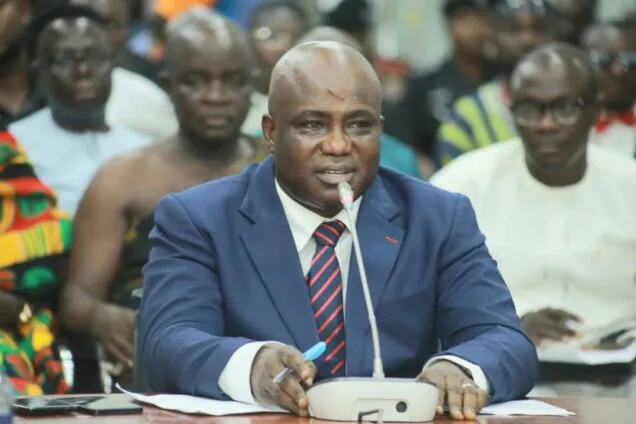
The Minister for Food and Agriculture, Eric Opoku, has emphasised the transformative potential of agriculture in tackling youth unemployment across Africa, describing the sector as a critical pathway to economic growth, stability, and peace on the continent.
Speaking at the Inter-Parliamentary Conference on Family, Sovereignty and Values on Thursday, June 4, Mr. Opoku highlighted the growing employment crisis facing Africa’s youth and called for strategic investments in agriculture to unlock millions of jobs.
According to the minister, between 10 and 12 million young Africans enter the labour market each year, yet only about three million formal jobs are created annually, leaving millions without meaningful employment opportunities.
“Approximately 10 to 12 million young Africans enter the labour market each year, while only about three million formal jobs are created annually,” Mr. Opoku stated.
He warned that the widening gap between job seekers and available employment opportunities continues to fuel social and economic challenges across the continent.
“The resulting unemployment and underemployment create social pressures that often contribute to migration, instability, and conflict. Indeed, poverty remains one of the greatest drivers of insecurity,” he said.
Mr. Opoku stressed that agriculture should not be viewed merely as a sector for food production but as a powerful engine for employment generation and economic transformation.
“Where livelihoods collapse, social tensions often rise. Agriculture, therefore, represents more than food production. It represents employment. It represents stability. It represents wealth creation. It represents peace,” he emphasised.
The Minister noted that significant investment in agricultural value chains could create millions of jobs while strengthening food security and boosting economic development across Africa.
Citing available evidence, Mr Opoku said a strategic investment of approximately US$50 billion in African agriculture could generate between 10 million and 20 million direct and indirect jobs.
“Available evidence suggests that strategic investment of US$50 billion in African agriculture, particularly across value chains including processing, logistics, storage, mechanisation and agribusiness development, could generate between 10 and 20 million direct and indirect jobs,” he noted.
He urged African governments, development partners, and private investors to prioritise agriculture as a key driver of employment and sustainable development, particularly for the continent’s growing youth population.
Source: JoyOnline
Jun 10, 2026
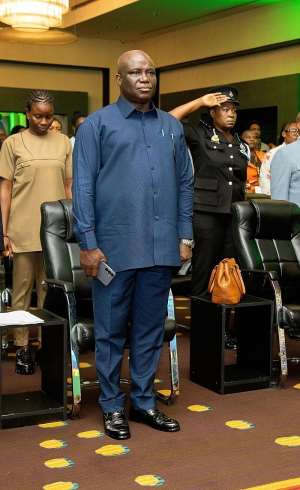
The Minister for Food and Agriculture, Eric Opoku, has criticised the low investment in agriculture across Africa and called on governments to allocate at least 10 percent of their annual budgets to the sector to boost food security and economic growth.
Speaking at the Inter-Parliamentary Conference on Family, Sovereignty, and Values on Thursday, June 4, Mr. Opoku warned that agriculture cannot deliver its full potential in transforming African economies without sustained and adequate funding.
He stressed that while African governments made commitments under the Maputo Declaration of 2003 and reaffirmed them under the Kampala Declaration, implementation has remained weak.
“Under these frameworks, our governments pledged to allocate at least 10 percent of their national budgets to agriculture and rural development as a means of unlocking the continent’s vast agricultural potential and accelerating economic transformation,” he noted.
However, he said the reality on the ground paints a different picture.
“Evidence across the continent suggests that many countries are yet to fulfill this commitment. In some countries, agriculture receives less than one percent of their national budget,” he said.
He added that some countries allocate only two to three percent, while others provide as little as 0.6 percent, describing the situation as grossly inadequate for a sector that employs the majority of Africa’s workforce.
“Such levels of investment are grossly inadequate for a sector that employs the majority of Africa’s workforce, feeds its population, and holds the key to industrialisation, poverty reduction, and economic growth,” he stated.
Mr. Opoku further called on African parliaments to play a stronger oversight role in ensuring that governments honour their commitments to the agricultural sector.
“This is where African parliaments must rise to the occasion. Parliaments have a constitutional responsibility to exercise oversight over public expenditure and government policy implementation,” he said.
He urged lawmakers to hold the executive accountable and ensure that budgetary promises translate into real development outcomes.
“They must hold the executive accountable and ensure that promises made to African citizens are translated into concrete budgetary commitments and measurable outcomes,” he said.
The minister added that parliamentarians must scrutinise national budgets and demand accountability when agricultural allocations fall below agreed continental targets.
“Parliamentarians must demand answers when agricultural allocations fall below agreed continental targets. They must scrutinise budgets, monitor implementation, and insist that agriculture receive the attention and resources necessary to drive national development,” he stated.
Source: JoyOnline
Jun 10, 2026
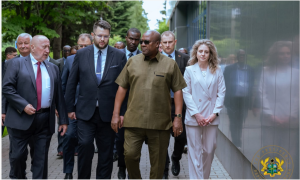
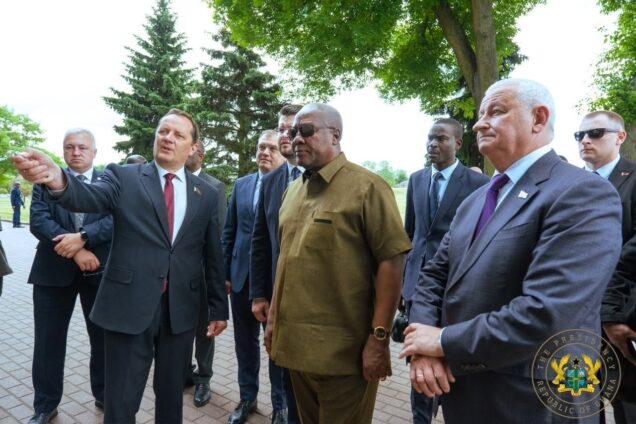
President John Dramani Mahama has called for deeper economic cooperation between Ghana and Belarus, urging Belarusian businesses to take advantage of investment opportunities in Ghana as the two countries seek to strengthen bilateral relations.
Speaking after a visit to the Brest Hero Fortress Memorial Complex in Belarus on Sunday, June 7, President Mahama said his trip should catalyse closer collaboration between the two nations, particularly in the areas of agriculture, mining and manufacturing.
Addressing a luncheon hosted by the Governor of Brest, Piotr Alexsandrovich, the President highlighted the city’s transformation from a symbol of wartime resilience into a centre of production, industrialisation and development.
“The heroism of the people of Brest is well-documented in history,” Mr Mahama said. “Brest has demonstrated that it is not only about history; it is about production, development, industrialisation, and culture. It is about everything that makes human life better.”
He expressed optimism that the visit would help forge stronger ties between Ghana and Belarus and create new opportunities for economic cooperation.
“I hope this visit will draw Ghana closer to Belarus, especially in the fields of agriculture, mining and manufacturing,” he stated.
President Mahama also extended an invitation to Belarusian investors to explore business opportunities in Ghana, describing the country as an attractive destination for investment and partnership.
He said Ghana remained committed to expanding cooperation with Belarus and fostering mutually beneficial partnerships that would contribute to economic growth and development in both countries.
The President further expressed hope that the friendship between Ghana and Belarus would endure and continue to flourish in the years ahead.
His remarks came after a tour of the Brest Hero Fortress Memorial Complex, one of Belarus’ most important Second World War memorial sites, where he paid tribute to soldiers and civilians who resisted the Nazi invasion in 1941.
President Mahama’s visit forms part of efforts to deepen diplomatic and economic relations between Ghana and Belarus and to explore new avenues for trade, investment and industrial cooperation, the presidency posted on Facebook.
Source: JoyOnline

May 21, 2026
The Head of Corporate Affairs at the Ghana National Buffer Stock Company (NAFCO), Emmanuel Arthur, has dismissed concerns that food is supplied to senior high schools without clear disclosure of pricing to school authorities.
He explained that food procurement and pricing for senior high schools follow a structured process involving multiple stakeholders, rather than being determined unilaterally by the Buffer Stock Company.
Speaking in an interview on Joy FM’s Newsnight on May 19, Mr Arthur said that at the start of every academic year, a pricing committee is convened to agree on food prices for supply to schools under the second-cycle feeding arrangement.
He said the committee includes representatives from the Ministry of Education, Ghana Education Service, the Conference of Heads of Assisted Secondary Schools (CHASS), and the Buffer Stock Company.
“At the beginning of the academic year, what we call the pricing committee meets. This committee comprises the Ministry of Education, Ghana Education Service, CHASS and Buffer Stock. Together, we fix the prices,” he explained.
He added that once the committee agrees on the prices, the Ghana Education Service forwards them to the Public Procurement Authority (PPA) for approval before implementation.
“When approval comes, it is communicated to all parties and then supply takes place. So all parties are aware of the prices,” he stated.
His comments follow concerns raised by some school heads who claimed they were not aware of the cost of food items supplied to their institutions.
However, he insisted that CHASS representatives are part of the process and are expected to relay decisions back to their members, noting that not all headmasters attend the meetings directly.
He also clarified that food supply under the programme is not handled by Buffer Stock alone, but also involves the Ghana Commodity Exchange as part of the distribution chain.
On current supply levels, he stated that no senior high school is experiencing food shortages.
“As we speak, no school can say they have food challenges. For the first time in many years, schools have more than they even need,” he said, adding that some schools are even facing storage constraints due to excess supply.
Source:JoyOnline
May 11, 2026
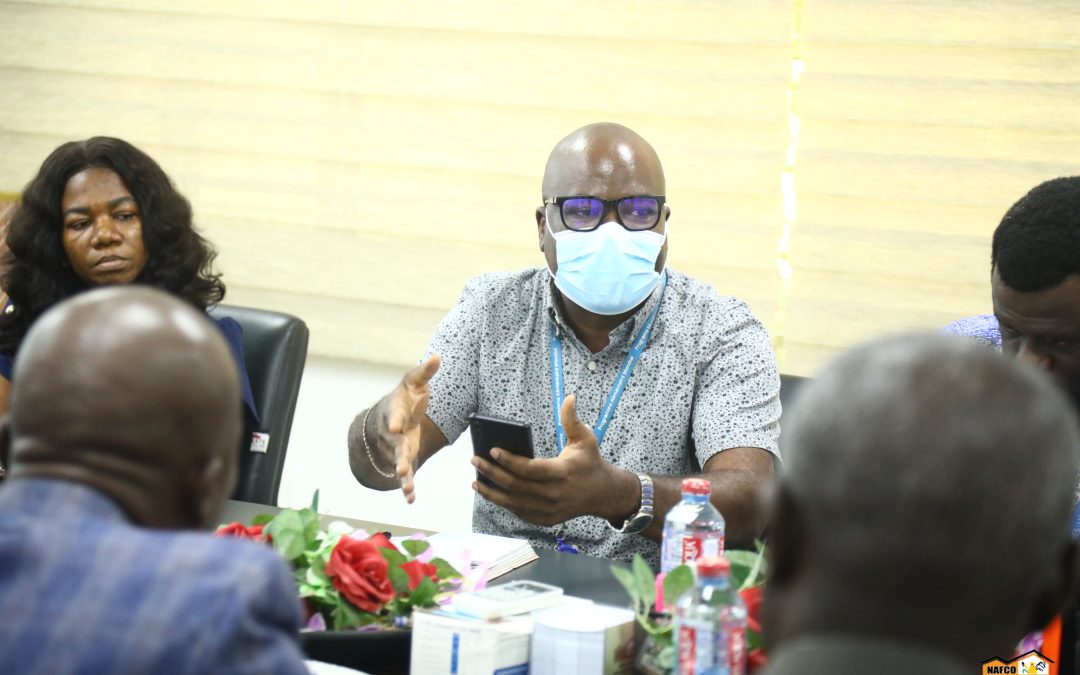
Earlier today, our management team led by our CEO, Mr George Abradu-Otoo hosted a technical team from the Dakar Regional Bureau of the World Food Programme ( WFP) who are in Ghana to undertake assesment for the commencement of work on Ghana Strategic Grain Reserve ( GSR) NAFCO Warehouse Modernization Project.
The project is expected to see the renovation of Warehouses, the provision of Laboratories and the provision of an Inventory Management System for the management and storage of grains in Ghana.
The project is being funded by WFP.
Apr 29, 2026
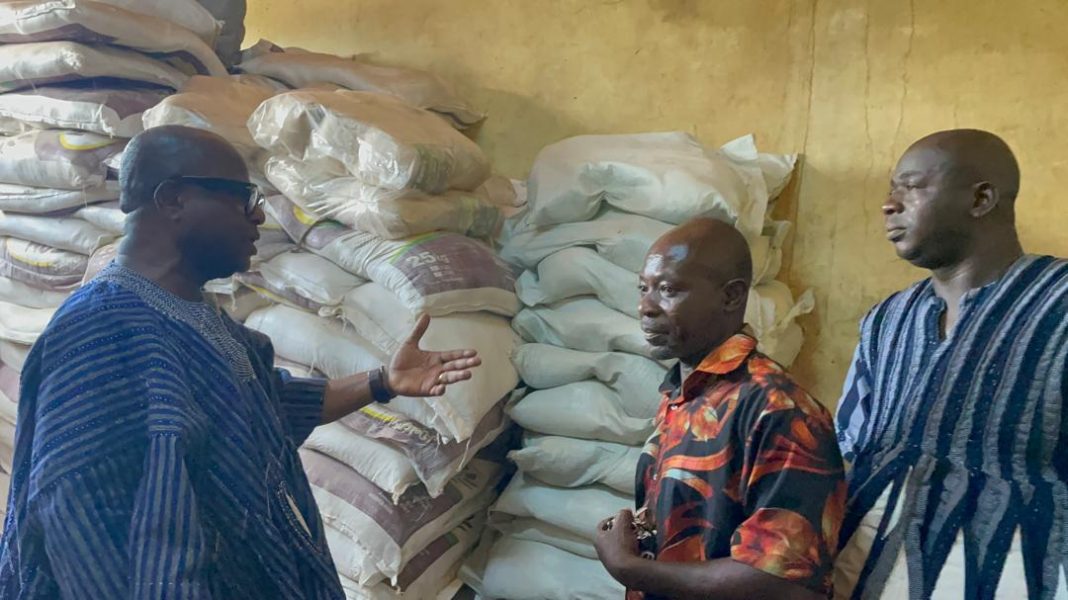
The Chief Executive Officer of the National Food Buffer Stock Company (NAFCO), George Abradu-Otoo, has undertaken a two-day working visit to the Upper East Region to assess food supply systems in Senior High Schools and inspect storage facilities across the region.
The visit took him to Bolgatanga Girls Senior High School (BOGISS) and Bolgatanga Technical Institute, where he engaged school authorities on the effectiveness of the buffer stock programme.
At BOGISS, the Headmistress, Gifty Ayamba, commended NAFCO for its consistent delivery of food items, describing the intervention as timely and impactful.
“I must say that we are honoured to be part of the selected schools, and we want to extend our heartfelt gratitude to you for the support that you have given us so far. We have been getting our food, and as it stands now, I can say that we are comfortable as far as the grains and other products are concerned,” she stated
She added, “So far, we haven’t encountered any challenges as far as the buffer food distribution is concerned… If we are going to rate, at least, I will score Buffer Stock 8 over 10. It’s a human institution, so definitely there will be some gaps, but so far it has been good.”
The CEO also interacted with the Upper East Regional Chairman of the Conference of Heads of Assisted Secondary Schools (CHASS), Richard Akumbase, who suggested that integrating local suppliers into the system could improve efficiency and boost local economies.
“When community members come to us and say they have produce but don’t know where to sell, we are unable to procure. If Buffer Stock can buy from them, it will help the local economy because the money will circulate within the community,” he noted.
Mr. Abradu-Otoo also inspected NAFCO warehouses at Pusu-Namongo and Zuarungu to assess their condition and readiness for storage under the national food reserve programme.
Earlier, he paid a courtesy call on the Upper East Regional Coordinating Council and later visited the Bolgatanga Municipal Chief Executive. He expressed satisfaction with feedback from the schools.
“All the schools that we went to were full of praise for us. For the first time in so many years, headmasters and headmistresses can go to sleep without worrying about where the next meal is going to come from for the students,” he stated.
Mr. Abradu-Otoo also clarified that recent concerns about food shortages in schools were not linked to NAFCO.
“This is not about Buffer Stock. Buffer Stock doesn’t supply perishables. We supply only non-perishables like rice, sugar, maize, millet, and sorghum,” he explained, adding that delays in reimbursement for perishables were the real concern for school authorities.
Among the entourage are Emmanuel J.K Arthur, Head of Corporate Affairs; Arnold Kojo Akah, Head of Operations; Aziz Peregrino-Brimah, National Coordinator, National Food Reserve Programme; and Albert Adongo, Upper East Regional Manager of NAFCO.
Source: A1Radioonline