Jun 11, 2026
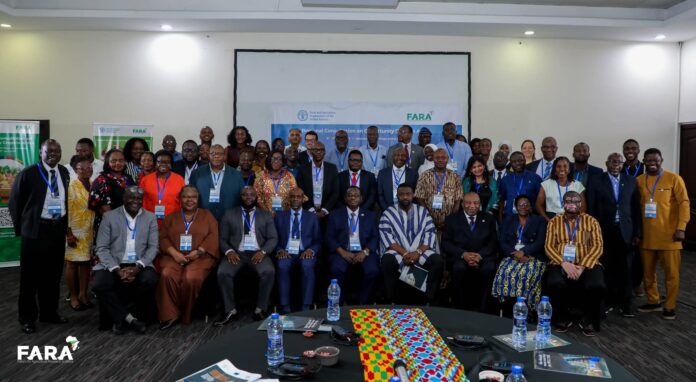
The Food and Agriculture Organisation of the United Nations (FAO), in collaboration with the Forum for Agricultural Research in Africa (FARA), have convened the Regional Consultation on Opportunity Crops in Africa, Accra.
The consultation brings together policymakers, researchers, development partners, private-sector actors, civil society, farmer organisations and regional institutions to advance the integration of neglected and underutilised crop species into Africa’s food systems.
These crops, increasingly referred to as opportunity crops, include millets, sorghum landraces, fonio, bambara groundnut, indigenous vegetables and other traditional crops that are deeply rooted in African food cultures but remain under-researched, under-invested and insufficiently represented in formal food, seed, research and market systems.
The conference comes at a critical moment for Africa’s agrifood systems. The continent continues to face interlinked challenges, including hunger, malnutrition, climate change, biodiversity loss, rapid urbanisation and growing dependence on imported foods.
According to the conference concept note, roughly one in five people in Africa faced hunger in 2024, while more than one billion people on the continent could not afford a healthy diet. At the same time, Africa’s rich plant genetic diversity, which underpins food security, nutrition, livelihoods and cultural heritage, is under increasing threat.
Opportunity crops offer practical pathways for addressing these challenges. Many are nutrient-dense, locally adapted, resilient to climate shocks, suitable for smallholder systems and capable of contributing to diversified diets, local economies and climate-resilient agriculture.
However, their potential has been constrained by limited research investment, weak seed systems, fragmented value chains, low consumer awareness, inadequate market development and insufficient policy support.
Speaking ahead of the consultation, both organizing agencies underscored that opportunity crops should be repositioned as strategic assets for Africa’s food systems transformation, given their contribution to biodiversity, nutrition, resilience and cultural identity.
The consultation will also contribute to continental policy momentum following the Kampala Comprehensive Africa Agriculture Development Programme Declaration, which calls on African Union Member States to increase the production and consumption of nutritious traditional and indigenous crops through appropriate policy, regulatory and financing mechanisms.
Over the three days, participants will review national and regional experiences with opportunity crops, discuss policy and institutional frameworks, examine approaches to conservation and sustainable use, and identify pathways to strengthen production, seed systems, value chains, research, capacity development, awareness-raising and market integration.
The programme will feature technical sessions on overcoming barriers to opportunity crops, strengthening knowledge and capacity, advancing regional action, promoting on-farm diversity and local adaptation, conserving crop genetic resources, improving breeding and pre-breeding systems, developing seed systems, and building the business case for opportunity crops.
The consultation will culminate in working-group discussions to develop an action-oriented regional roadmap to integrate opportunity crops into Africa’s agrifood systems.
The consultation will include contributions from regional and continental institutions, including the African Union Commission, AUDA-NEPAD, CORAF, ASARECA, CCARDECA, CGIAR, centres, Crop Trust, universities, farmer organisations, private sector actors, and other partners working to advance agricultural biodiversity and resilient food systems across Africa.
The event is expected to foster a shared understanding of the opportunities, gaps and priorities for mainstreaming opportunity crops in Africa, while strengthening partnerships among governments, research institutions, farmers, private-sector actors and civil society.
A key outcome will be a regional roadmap and collaborative action plan to guide future investments, policy reforms and coordinated implementation.
The consultation will be held in a hybrid format with interpretation in English and French, enabling wider participation across Africa and beyond.

Jun 11, 2026
Honorable Eric Opoku, Minister for Food and Agriculture, has announced a bold and transformative shift in Ghana’s agricultural strategy, aimed at repositioning the country toward a structured and industrialized tree crop economy.
The Minister made this declaration when he addressed participants at the maiden edition of the Ghana Tree Crops Investment Summit and Exhibition (GTCIS 2026), held at the Accra International Conference Centre on Tuesday, 17 February 2026. The high-level event attracted a distinguished audience, including His Excellency the President, John Dramani Mahama; His Royal Majesty Otumfuo Osei Tutu II, represented by Nana Kwame Baffoe IV, Omanhene of the Nkoranza Traditional Area; Ministers of State; Chief Executive Officers; development partners; investors; and key stakeholders across the agricultural value chain.
Addressing the gathering, Hon. Eric Opoku explained that the current administration is deliberately transforming Ghana’s tree crops sector from fragmented and largely informal production systems into organized, investment-ready pillars of national economic growth. He noted that the new approach prioritizes order, predictability and sustainability, underpinned by a robust regulatory framework led by the Tree Crops Development Authority.
“This strategic reset is about creating confidence for both farmers and investors,” the Minister said. “We are strengthening access to reliable planting materials, expanding extension services, and enforcing industry standards that will protect investments while improving farmer incomes.”
A key highlight of the Minister’s address was the urgent need for Ghana to move beyond the export of raw agricultural commodities. He stressed that the future of the sector lies in value addition, calling for increased local processing of cashew and shea, the development of integrated agro-industrial hubs for coconut and oil palm, and the expansion of rubber and mango into high-value manufactured products. To support this agenda, the Ministry is working to secure land banks in suitable ecological zones and is collaborating closely with institutions such as the Ghana Standards Authority to ensure compliance with international export requirements.
Placing farmers at the heart of the transformation, Hon. Eric Opoku announced plans to scale up the distribution of certified elite seedlings and establish training hubs to boost productivity and significantly reduce post-harvest losses. He emphasized the inclusive nature of the strategy, highlighting the central role of women in the shea sector and the growing participation of young people in cashew and mango value chains, positioning tree crops as a sustainable pathway for rural livelihoods and youth employment.
In conclusion, the Minister invited private sector players to partner with government in building long-term value across the tree crops sector. Referencing opportunities under the African Continental Free Trade Area, he urged financial institutions to treat tree crops as structured, asset-backed investments rather than speculative ventures.
“With coordinated production, effective regulation and strong local processing, Ghana’s tree crop sector is moving decisively from potential to prosperity,” Hon. Eric Opoku affirmed.
Jun 11, 2026
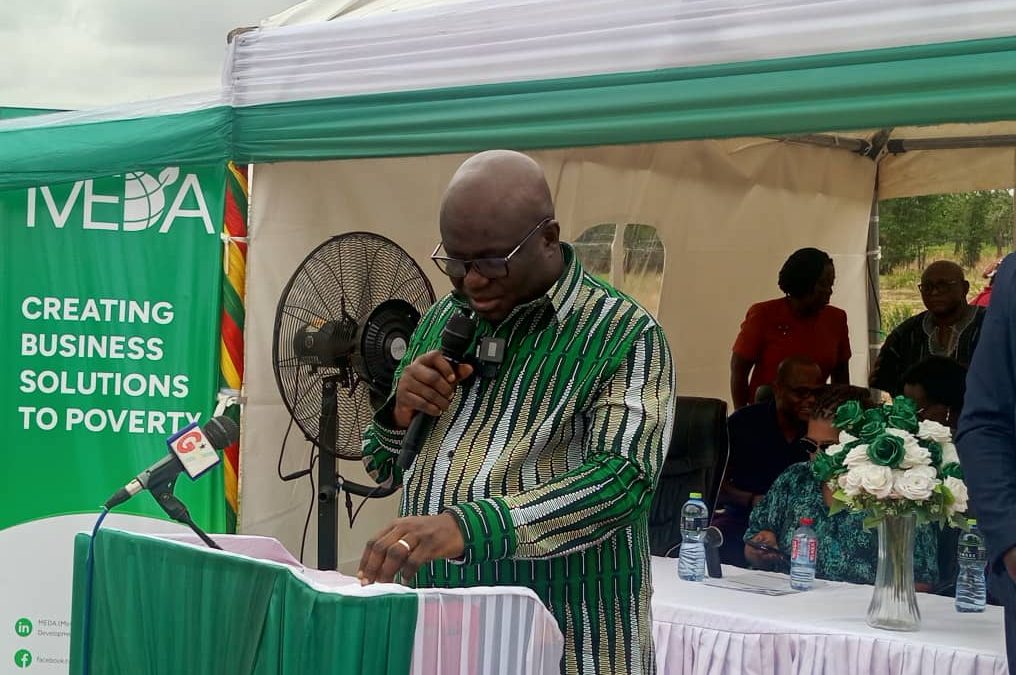
The Government of Ghana is scaling up efforts to boost vegetable production through the construction of 25 modern solar-powered boreholes in selected districts across the five northern regions.
The initiative is being carried out under the Greater Rural Opportunities for Women 2 (GROW2) Project, with funding support from Global Affairs Canada and implementation by Mennonite Economic Development Associates (MEDA) in collaboration with the Ministry of Food and Agriculture (MoFA).
With an investment of approximately GH¢8 million, the project is expected to benefit women in more than 3,000 Village Savings and Loans Associations (VSLAs) within the beneficiary communities. The initiative seeks to provide reliable and sustainable water supply systems for year-round vegetable production, improve agricultural productivity, and strengthen household incomes.
Speaking at the symbolic inauguration ceremony held at Moglaa in the Northern Region, the Minister for Food and Agriculture, Hon. Eric Opoku, described the project as a strategic intervention aimed at transforming dry-season farming and improving irrigation access across the Northern, Upper West and Savannah regions.
According to the Minister, inconsistent rainfall patterns and inadequate access to water sources have over the years constrained agricultural productivity and contributed to seasonal unemployment among farmers in northern Ghana.
He noted that the solar-powered boreholes would provide an environmentally sustainable source of irrigation water, enabling farmers, particularly women to cultivate vegetables throughout the year rather than depending solely on the rainy season.
Hon. Opoku further indicated that the initiative forms part of broader government efforts to modernise agriculture, strengthen food security, increase farmers’ incomes and reduce poverty, especially in underserved communities.
He emphasized that the intervention would position northern Ghana as a major hub for year-round vegetable production and contribute significantly to the country’s agricultural transformation agenda.
The Canadian High Commissioner to Ghana, Madam Myriam Montrat, said the inauguration represented more than the commissioning of infrastructure, describing it as a symbol of opportunity, resilience and strong international partnership.
She commended MEDA and the implementing partners for their commitment, adaptability and community-centered approach in supporting women farmers and rural livelihoods.
The Northern Regional Minister, Hon. Ali Adolf John Mburidiba, also described the solar-powered irrigation systems as transformative interventions that would harness renewable energy to support sustainable agriculture in the region.
He noted that the facilities would enable women farmers in communities such as Moglaa to engage in all-year-round vegetable cultivation, particularly during the dry season, thereby improving food production and household incomes.
Jun 10, 2026
Ghana and the Netherlands have taken a significant step to reinforce bilateral cooperation in agriculture, with a renewed focus on strengthening the vegetable seed sector to boost food security and sustainability.
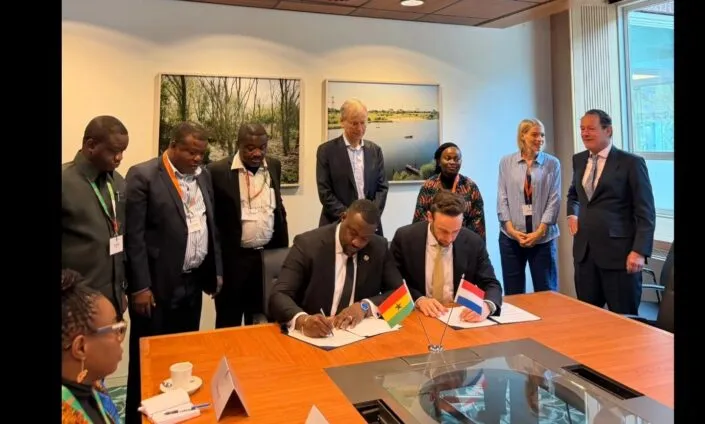
Deputy Minister for Food and Agriculture, John Dumelo, announced that the two countries have signed an addendum to an existing Memorandum of Understanding (MoU), originally agreed on 28th May 2025, under the Food and Agriculture Working Group.
The agreement was formalised in The Hague on Tuesday, April 14, alongside his Dutch counterpart, Silvo Erkens.
“Following the MoU signed on 28 May 2025, Ghana and the Netherlands have strengthened their partnership through an addendum under the Food and Agriculture Working Group, focusing on the vegetable seed sector,” Mr Dumelo stated in his Facebook post.
He emphasised that the renewed collaboration is designed to advance sustainable agricultural practices and improve food systems in Ghana.
“The collaboration will enhance sustainable agriculture and food security by strengthening seed systems, improving access to quality seeds, and promoting research, innovation, and partnerships,” he added.
According to the deputy minister, the agreement underscores a shared commitment between both countries to leverage expertise and innovation in addressing challenges within the agricultural value chain.
Mr Dumelo further disclosed that his official visit to the Netherlands, undertaken at the invitation of the Dutch government, is ongoing and will include strategic engagements with key stakeholders.
“On the invitation of the Kingdom of the Netherlands, the three-day working visit continues today with visits to research institutions, fertiliser and major seeds producers across the country,” he noted.
The strengthened partnership is expected to open new avenues for technical cooperation, investment, and knowledge transfer, positioning Ghana’s agricultural sector for improved productivity and resilience.
Source:JoyOnline
Jun 10, 2026
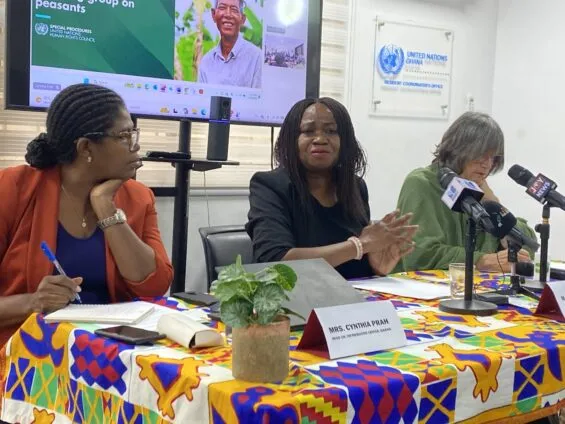
The United Nations Working Group on the Rights of Peasants and Other People Working in Rural Areas says Ghana risks facing a future food crisis, social unrest, and growing national insecurity if sustainable agriculture and rural livelihoods are neglected.
Professor Uche Ofodile, a member of the Working Group representing Africa, said the long-term consequences of failing to invest in sustainable agriculture and protect rural livelihoods could be severe.
“If there is a problem with food availability, especially in times of crisis and international instability, and there is a lack of fertilisers and inputs, if you don’t develop methods that can do without too much external input, then there will be problems, and of course, when you have food problems, you are in unrest,” she said.
The Working Group gave the caution on Thursday at an end-of-mission press briefing in Accra, where it presented preliminary findings and recommendations following a 10-day official visit to Ghana.
Whilst in Ghana, the members engaged government institutions, farmers, fisherfolk, pastoralists, civil society organisations, traditional authorities, and rural communities to assess the human rights situation of peasants and rural workers.
Prof. Ofodile noted that the issue went beyond food availability to include nutritional security, national sovereignty, youth unemployment, and economic resilience.
She said overdependence on imported agricultural inputs and global supply chains left African countries vulnerable to external shocks.
Africa’s rapidly growing youth population also faced a critical challenge as many young people continued to abandon agriculture for illegal mining activities due to the lack of viable economic opportunities in farming.
Prof. Ofodile added that the crisis also affected young women in rural communities, where teenage pregnancy and economic vulnerability remained growing concerns.
The Working Group observed that while Ghana had made commendable progress through policies aimed at agricultural modernisation, climate resilience, fisheries reforms, gender equity, and social protection, many smallholder farmers, artisanal fishers, and pastoralists remained excluded from meaningful participation in decision-making.
The experts warned that Ghana’s current agricultural transformation agenda, which increasingly focused on mechanised and export-oriented agriculture, risked marginalising the smallholder farmers and rural communities who formed the backbone of the country’s food production system.
They identified climate change and illegal mining, otherwise known as “galamsey,” as twin threats confronting Ghana’s rural economy.
The group described “galamsey” as “the most acute, rapidly expanding, and politically charged environmental emergency” facing the country, citing contamination of rivers, destruction of farmland, and the spread of mercury and other toxic chemicals.
According to the experts, illegal mining should be understood both as a cause of environmental destruction and as a symptom of deeper economic failures affecting rural youth.
The Working Group also raised concerns over land insecurity, particularly for women, youth, pastoralists, and smallholder farmers.
It noted that women remained largely excluded from land ownership and decision-making despite playing major roles in agricultural and fisheries value chains.
The experts further expressed concern over the vulnerability of older women farmers to witchcraft accusations, which they said often resulted in displacement and loss of livelihoods.
The delegation commended Ghana for its constitutional human rights framework and recent laws, including the Fisheries and Aquaculture Act 2025, the Social Protection Act 2025, and the Affirmative Action (Gender Equity) Act 2024.
It also praised initiatives such as the Community Resource Management Area model and the National Alternative Employment and Livelihood Programme as examples of inclusive and participatory governance.
However, the working group stressed that meaningful progress would require stronger political will, deeper community participation, and long-term investment in sustainable agriculture and rural development.
Prof. Ofodile urged the media to give voice to peasant farmers by amplifying their concerns and drawing attention to the challenges affecting their livelihoods.
She also extended an invitation to the media and other stakeholders to partner with the Working Group in supporting its mandate to promote and protect the rights of peasants and rural communities.
The United Nations Human Rights Council Working Group on the Rights of Peasants and Other People Working in Rural Areas monitors the implementation of the UN Declaration on the Rights of Peasants (UNDROP), aimed at protecting small-scale farmers, fisherfolk, and pastoralists from inequality, exclusion, and land-related rights violations.
Established in 2024, it conducted its first official country visit to Ghana from May 5 to 14, at the invitation of the Government of Ghana.
The five-member independent expert group represents Asia, Western Europe, Eastern Europe, the Americas, and Africa, with two members participating in the Ghana mission, supported by the UN Secretariat.
A comprehensive report on the findings and recommendations would be presented to the UN Human Rights Council in September 2026.
Source: GNA

Jun 10, 2026
Agritech innovator Evans Kyere-Mensah has urged young Ghanaians to rethink their perception of agriculture, describing the sector as a pathway to innovation, enterprise development and wealth creation rather than a last resort.
Speaking at the Ghana Youth Agriculture Summit 2026 on Friday, May 22, Mr Kyere-Mensah said the gathering was more than a conference, but a critical conversation about Ghana’s future and the role of young people in shaping it.
“Today is not just another conference. Today is a conversation about the future of Ghana, and that future is sitting right here in this hall,” he told participants.
He noted that many young people have grown up believing success lies only in corporate offices, urban centres such as Accra, or opportunities abroad, while agriculture is often seen as a fallback option.
“For too long, many young people have been made to believe that success only exists in offices, in suits, in Accra, or somewhere abroad. Many have been taught to see agriculture as a last option instead of one of the greatest opportunities of our generation,” he said.
Mr Kyere-Mensah, however, rejected that perception, insisting that agriculture is a major economic sector with vast opportunities.
“But let me say this clearly today: agriculture is not poverty. Agriculture is not punishment. Agriculture is a business. Agriculture is an industry. Agriculture is technology. And agriculture is wealth creation,” he stated.
He noted that food production and agricultural commodities form the backbone of major value chains, stressing that everyday consumption represents significant business opportunities.
“The food we eat every day is somebody’s business. The cocoa, cassava, maize, poultry, vegetables, fruits and livestock we consume daily are all part of billion-dollar value chains,” he said, urging young people not to remain on the sidelines.
The agritech innovator also encouraged young people to start small rather than wait for large amounts of capital, noting that successful enterprises often begin modestly.
“Many young people are waiting for big capital before they start. But history teaches us that great businesses rarely begin big. They begin with vision, consistency and courage. Start small. Start where you are. Start with what you have,” he said.
He added that small ventures can grow into large-scale enterprises over time, citing examples in poultry, cassava farming and digital agribusiness platforms.
“Do not despise small beginnings. The future millionaire in agriculture may start with one acre, one greenhouse, one poultry pen, one processing machine or one bold decision,” he said.
Mr Kyere-Mensah also highlighted opportunities available through institutions such as the National Entrepreneurship and Innovation Programme (NEIP), the National Service Authority, youth entrepreneurship initiatives, skills development programmes and agribusiness incubation schemes.
He said these interventions provide training, mentorship, financing and enterprise development support, but stressed that success depends on readiness and preparation.
He further described agriculture as a broad ecosystem beyond farming, encompassing production, logistics, technology, marketing, processing, exports, mechanisation, media and innovation.
“Ghana does not lack opportunities. What we often lack is the courage to believe that we can build from where we are,” he said.
He added that the next generation of wealthy Ghanaians will emerge not only from traditional white-collar professions, but increasingly from agribusiness and agricultural innovation.
“To every young person here today: do not wait for perfect conditions. Do not underestimate your beginning. Your journey can start today,” he said.
Mr Kyere-Mensah urged participants to use the summit as a platform to reshape their ambitions and actively explore opportunities within the agricultural sector.
Source: Myjoyonline.com