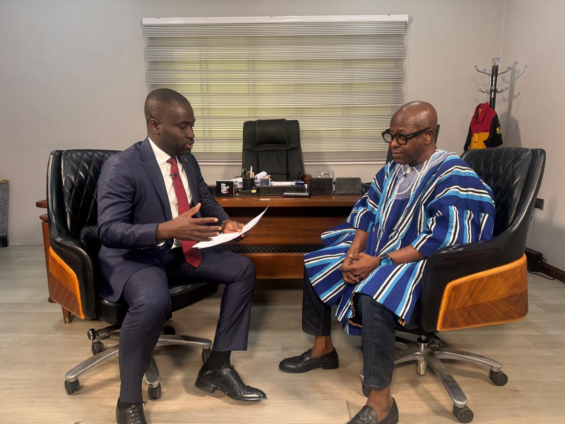
The CEO of the National Food Buffer Stock Company (NAFCO), George Abradu-Otoo, says government’s decision to commit ¢300 million towards building a national grain reserve marks the beginning of a new era for food security in Ghana.
Speaking on JoyNews’ PM Express Business Edition on Thursday, he described the intervention as unprecedented and a major policy shift, even though the amount falls far short of what is required to make a significant impact.
“Last year, Minister of Finance Dr Ato Forson announced that they were giving us further ¢200 million to continue the good work that we were doing, so in other words, so far we had only ¢300 million,” he said.
Mr Abradu-Otoo explained that the resources available to the Buffer Stock Company remain inadequate for large-scale grain purchases aimed at stabilising prices and protecting farmers from post-harvest losses.
“If we need to do proper meaningful mopping up of excess grains, we need no less than ¢1.5 billion, so you can imagine what ¢300 million has done,” he noted.
Despite the funding gap, he insisted the allocation should be viewed as an important first step.
“But it’s a good beginning because it hasn’t been done before. That’s where I draw my comfort from,” he said.
According to him, the significance of the initiative lies not only in the money committed but in government’s recognition of the need for a strategic national food reserve.
“It’s a good beginning for the government to even think in the first place that we need to have a national food reserve,” he stressed.
Mr Abradu-Otoo revealed that Ghana has long been an outlier within the West African sub-region for lacking a formal food reserve system.
“Because if you take the West African sub-region, Ghana is the only country that did not have a food reserve, can you believe that?” he said.
He added that even countries facing security and economic challenges have maintained grain reserves to cushion their populations against supply disruptions and food shortages.
“Interesting, we can also have Mali, etc, have a national food reserve,” he observed.
The Buffer Stock CEO believes that establishing a grain reserve will strengthen Ghana’s ability to respond to food production shocks, support farmers by purchasing surplus harvests, and improve national food security over the long term.
For him, the challenge now is to build on the initial investment and mobilise the additional resources needed to expand grain purchases to meaningful levels.